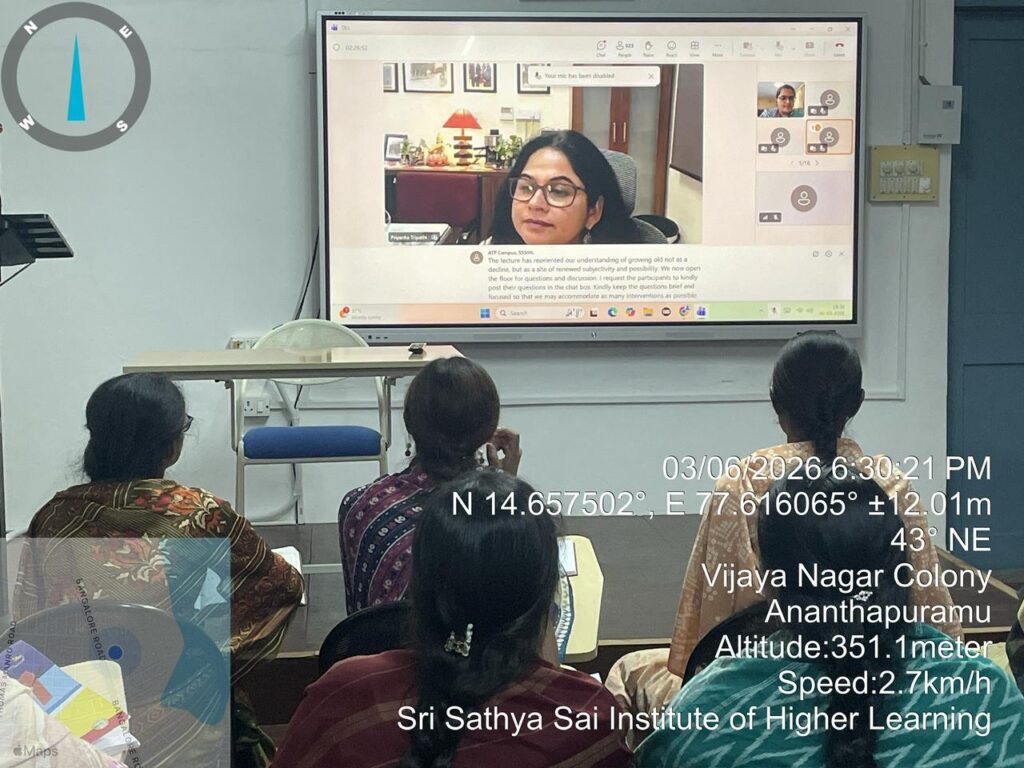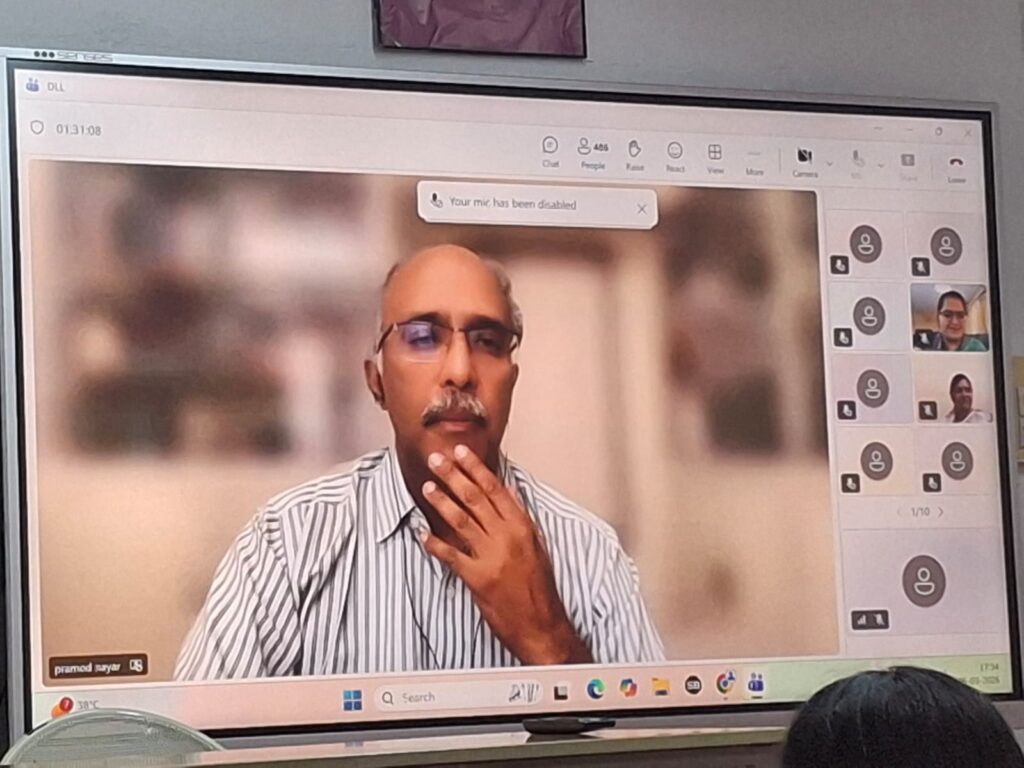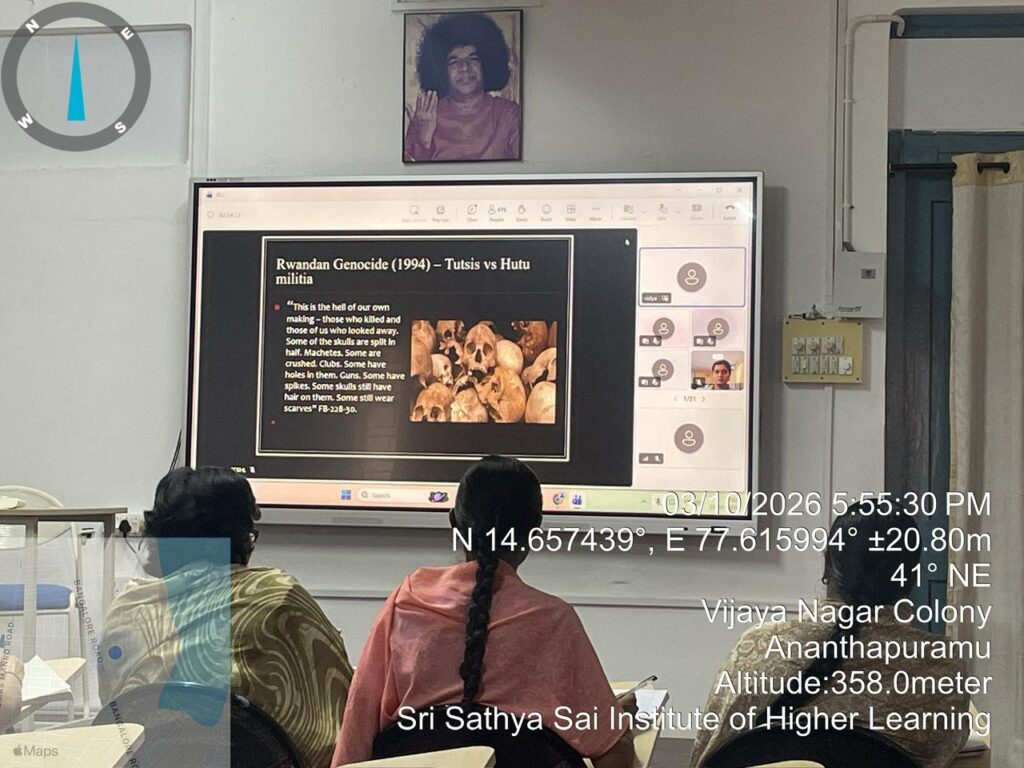

The Department of Languages and Literature – English, Sri Sathya Sai Institute of Higher Learning (SSSIHL), in collaboration with the UNESCO Chair in Vulnerability Studies, University of Hyderabad, successfully conducted a ten-day online Faculty Development Programme (FDP) from 6 to 18 March 2026. Bringing together over 600 participants from across India, the programme created a vibrant interdisciplinary space for engaging with contemporary literary-cultural theory through the lens of vulnerability.
The FDP commenced with an inaugural session that underscored the role of literature and storytelling in fostering empathy, care, and ethical awareness in an increasingly digitised and uncertain world. The session featured Introductory Remarks by Prof. B. Raghavendra Prasad, Honourable Vice-Chancellor, SSSIHL, and Inaugural Address by Prof. Pramod K. Nayar, UNESCO Chair in Vulnerability Studies, University of Hyderabad, who highlighted the Chair’s global initiatives and the evolving significance of vulnerability studies. Over ten days, eminent scholars from leading institutions in India and abroad delivered insightful lectures spanning diverse themes such as ageing, embodiment, ecological crises, posthumanism, animal and plant studies, migration, war narratives, psychological impacts of oppression, and the politics of representation.
Sessions explored critical concerns including gendered and age-based vulnerabilities in media, trauma and memory in Partition literature, and storytelling as a mode of healing in end-of-life care. Interdisciplinary perspectives from environmental humanities, urban studies, and new materialism highlighted the interconnectedness of human and non-human worlds in the Anthropocene. Discussions also examined vulnerability across cultural forms such as comics, visual art, and literary narratives, foregrounding issues of displacement, systemic oppression, and resistance.
The concluding sessions reflected on language, childhood, and feminist historiography, reinforcing the idea that vulnerability is not merely individual but deeply structural and relational. Collectively, the FDP encouraged participants to rethink pedagogical practices, research frameworks, and interpretive strategies, emphasising the ethical relevance of the humanities in addressing real-world challenges.