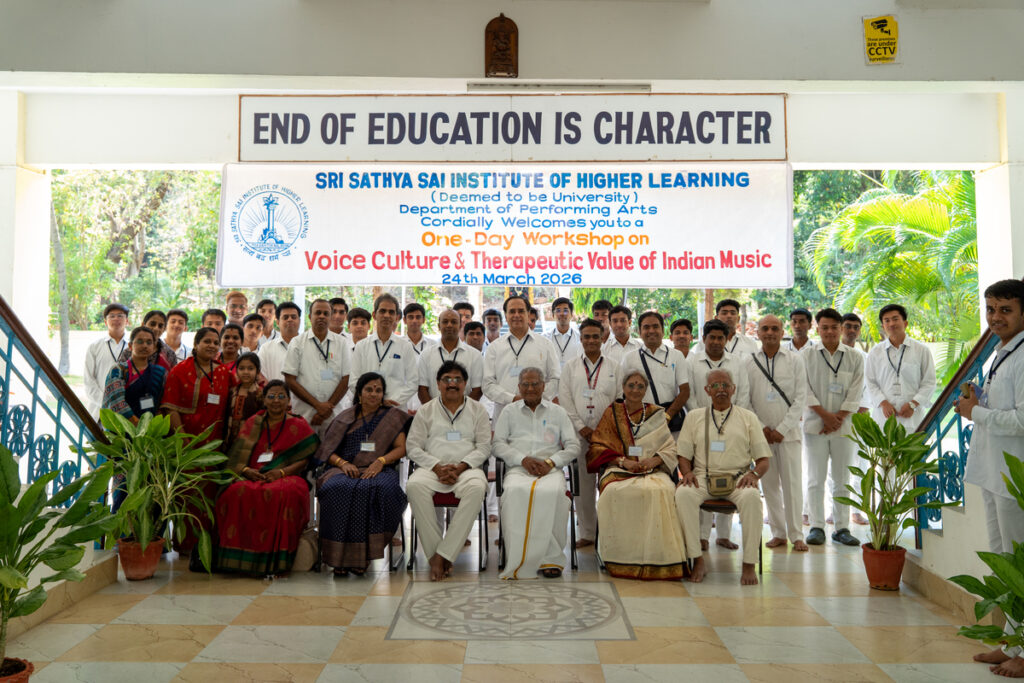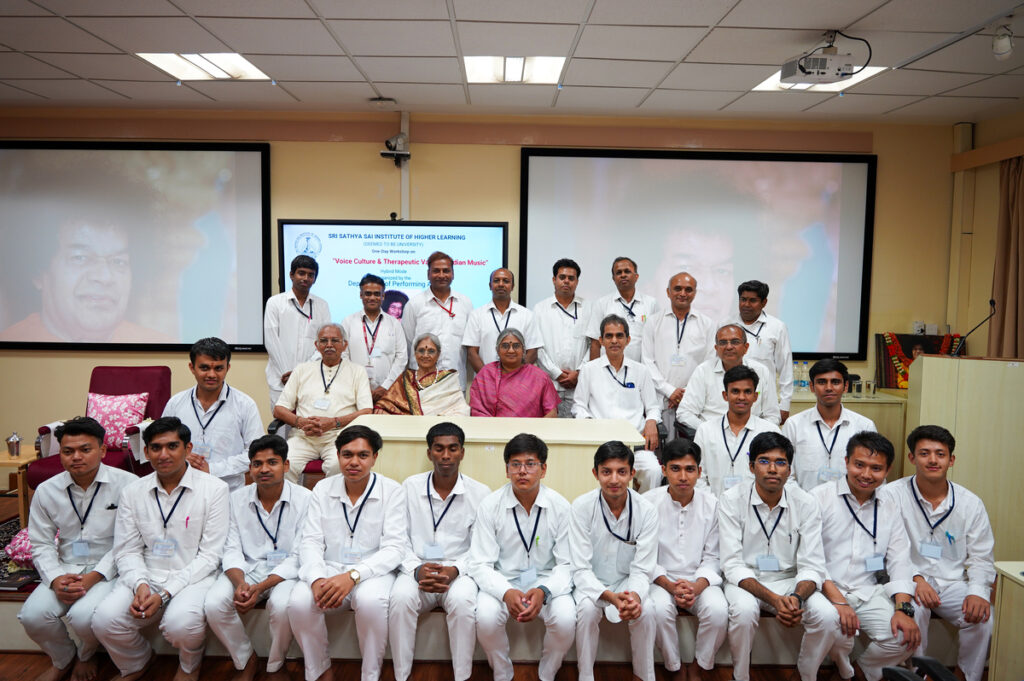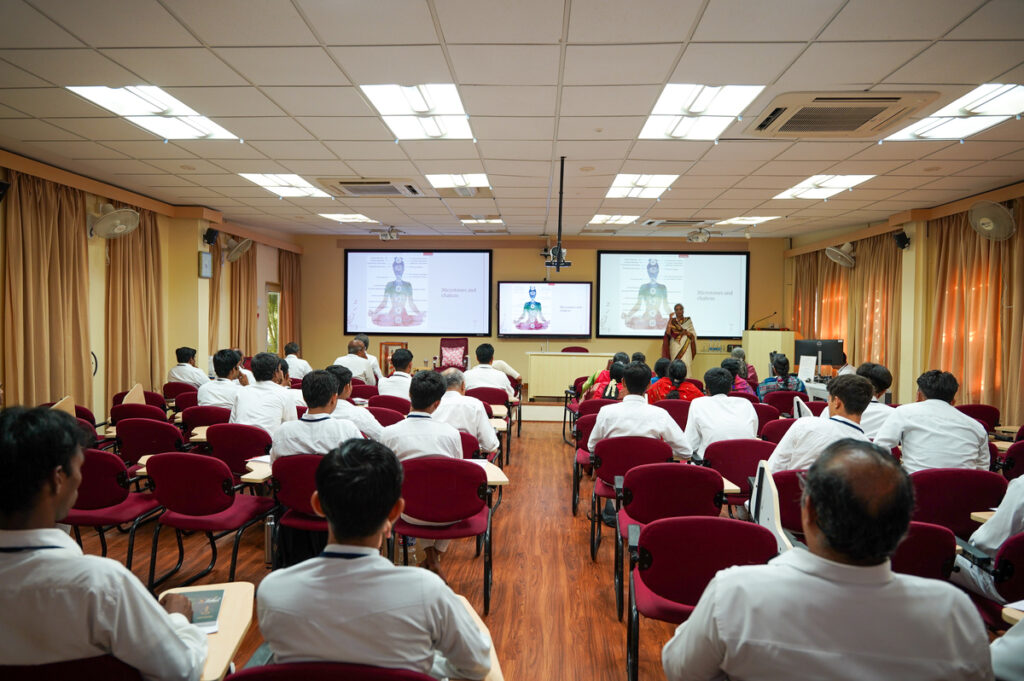

The Department of Performing Arts, Sri Sathya Sai Institute of Higher Learning (SSSIHL), conducted a one-day workshop on “Voice Culture & Therapeutic Value of Indian Music” at the Prasanthi Nilayam Campus.
The workshop witnessed enthusiastic participation from faculty, students, and alumni across SSSIHL campuses, with attendees joining both offline and online.
The Revered Chancellor of SSSIHL, Sri K Chakravarthi, graced the occasion as the Chief Guest. The event was also attended by Prof. R Raghunatha Sarma, Director of the Prasanthi Nilayam Campus, Prof. P.L. Rani, Dean, Humanities & Social Sciences and Languages & Literature, and Dr. G Raghavender Raju, the Dean of Student Welfare.
Session I: Voice Production Techniques & Voice Care
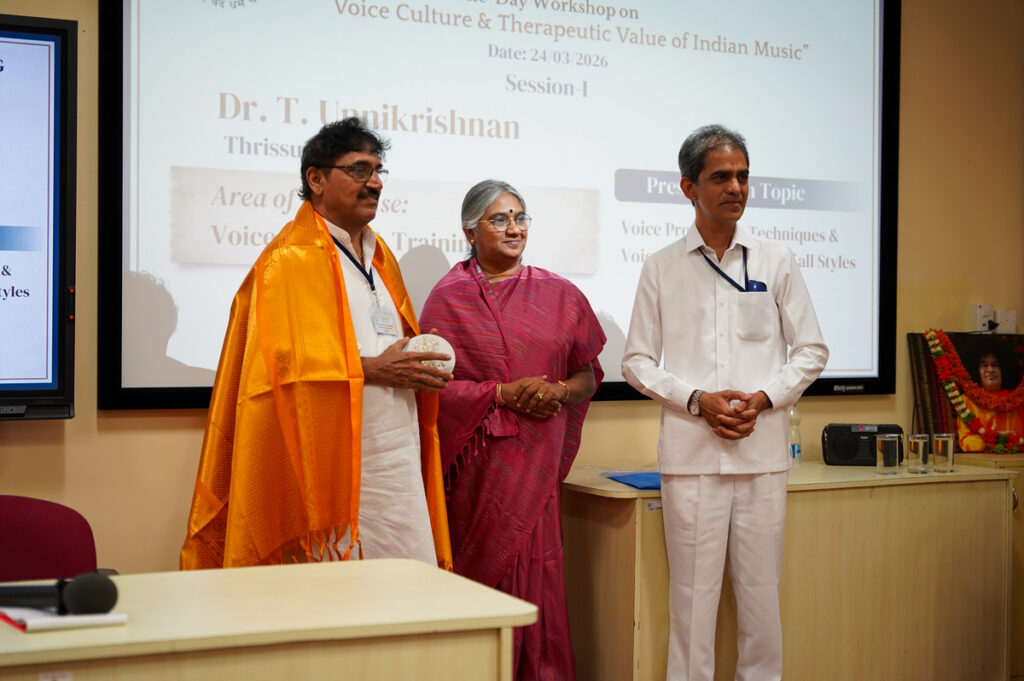
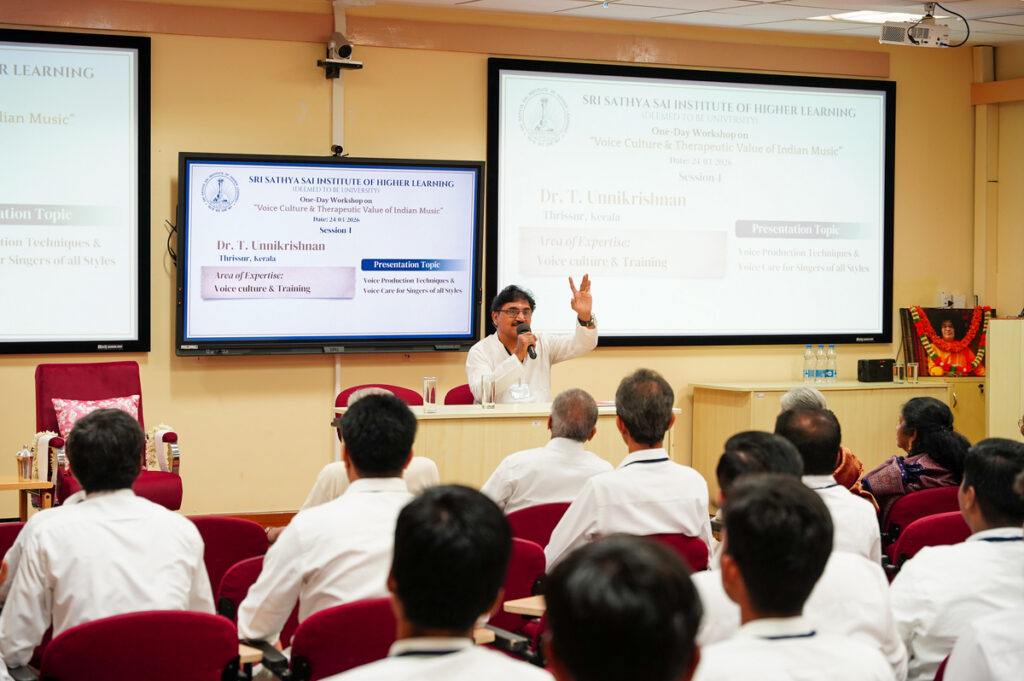
The first session was delivered by Dr. T Unnikrishnan, an internationally reputed voice trainer, on the topic “Voice Production Techniques & Voice Care for Singers of all Styles.”
Dr. Unnikrishnan shared valuable insights into voice training methods tailored for both Indian classical and light music. Through practical demonstrations, he elaborated on techniques to enhance clarity, speed, and the sanctity of pronunciation. He emphasized the importance of proper breathing techniques and dietary discipline in maintaining vocal health.
Highlighting the nuances of devotional singing, he demonstrated variations using the Sai bhajan “Anupama Sundara Nanda Kishora”, illustrating how subtle modulations can evoke different emotional expressions. He also explained the ethics and techniques of singing with a microphone. The session concluded with an engaging interaction, where he addressed queries from both offline and online participants.
Session II: Indian Classical Music for Therapeutic Interventions
The second session was conducted by Dr. Rajam Shanker on “Indian Classical Music for Therapeutic Interventions.”
Dr. Rajam began by tracing the origins of music therapy to the Vedic period, highlighting its historical significance in healing practices. She elaborated on her current practice, Nada Anusandana, which focuses on eliciting resonant responses from the body’s energy centres (chakras) to support and enhance the healing process.
She explained that music therapy integrates principles from astrology, Ayurveda, and yoga. The session provided insights into the application of musical notes (Sa to Ni) in relation to the seven chakras and their therapeutic implications.
The session was highly interactive, with participants engaging in identifying ragas across both Carnatic and Hindustani traditions. Music students, in particular, responded enthusiastically. Dr. Rajam emphasized that music therapy is an evolving and increasingly accepted complementary approach, requiring continuous study, evaluation, and documentation. She also addressed questions from participants across both modes.
Conclusion
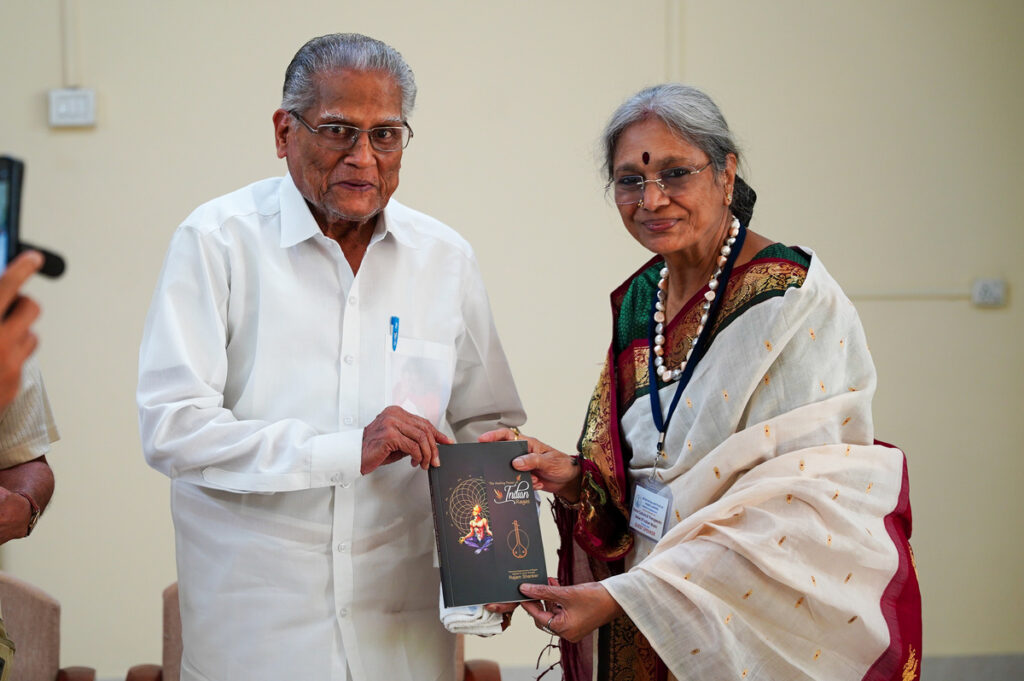
The workshop concluded with the felicitation of the esteemed speakers, followed by a vote of thanks and Mangala Arati.
The sessions provided a holistic perspective on voice culture and the therapeutic dimensions of Indian music, enriching participants with both practical techniques and deeper conceptual understanding.