
Day 3: Rediscovering the Self and Carrying the Light Within
The third and final day of the Summer Course in Bhāratīya Culture and Spirituality 2026, organised by the Centre for Sri Sathya Sai Studies, Sri Sathya Sai Institute of Higher Learning (SSSIHL), brought the three-day programme to an inspiring conclusion at Prasanthi Nilayam. Centred on the theme “Antar Jāgaraṇa – Inner Awakening: The Guiding Light in Life’s Journey,” the concluding sessions encouraged students to pursue self-enquiry, cultivate humility, and translate spiritual wisdom into purposeful living.
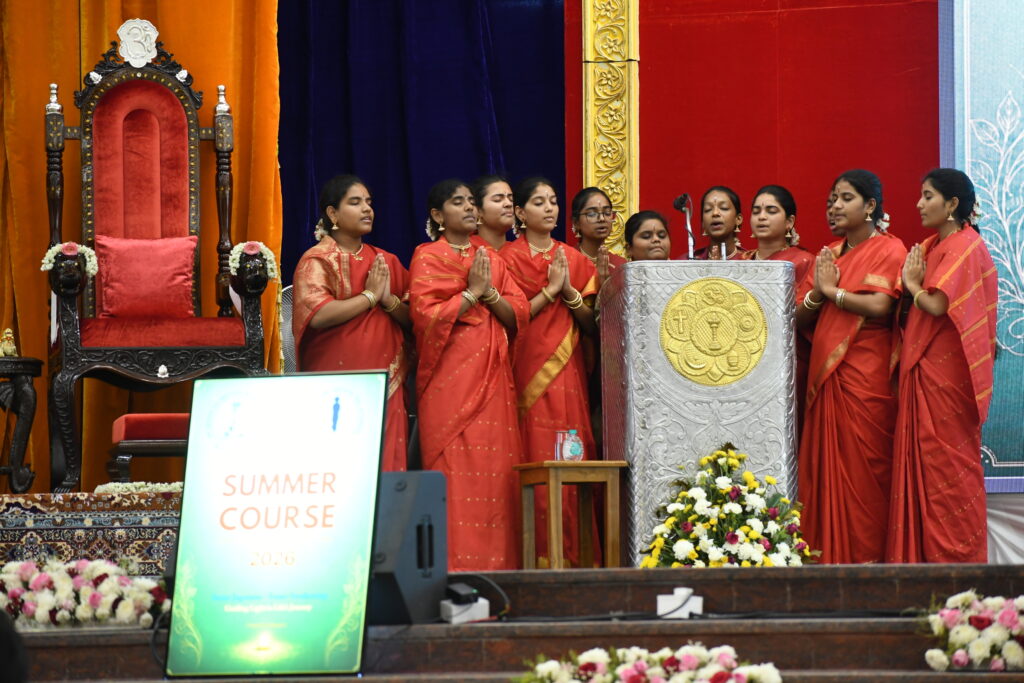
The morning programme at the Poornachandra Auditorium commenced with the sacred chanting of the Devī Sūktam by students of the Anantapur Campus, Sri Sathya Sai Higher Secondary School (Girls), and Sri Sathya Sai Easwaramma High School (Girls), invoking the Divine Mother and creating a serene atmosphere for reflection.
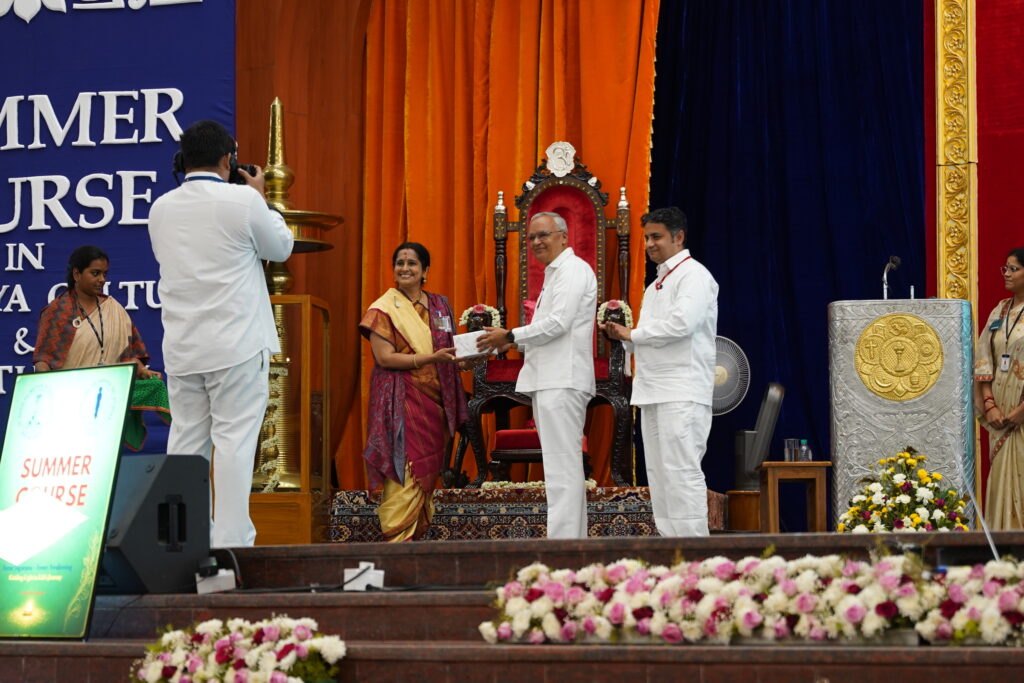
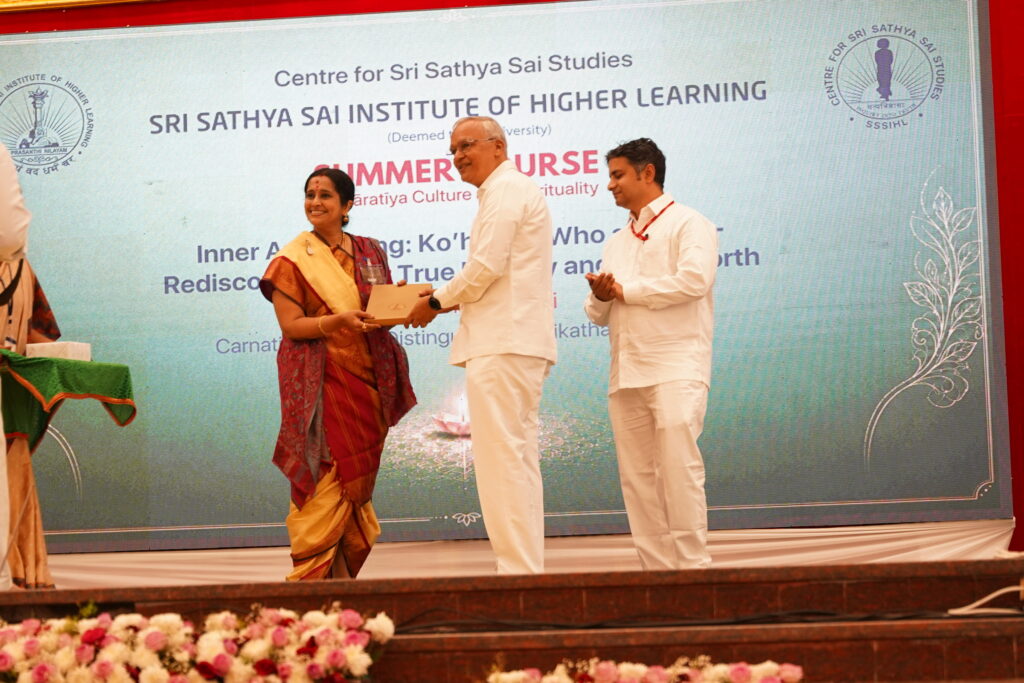
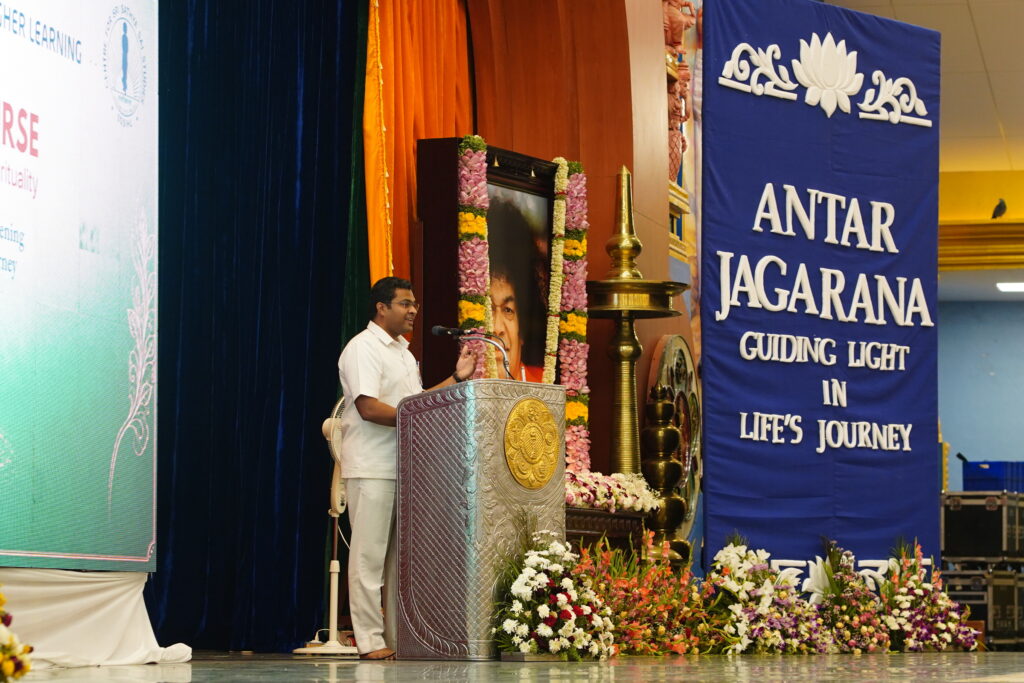
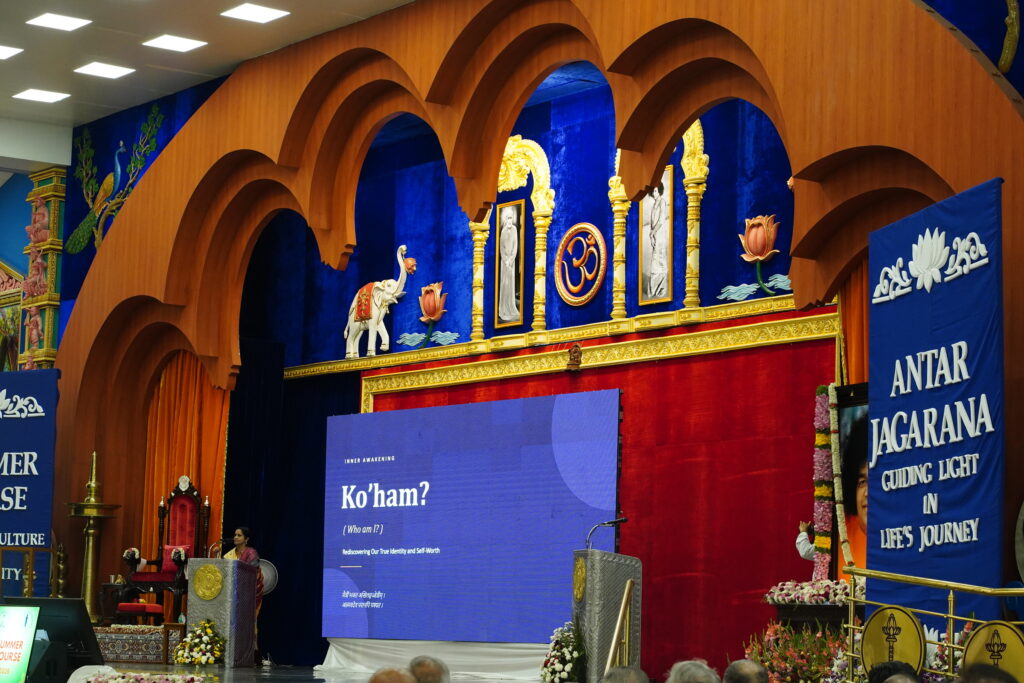
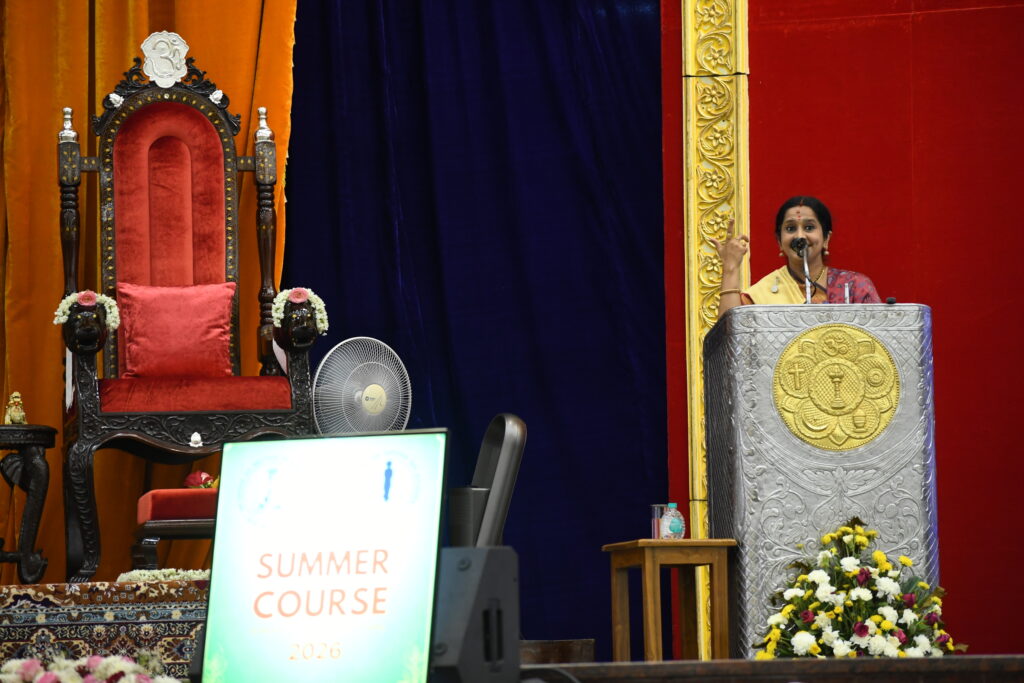
The first session featured Smt. Vishakha Hari, renowned Carnatic Vocalist and Distinguished Harikatha Exponent, who delivered an inspiring address on “Inner Awakening: Ko’ham? (Who am I?) – Rediscovering Our True Identity and Self-Worth.” Blending the timeless tradition of Harikatha with soulful musical renderings and scriptural narratives, she guided students through one of humanity’s most fundamental questions—“Who am I?” She explained that true inner awakening begins with self-enquiry and surrender to the Divine, especially during moments of confusion and uncertainty. Emphasising drudha vishwasa—complete and unwavering faith in God—she observed that such conviction arises only when the senses are disciplined and the restless mind is quietened. In the present age of Kali Yuga, she said, Namasankeerthana remains one of the most powerful means to silence the mind and experience the Divine within.
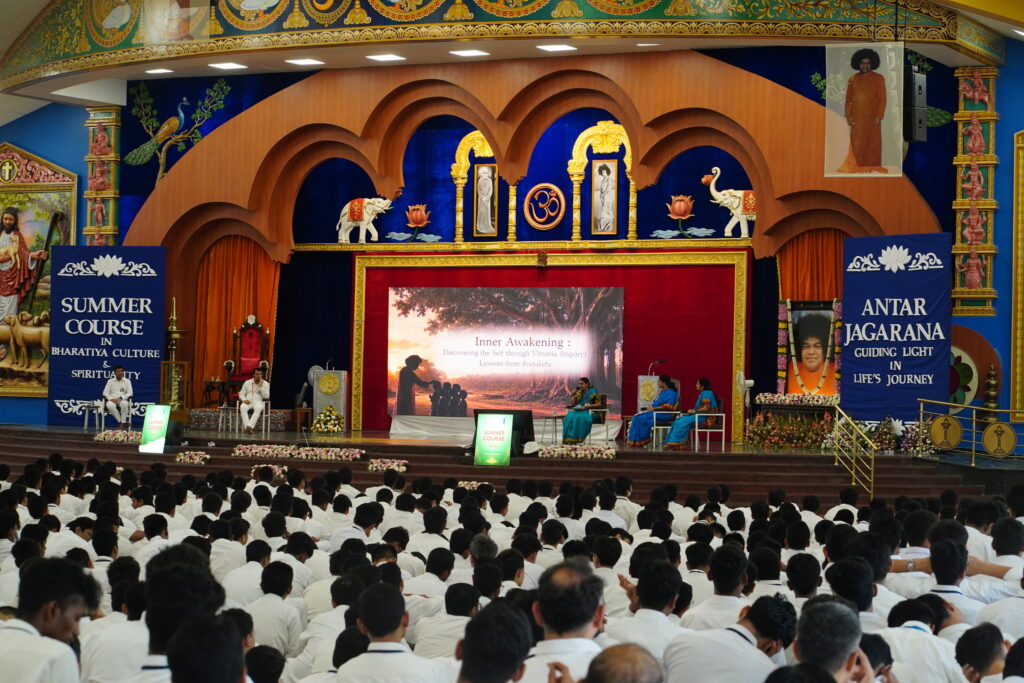
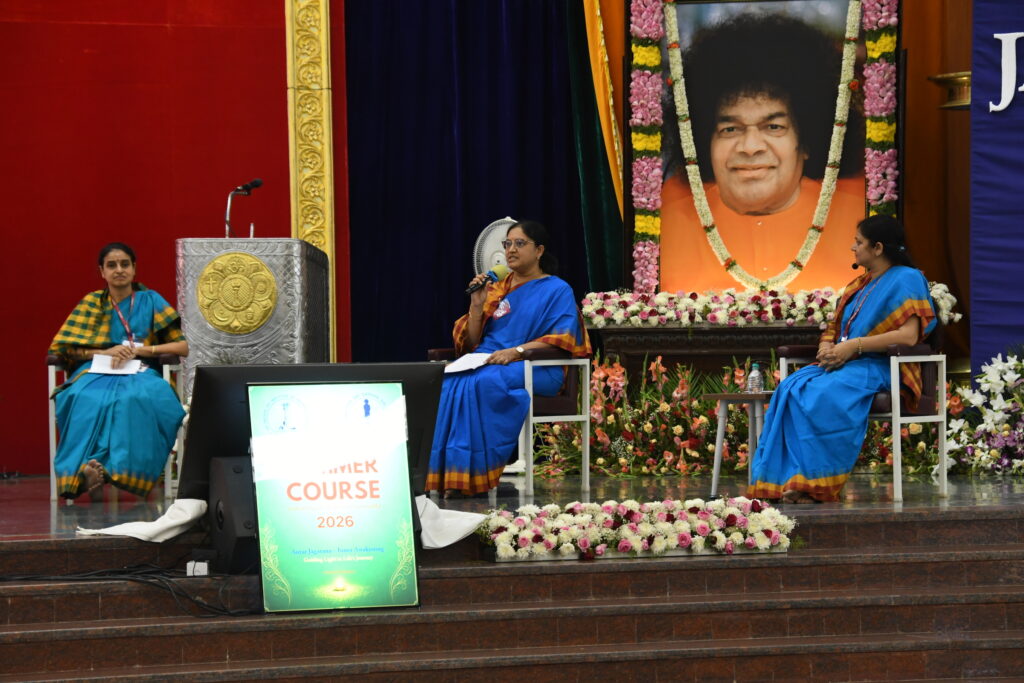
Following a short break, the programme continued with a case study presentation and discussion titled “Inner Awakening – Discovering the Self through Vimarśā (Inquiry): Lessons from Śvetaketu.” The session was moderated by Dr Maitali Khanna, Head, Department of Languages and Literature, SSSIHL.
The panel comprised Prof. Deepa Seetharaman, Professor, Department of Physics, SSSIHL; Ms Sai Archana M., Assistant Professor, Department of Languages and Literature, SSSIHL; Sri J. Prem Anosh, Sri Sathya Sai Media Centre; and Sri Vinod Cartic, Managing Trustee, Sai Krushna Charitable Trust and CEO, Catalyst Trainers.
Drawing upon the celebrated Upanishadic narrative of Śvetaketu, the panel explored the profound Mahāvākya, “Tat Tvam Asi” (Thou Art That), explaining that the ultimate purpose of education is the discovery of one’s own divine nature. The speakers reflected on Bhagawan Sri Sathya Sai Baba’s teaching that education must foster humility rather than arrogance, and that knowledge acquires true meaning only when it is used in the service of society. They highlighted Bhagawan’s insight that qualifications become skills only when applied selflessly for the welfare of others, enabling students to cultivate the ideal balance between confidence and humility.
Using the analogy of a tiny seed that invisibly contains the potential of an entire tree, the panel illustrated the Upanishadic truth that the entire universe emerges from the one Supreme Reality. The discussion encouraged students to move beyond intellectual understanding towards sincere enquiry, introspection, and the direct experience of their innate divinity.
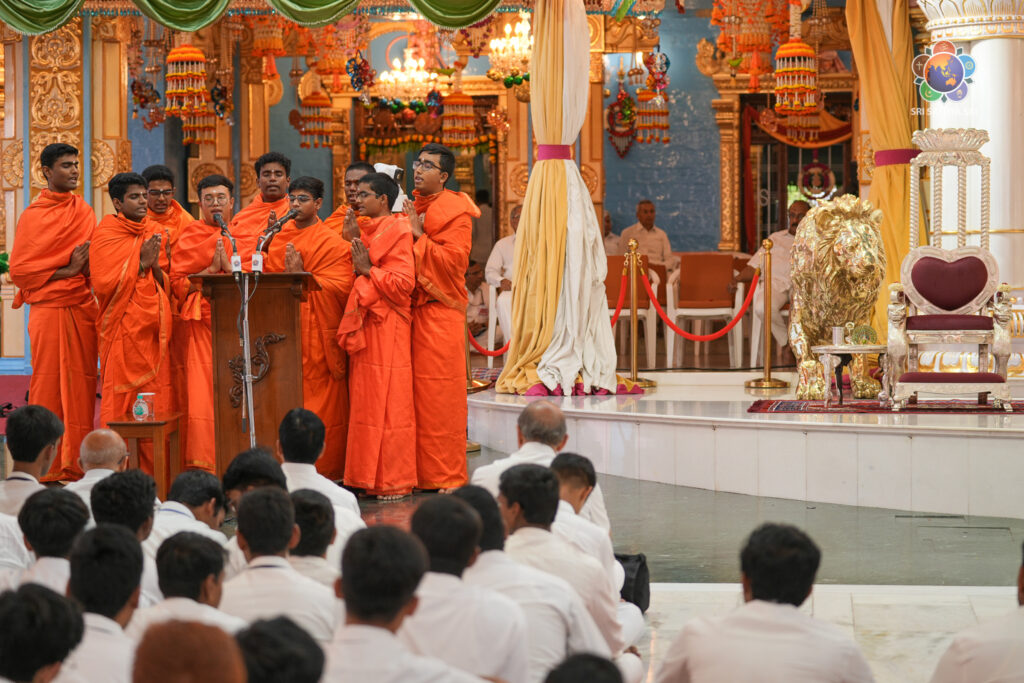
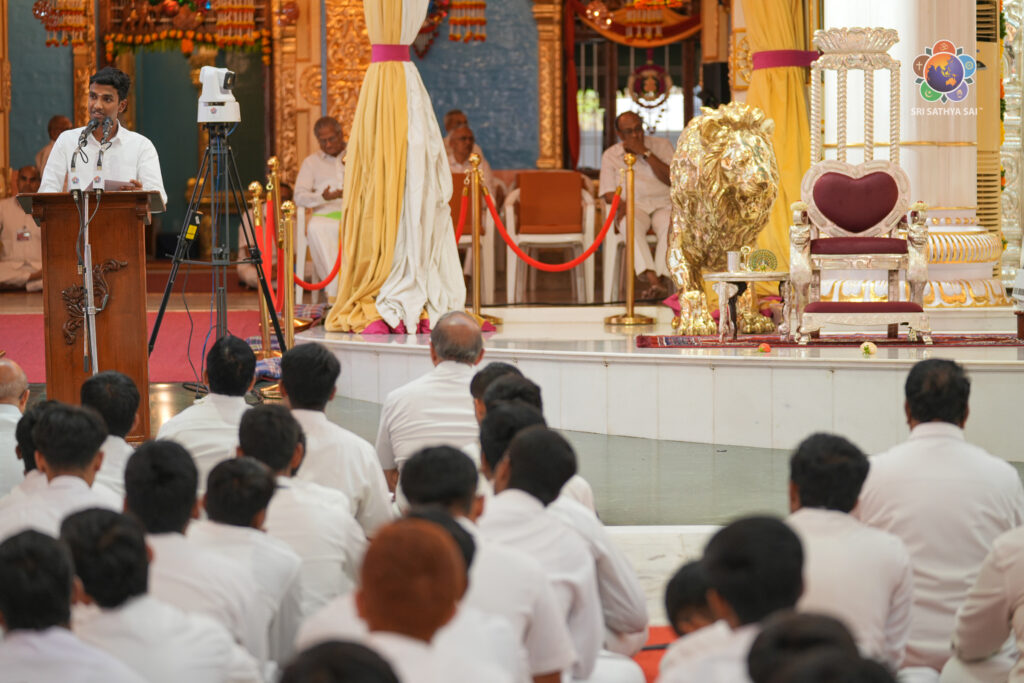
The evening programme at Sai Kulwant Hall began with Vedam chanting, followed by the Nārāyaṇa Upanishad rendered by students of the Nandigiri Campus. A summary of the day’s proceedings was presented by Sri Gowtham Jegathesan S., IV B.S. (Hons./Hons. with Research) in Computer Science, SSSIHL.
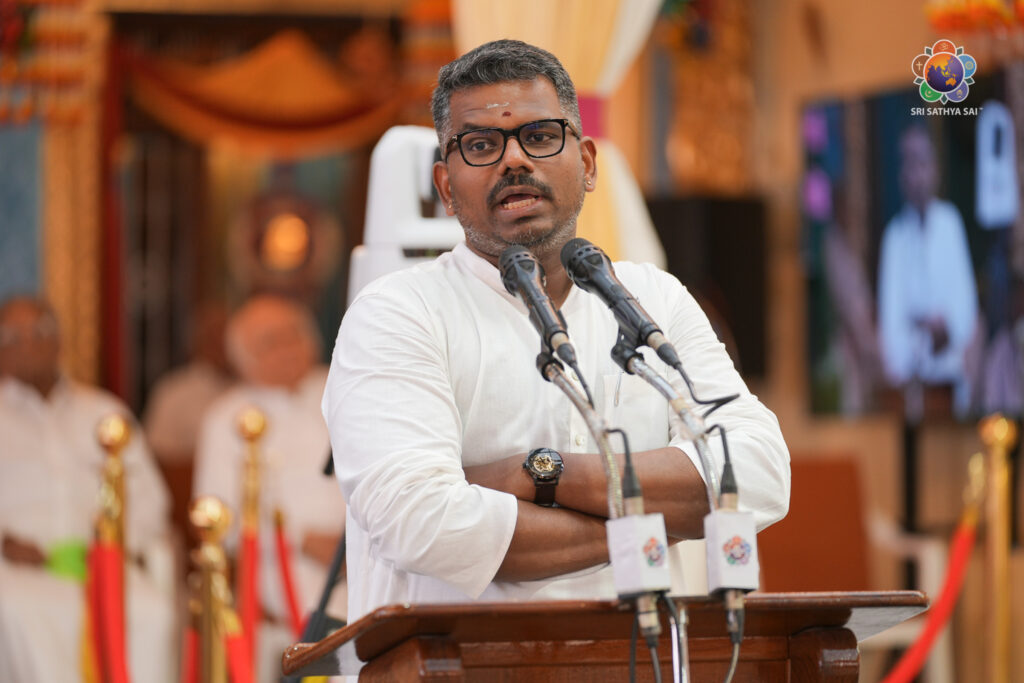
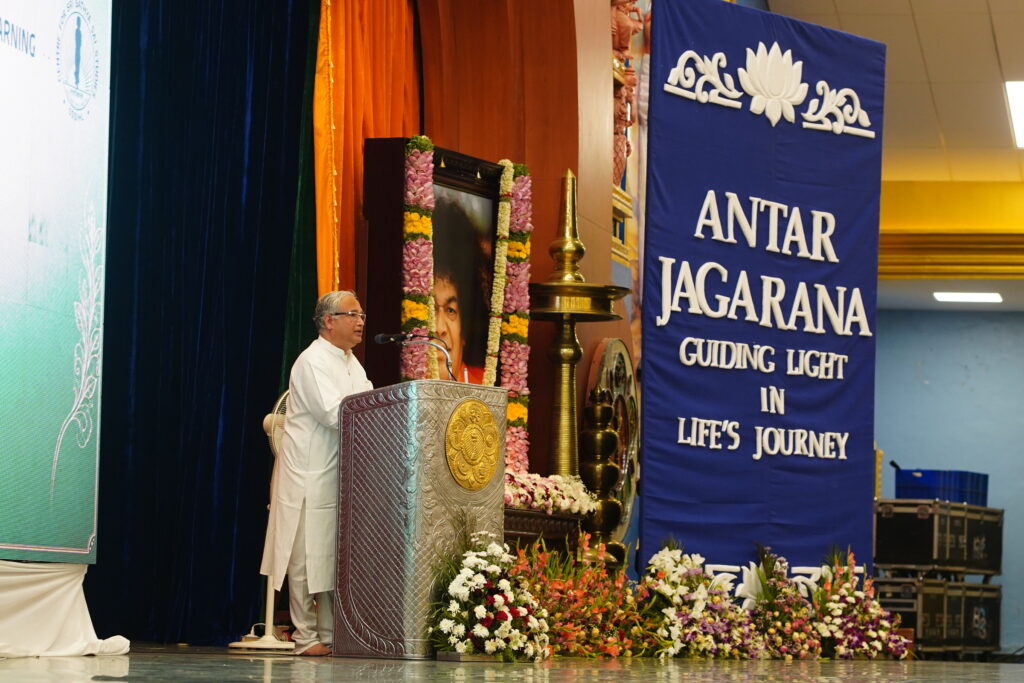
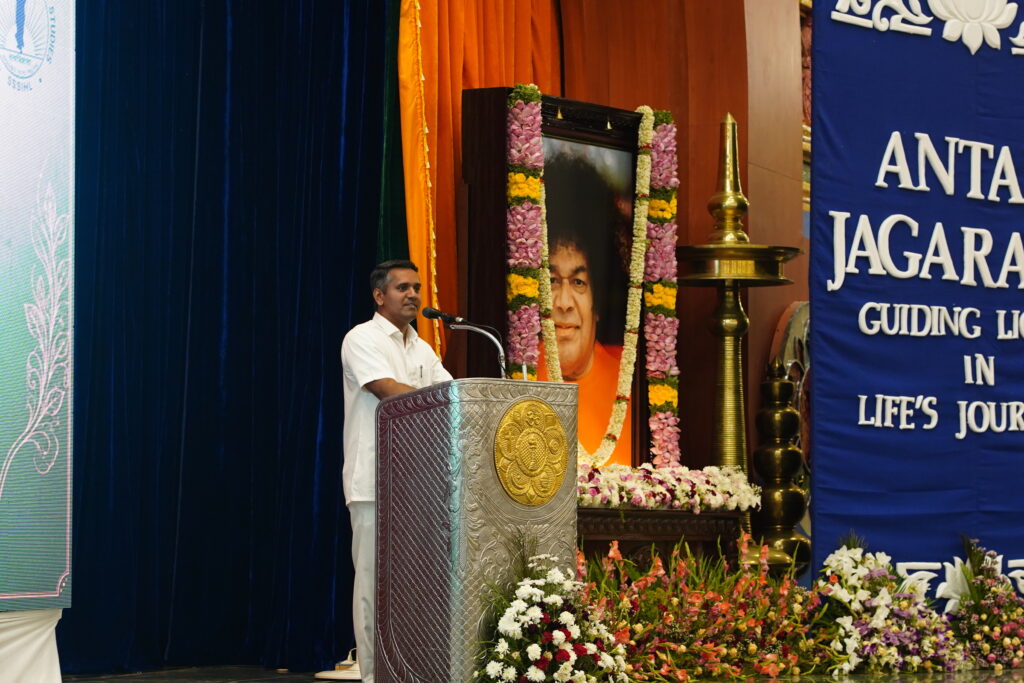
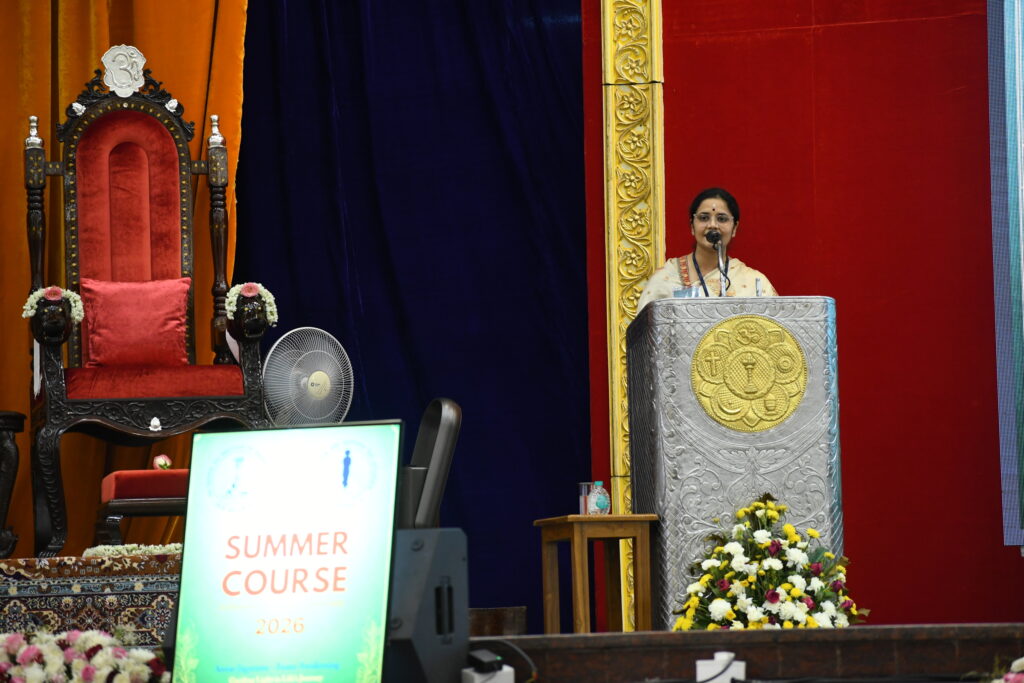
The Valedictory Session featured Sri J. Sai Deepak, Senior Advocate, Supreme Court of India and Delhi High Court, and Author, who delivered an inspiring address on “Inner Awakening – Unity in Diversity: Bhāratīya Wisdom for Global Harmony.”
Beginning on a deeply personal note, Sri Sai Deepak shared his own spiritual journey with Bhagawan Sri Sathya Sai Baba, describing how he evolved over nearly two decades from what he called “a relative agnostic to a complete believer.” Recalling childhood visits to Sai centres, Bhagawan’s visit to Delhi in 2010, and his pilgrimage to Prasanthi Nilayam following Bhagawan’s Mahasamadhi in 2011, he reflected on how he gradually recognised the silent yet profound influence of Bhagawan in shaping the defining decisions of his life.
Speaking on Bharat’s aspiration to emerge as a Vishwaguru, he distinguished ambition, which seeks personal importance, from aspiration, which seeks to make a positive difference in the lives of others. Comparing the Vedas to foundational research and the Shastras to applied research, he explained that while the Vedas reveal eternal truths, the Shastras demonstrate their practical application in everyday life.
Citing Bhagawan’s extraordinary service initiatives—including free hospitals, educational institutions, and drinking water projects—he illustrated that genuine spirituality naturally expresses itself through compassionate action. Encouraging students not to remain insulated within an “oasis of spirituality” while society faces numerous challenges, he urged them to engage confidently with the world, combining professional excellence with the values imbibed through Sai education. Concluding his address, he exhorted students to become agents of positive transformation by applying timeless Dharmic principles to contemporary challenges and contributing meaningfully to the progress of Bharat and the world.
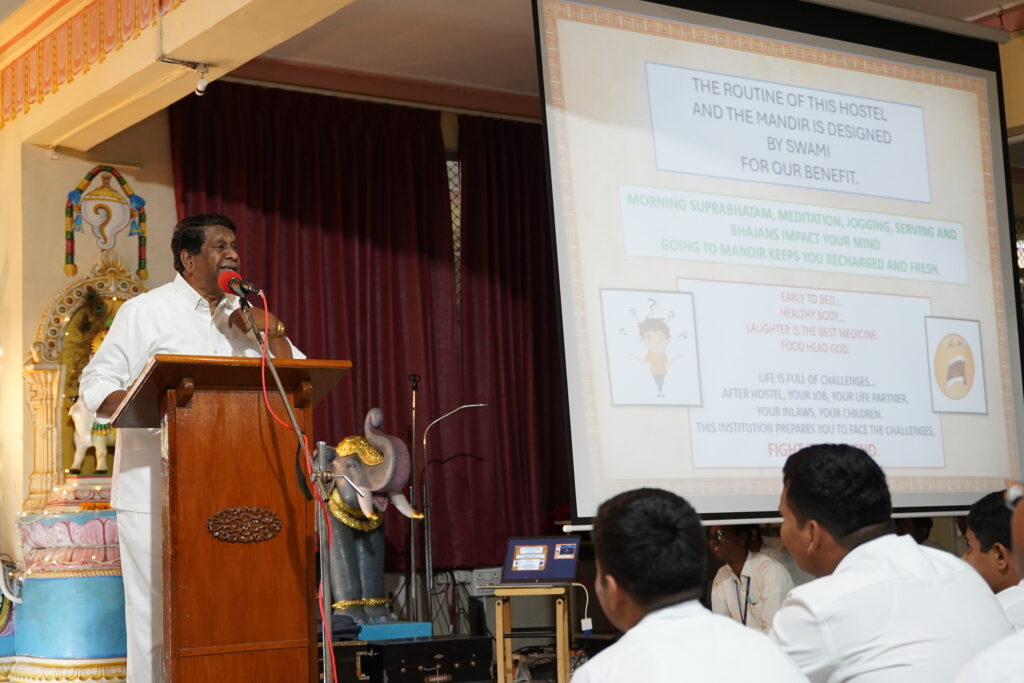
The three-day Summer Course concluded with Bhajans and Arati at Sai Kulwant Hall, followed later in the evening by a Satsang titled “Personal Reflections on the Guidance from Bhagawan Baba,” led by Prof. R. Raghunatha Sarma (SSSIHL) and Sri Sai Surendranath (SSSHSS).
As the Summer Course in Bhāratīya Culture and Spirituality 2026 drew to a close, students departed with far more than memories of inspiring lectures and discussions. Through reflective dialogues, scriptural insights, interactive case studies, and the living example of distinguished speakers, they were encouraged to internalise Bhagawan’s teachings and embark upon the lifelong journey of Antar Jāgaraṇa—awakening the divinity within. The programme reaffirmed that inner awakening is not an event confined to three days, but a continuous process of self-discovery, righteous living, selfless service, and unwavering faith that shapes one’s character and purpose throughout life.