Media for the Event
Schedule & Profiles of the event.
Press Release of the event.
Video recording of the event.


Schedule & Profiles of the event.
Press Release of the event.
Video recording of the event.
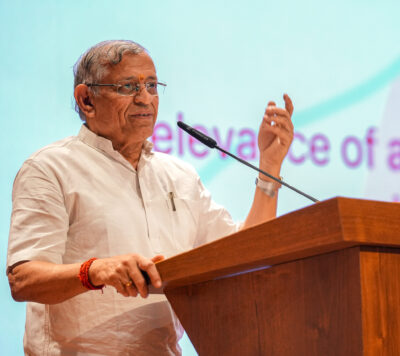
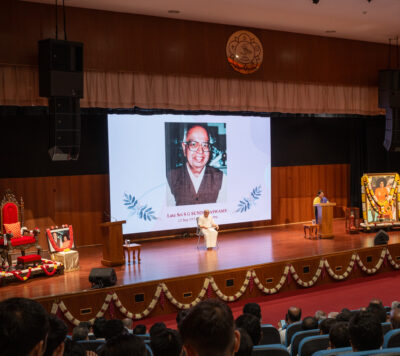
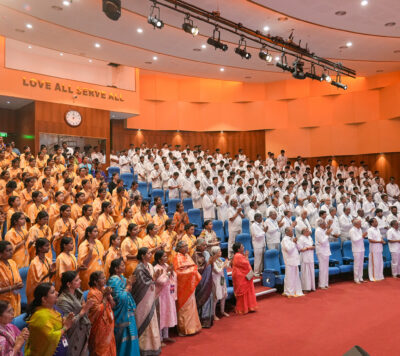
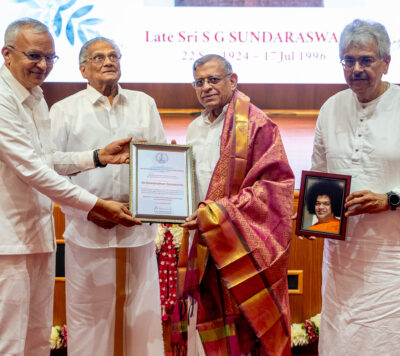
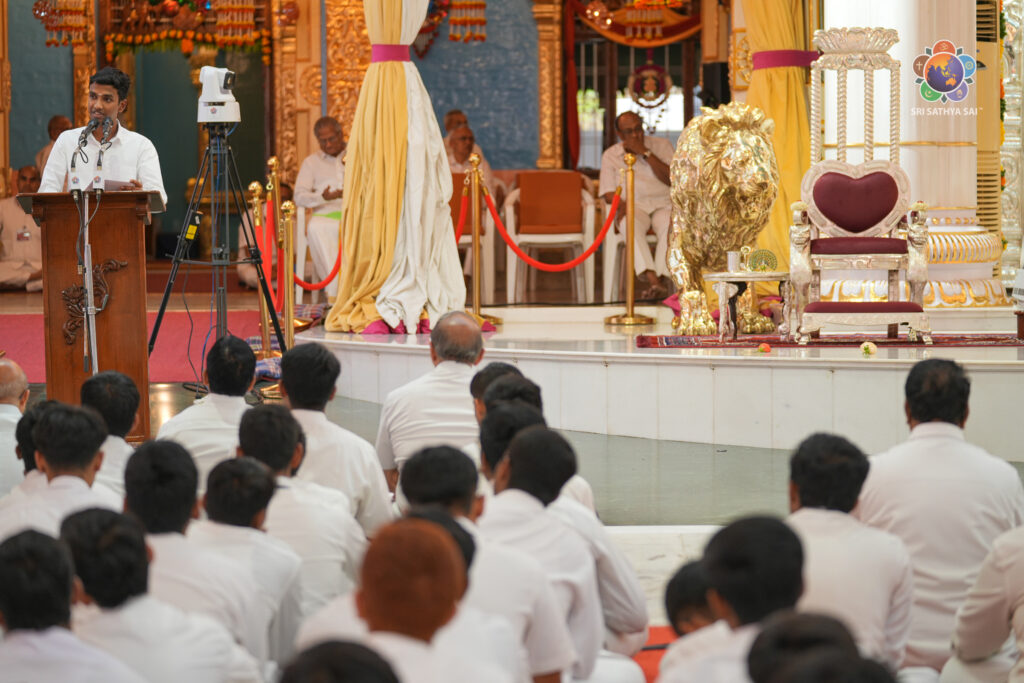
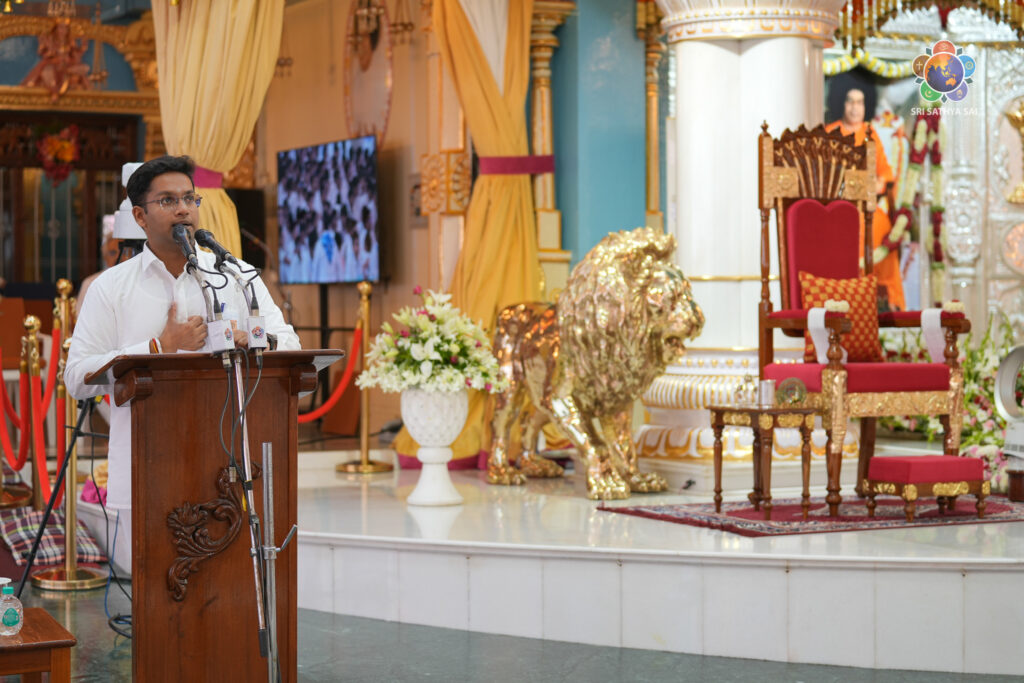
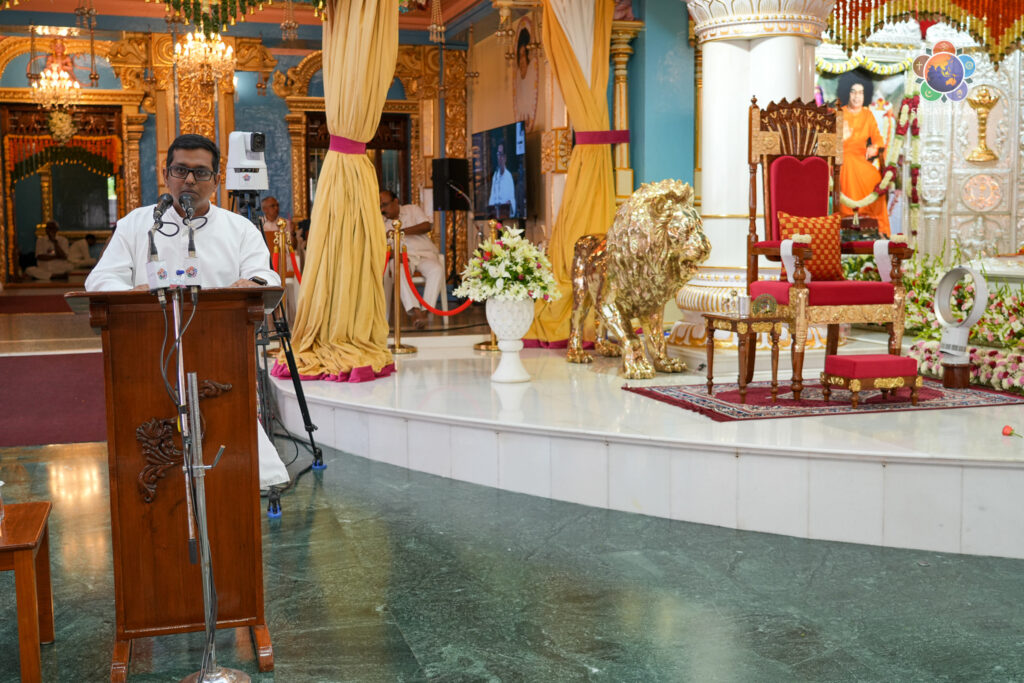
Journalist and corporate advisor Sri Swaminathan Gurumurthy delivered the Sri S G Sundaraswamy Memorial Lecture 2026 at the Sai Hira Global Convention Centre, Prasanthi Nilayam, on “Relevance of Ancient Indian Philosophical Thought to Contemporary Times”.
Held annually, the event is an endowment lecture commemorated in honour of the late Sri S G Sundaraswamy by his son, Sri S S Naganand, Trustee, Sri Sathya Sai Central Trust. It allows faculty and students to meet and learn from distinguished scholars and professionals. Funds from the endowment go towards expenses at Sri Sathya Sai Institute of Higher Learning (Deemed to be University).
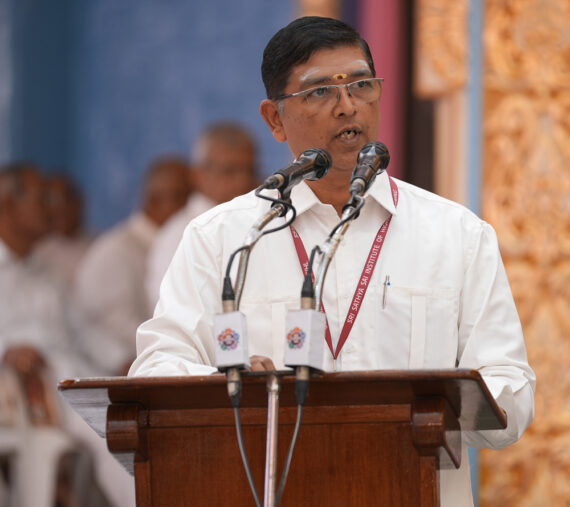
Sri Ritwik Chandra Pandey, Doctoral Research Scholar, Mathematics & Computer Science, SSSIHL was the Master of Ceremonies for the event. After a Welcome Address by Prof. U Suma, Chairperson, Centre for Sri Sathya Sai Studies, SSSIHL, Prof. Rani P L, Director, Anantapur Campus, SSSIHL set the context and requested Sri Swaminathan Gurumurthy to address the audience.
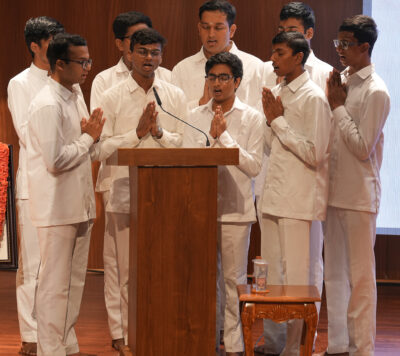
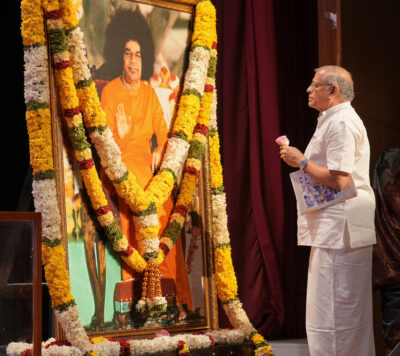
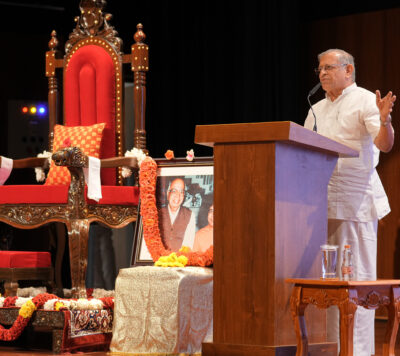
In his talk, Sri Gurumurthy explored the connections between Indian philosophy, modern science and artificial intelligence. Distinguishing knowledge from information, he emphasised the enduring relevance of India’s civilisational wisdom.
Through the themes of food, shelter and social security, he highlighted the role of family, community and shared responsibilities in sustaining society. Contrasting Western individual-centric models with India’s traditional social structures, he illustrated how families living together share duties and support one another.
He described Dharma as a framework of duties, ethics and interconnectedness that extends beyond ritualistic religion. Applying these principles to modern economics and governance, he argued, could promote long-term stability and social harmony over short-term material gain.
Sri Gurumurthy also delved into the origin of the universe and the concept of primordial sound as its beginning. “The Vedas are the means to connect with the cosmic sound – this intelligible sound,” he said. “The material universe was born out of this grand acoustic phenomenon, and the main teaching of our seers is that the gross is not real.”
“But merely believing is not enough. You have to understand. Hence, this stream of knowledge is passed on from one generation to another. This is how the Indian civilisation has survived and continues to thrive,” he concluded.
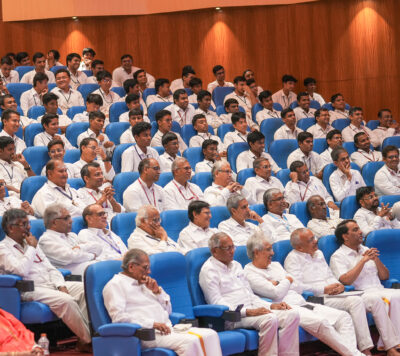
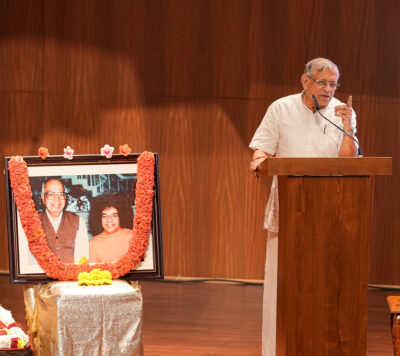
The event was attended by Sri Venu Srinivasan, Chairman Emeritus, TVS Motor Company and TVS Holdings; Sri K Chakravarthi IAS (Retd.), Chancellor, SSSIHL; Prof. B Raghavendra Prasad, Vice-Chancellor, SSSIHL; Dr Srikanth Khanna, Registrar, SSSIHL; Sri R J Rathnakar, Managing Trustee, Sri Sathya Sai Central Trust; Sri S S Naganand, Trustee, Sri Sathya Sai Central Trust, and his family; along with senior members of both trusts, faculty and students of SSSIHL.
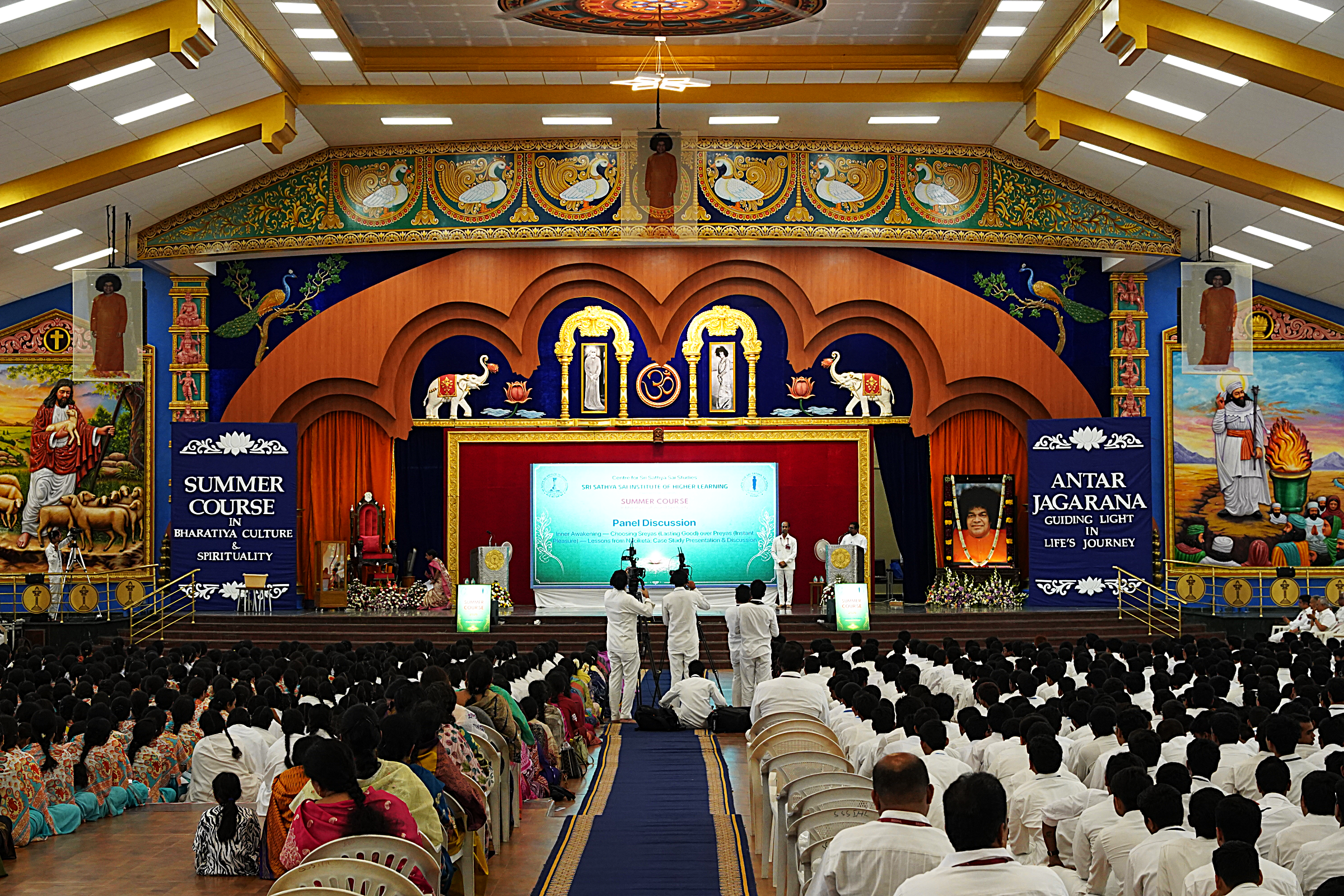
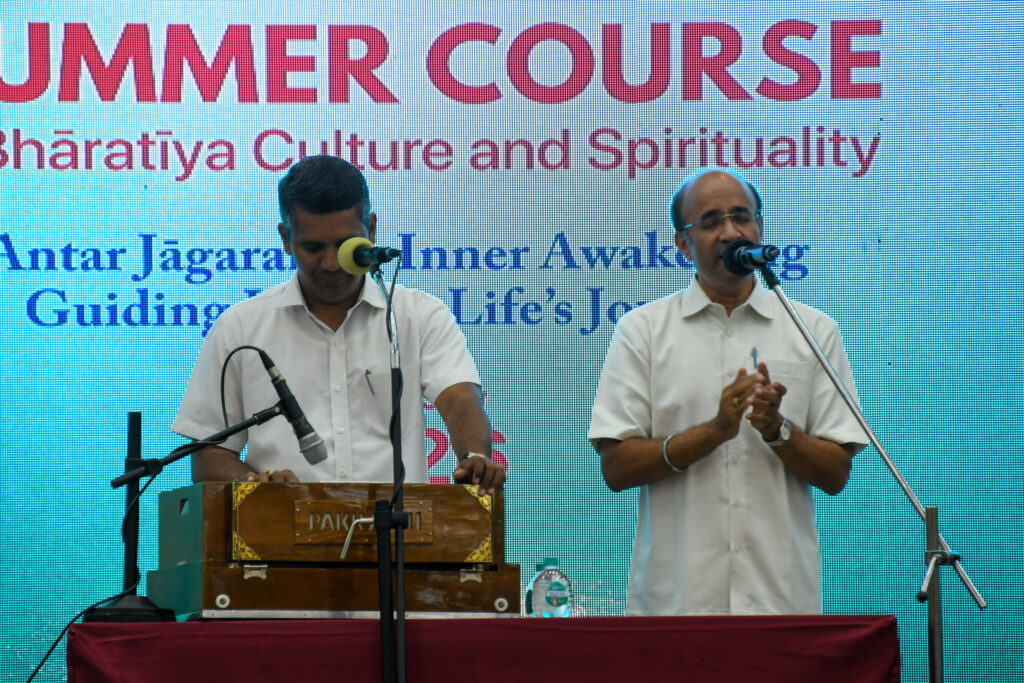
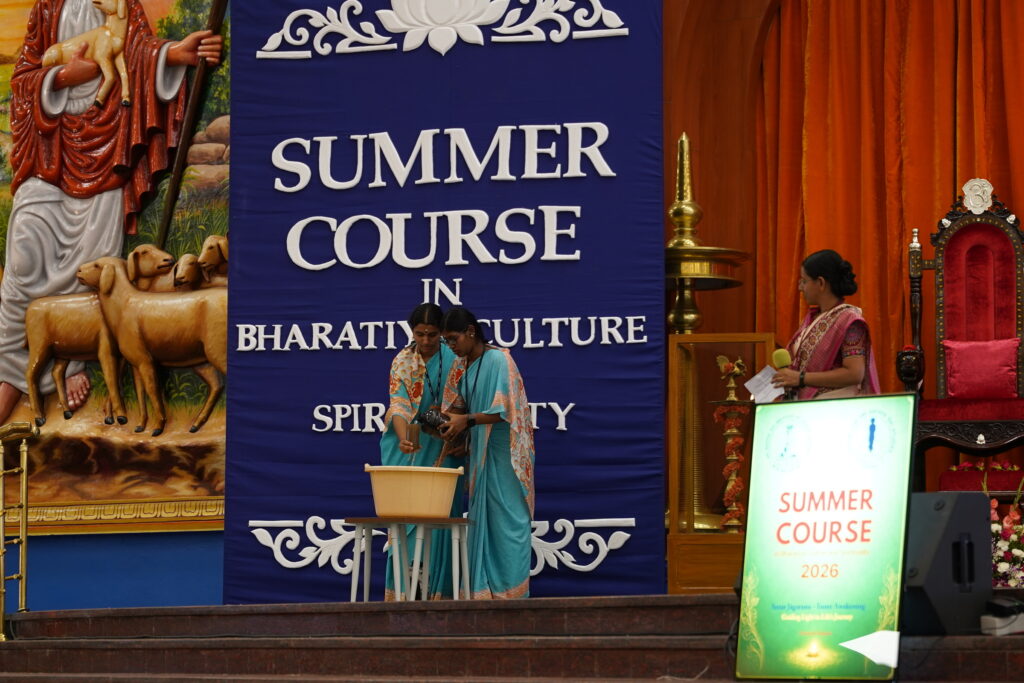
The Summer Course in Bhāratīya Culture and Spirituality 2026, organised by the Centre for Sri Sathya Sai Studies, Sri Sathya Sai Institute of Higher Learning (SSSIHL), concluded successfully after three days of inspiring discourses, interactive case studies, panel discussions, devotional sessions, and reflective learning. Instituted by Revered Founder Chancellor Bhagawan Sri Sathya Sai Baba in the early 1970s, the Summer Course continues to be a distinctive feature of SSSIHL’s Integral Education system, nurturing students through the harmonious integration of academic excellence, character development, and spiritual wisdom.
Held from 26–28 July 2026 at Prasanthi Nilayam, this year’s Summer Course centred on the theme “Antar Jāgaraṇa – Inner Awakening: The Guiding Light in Life’s Journey,” inviting students to embark on a lifelong journey of self-discovery, righteous living, and selfless service. The three-day event was attended by over 3000 students and staff of all SSSIHL campuses, XI-XII Std. students of Sri Sathya Sai Higher Secondary School (Girls and Boys Wings) and Smt. Eswaramma High School,
The three-day Summer Course was graced by Sri K. Chakravarthi, IAS (Retd.), Chancellor, SSSIHL; Prof. B. Raghavendra Prasad, Vice-Chancellor, SSSIHL; Dr Srikanth Khanna, Registrar, SSSIHL; and Dr G. S. Srirangarajan, Controller of Examinations, SSSIHL.
The programme was honoured by the presence of Sri R. J. Rathnakar, Managing Trustee, Sri Sathya Sai Central Trust, and senior members of the Sri Sathya Sai Central Trust (SSSCT), Sri Sathya Sai Seva Organisations (SSSSO), Sri Sathya Sai Global Council (SSSGC). Senior functionaries of the Sai institutions and organisations, senior faculty members and staff of the Institute and its Schools also participated in the programme.
The Summer Course commenced with addresses by Dr Srikanth Khanna, Registrar, SSSIHL, Dr G. S. Srirangarajan, Co-Chairperson, Centre for Sri Sathya Sai Studies and Controller of Examinations, SSSIHL, and Sri R. J. Rathnakar, Managing Trustee, Sri Sathya Sai Central Trust, who set the context for the theme and reaffirmed Bhagawan’s vision of values-based integral education. The keynote address by Sri Amol Anil Muzumdar, Head Coach of the Indian Women’s Cricket Team, explored Inner Awakening and Inner Resilience, while an interactive case study on “Choosing Śreyas over Preyas: Lessons from Naciketā” encouraged students to choose lasting good over fleeting pleasure.
Read:Day 1 report and photographs→ https://www.sssihl.edu.in/summer-course-2026-day-1/
The second day focused on the transformative power of Abhyāsa (practice) and Dharma. A case study on “Inner Awakening and Abhyāsa: Lessons from Lord Hanuman”, moderated by Dr Sai Shyam, featured Dr V. Bhaskaran, Dr K. J. Srinivas, Dr Priyamvada C., and Sri Sai Ganesh Muthuraman, Software Engineer, Google.
The evening panel at Sai Kulwant Hall, moderated by Prof. Rani P. L., brought together Ms Sai Swaroopa Iyer, Ms Sai Geetha M. N., Dr Lathasree, and Ms Vidyulatha Narayan, who reflected on “Dharma as the Compass for Daily Life” and its relevance in personal and professional life.
Read: Day 2 report and photographs → https://www.sssihl.edu.in/summer-course-2026-day-2/
View: Day 2 Proceedings from Sai Kulwant Hall
The concluding day explored the timeless questions of identity and purpose. Smt. Vishakha Hari, Carnatic Vocalist and Distinguished Harikatha Exponent, delivered a deeply inspiring discourse on “Ko’ham? (Who am I?) – Rediscovering Our True Identity and Self-Worth.” This was followed by a case study on Śvetaketu, moderated by Dr Maitali Khanna, featuring Prof. Deepa Seetharaman, Ms Sai Archana M., Sri J. Prem Anosh, and Sri Vinod Cartic, which explored the Mahāvākya Tat Tvam Asi and the role of humility in true education.
The valedictory address by Sri J. Sai Deepak, Senior Advocate, Supreme Court of India and Delhi High Court, and Author, inspired students to apply Bhāratīya wisdom and Dharmic values in addressing contemporary challenges and contributing to nation-building.
Read: Day 3 report and photographs → https://www.sssihl.edu.in/summer-course-2026-day-3/
View: Day 3 Proceedings from Sai Kulwant Hall
Across three days, the Summer Course brought together eminent scholars, educators, professionals, industry leaders, and spiritual practitioners, offering students a unique opportunity to engage with India’s timeless wisdom traditions through lectures, case studies, discussions, devotional programmes, Vedam, bhajans, and workshops. The sessions reinforced Bhagawan Sri Sathya Sai Baba’s vision that education must culminate in character, compassion, and selfless service.
As students return to their respective campuses, they carry with them not merely the memories of three enriching days, but a renewed resolve to practise the values they have reflected upon.
The Summer Course reaffirmed that Antar Jāgaraṇa—Inner Awakening—is not a destination, but a lifelong journey of self-discovery, righteous living, and dedicated service to society, enabling each individual to become a beacon of light in the world.
Event Page – https://www.sssihl.edu.in/summer-course-2026/
Schedule: https://www.sssihl.edu.in/sssihl-summer-course-2026-event-schedule/
Read MoreThe third and final day of the Summer Course in Bhāratīya Culture and Spirituality 2026, organised by the Centre for Sri Sathya Sai Studies, Sri Sathya Sai Institute of Higher Learning (SSSIHL), brought the three-day programme to an inspiring conclusion at Prasanthi Nilayam. Centred on the theme “Antar Jāgaraṇa – Inner Awakening: The Guiding Light in Life’s Journey,” the concluding sessions encouraged students to pursue self-enquiry, cultivate humility, and translate spiritual wisdom into purposeful living.
The morning programme at the Poornachandra Auditorium commenced with the sacred chanting of the Devī Sūktam by students of the Anantapur Campus, Sri Sathya Sai Higher Secondary School (Girls), and Sri Sathya Sai Easwaramma High School (Girls), invoking the Divine Mother and creating a serene atmosphere for reflection.
The first session featured Smt. Vishakha Hari, renowned Carnatic Vocalist and Distinguished Harikatha Exponent, who delivered an inspiring address on “Inner Awakening: Ko’ham? (Who am I?) – Rediscovering Our True Identity and Self-Worth.” Blending the timeless tradition of Harikatha with soulful musical renderings and scriptural narratives, she guided students through one of humanity’s most fundamental questions—“Who am I?” She explained that true inner awakening begins with self-enquiry and surrender to the Divine, especially during moments of confusion and uncertainty. Emphasising drudha vishwasa—complete and unwavering faith in God—she observed that such conviction arises only when the senses are disciplined and the restless mind is quietened. In the present age of Kali Yuga, she said, Namasankeerthana remains one of the most powerful means to silence the mind and experience the Divine within.
Following a short break, the programme continued with a case study presentation and discussion titled “Inner Awakening – Discovering the Self through Vimarśā (Inquiry): Lessons from Śvetaketu.” The session was moderated by Dr Maitali Khanna, Head, Department of Languages and Literature, SSSIHL.
The panel comprised Prof. Deepa Seetharaman, Professor, Department of Physics, SSSIHL; Ms Sai Archana M., Assistant Professor, Department of Languages and Literature, SSSIHL; Sri J. Prem Anosh, Sri Sathya Sai Media Centre; and Sri Vinod Cartic, Managing Trustee, Sai Krushna Charitable Trust and CEO, Catalyst Trainers.
Drawing upon the celebrated Upanishadic narrative of Śvetaketu, the panel explored the profound Mahāvākya, “Tat Tvam Asi” (Thou Art That), explaining that the ultimate purpose of education is the discovery of one’s own divine nature. The speakers reflected on Bhagawan Sri Sathya Sai Baba’s teaching that education must foster humility rather than arrogance, and that knowledge acquires true meaning only when it is used in the service of society. They highlighted Bhagawan’s insight that qualifications become skills only when applied selflessly for the welfare of others, enabling students to cultivate the ideal balance between confidence and humility.
Using the analogy of a tiny seed that invisibly contains the potential of an entire tree, the panel illustrated the Upanishadic truth that the entire universe emerges from the one Supreme Reality. The discussion encouraged students to move beyond intellectual understanding towards sincere enquiry, introspection, and the direct experience of their innate divinity.
The evening programme at Sai Kulwant Hall began with Vedam chanting, followed by the Nārāyaṇa Upanishad rendered by students of the Nandigiri Campus. A summary of the day’s proceedings was presented by Sri Gowtham Jegathesan S., IV B.S. (Hons./Hons. with Research) in Computer Science, SSSIHL.
The Valedictory Session featured Sri J. Sai Deepak, Senior Advocate, Supreme Court of India and Delhi High Court, and Author, who delivered an inspiring address on “Inner Awakening – Unity in Diversity: Bhāratīya Wisdom for Global Harmony.”
Beginning on a deeply personal note, Sri Sai Deepak shared his own spiritual journey with Bhagawan Sri Sathya Sai Baba, describing how he evolved over nearly two decades from what he called “a relative agnostic to a complete believer.” Recalling childhood visits to Sai centres, Bhagawan’s visit to Delhi in 2010, and his pilgrimage to Prasanthi Nilayam following Bhagawan’s Mahasamadhi in 2011, he reflected on how he gradually recognised the silent yet profound influence of Bhagawan in shaping the defining decisions of his life.
Speaking on Bharat’s aspiration to emerge as a Vishwaguru, he distinguished ambition, which seeks personal importance, from aspiration, which seeks to make a positive difference in the lives of others. Comparing the Vedas to foundational research and the Shastras to applied research, he explained that while the Vedas reveal eternal truths, the Shastras demonstrate their practical application in everyday life.
Citing Bhagawan’s extraordinary service initiatives—including free hospitals, educational institutions, and drinking water projects—he illustrated that genuine spirituality naturally expresses itself through compassionate action. Encouraging students not to remain insulated within an “oasis of spirituality” while society faces numerous challenges, he urged them to engage confidently with the world, combining professional excellence with the values imbibed through Sai education. Concluding his address, he exhorted students to become agents of positive transformation by applying timeless Dharmic principles to contemporary challenges and contributing meaningfully to the progress of Bharat and the world.
The three-day Summer Course concluded with Bhajans and Arati at Sai Kulwant Hall, followed later in the evening by a Satsang titled “Personal Reflections on the Guidance from Bhagawan Baba,” led by Prof. R. Raghunatha Sarma (SSSIHL) and Sri Sai Surendranath (SSSHSS).
As the Summer Course in Bhāratīya Culture and Spirituality 2026 drew to a close, students departed with far more than memories of inspiring lectures and discussions. Through reflective dialogues, scriptural insights, interactive case studies, and the living example of distinguished speakers, they were encouraged to internalise Bhagawan’s teachings and embark upon the lifelong journey of Antar Jāgaraṇa—awakening the divinity within. The programme reaffirmed that inner awakening is not an event confined to three days, but a continuous process of self-discovery, righteous living, selfless service, and unwavering faith that shapes one’s character and purpose throughout life.
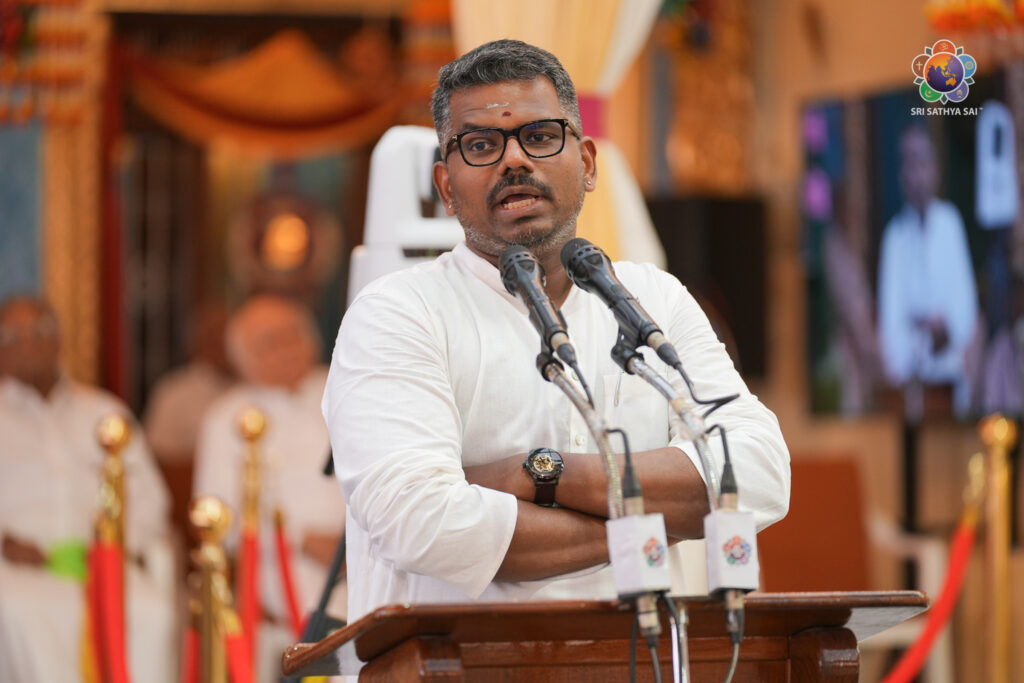
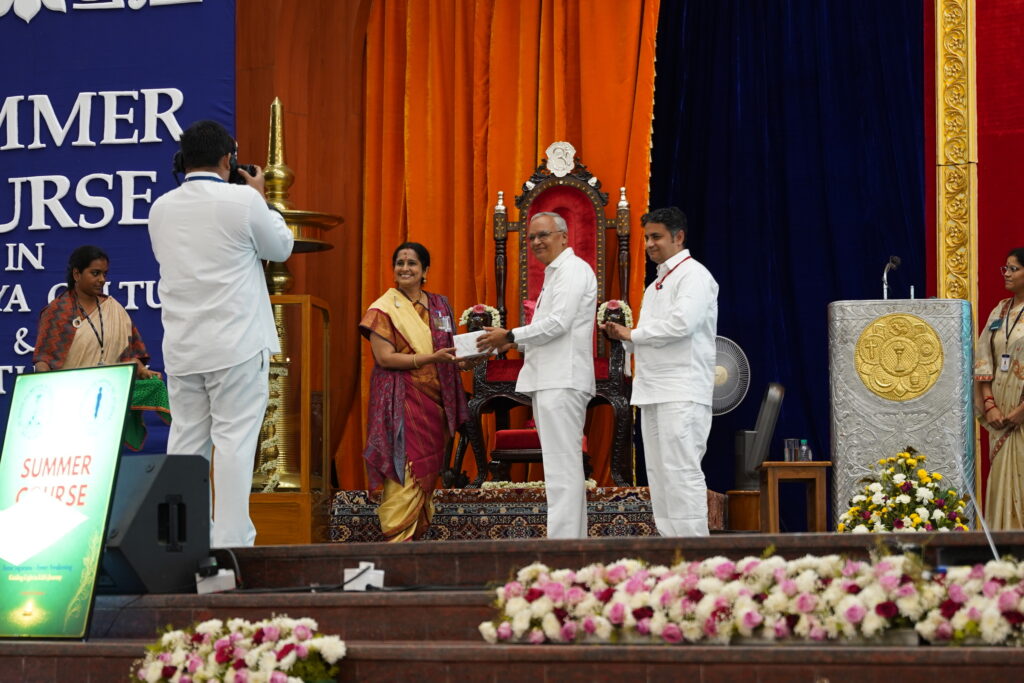
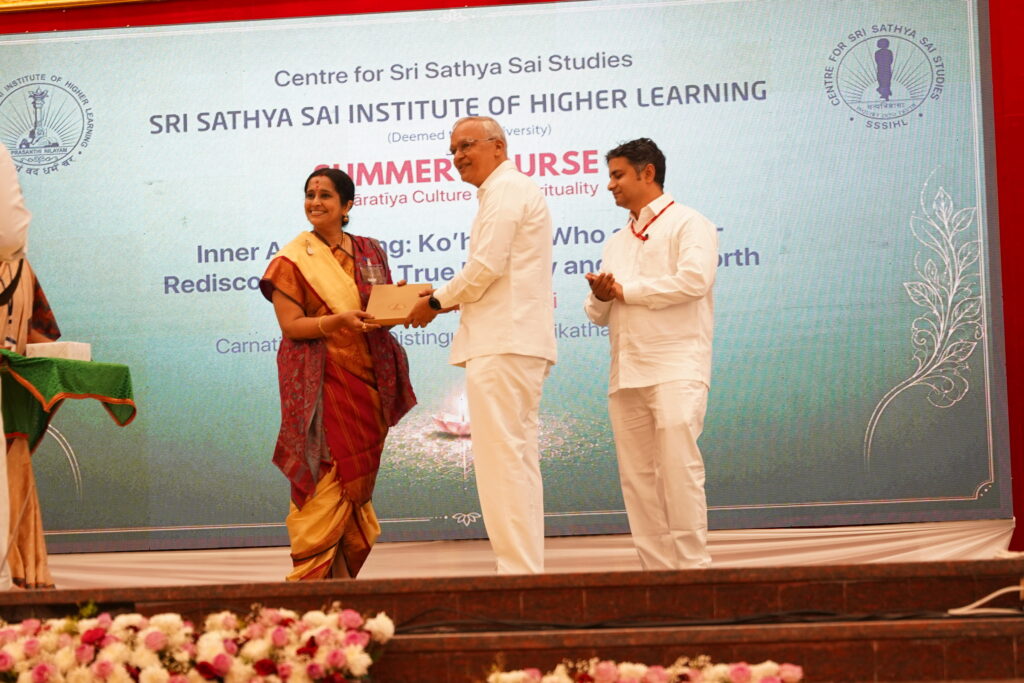
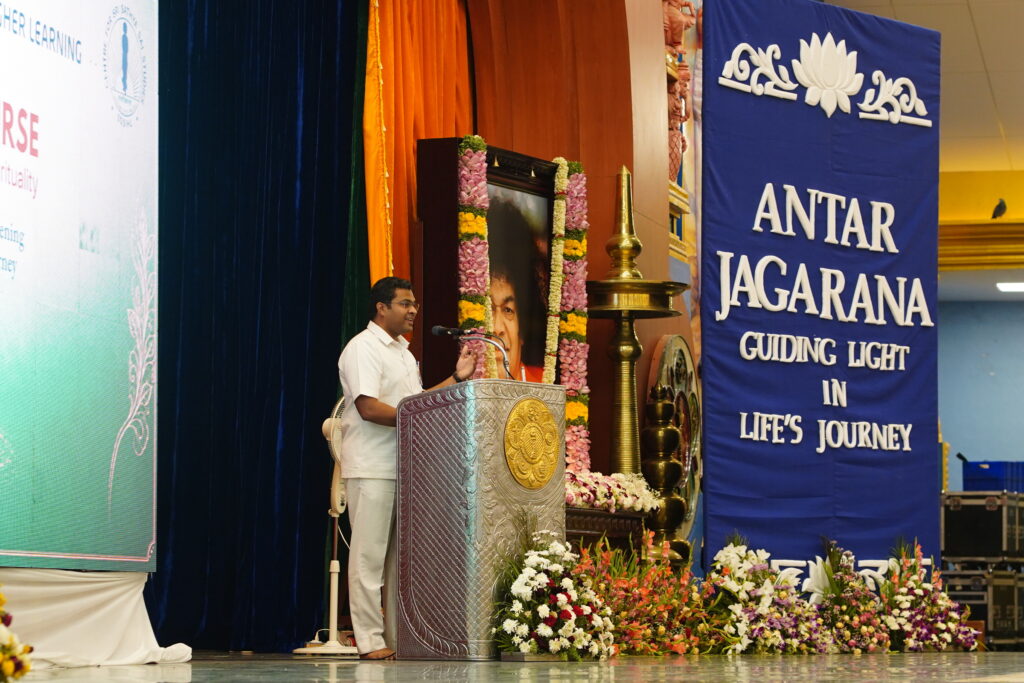
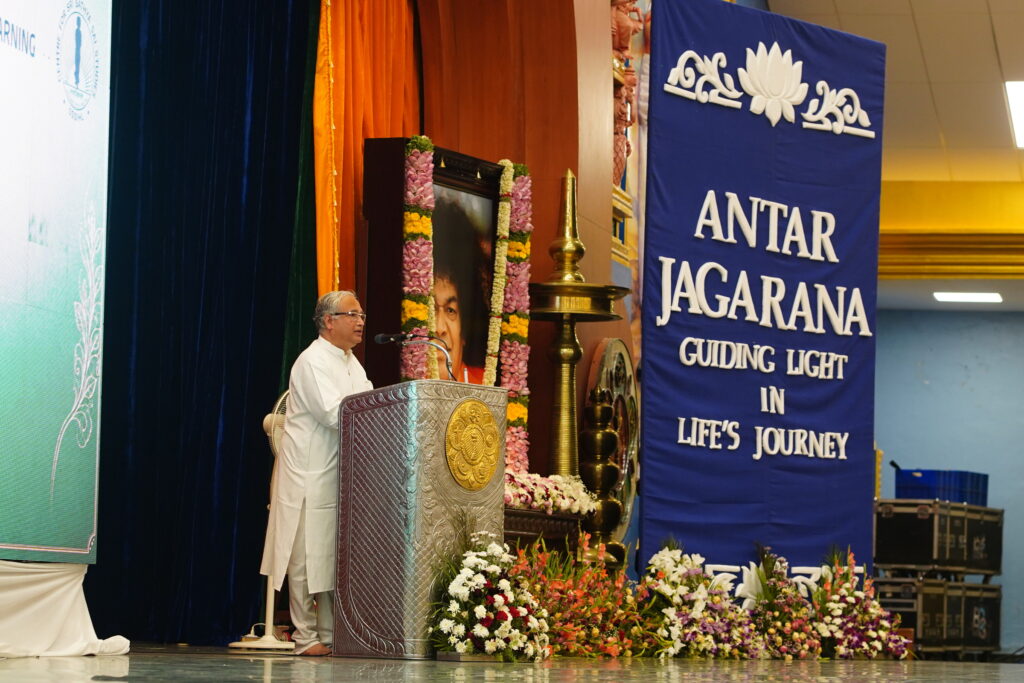
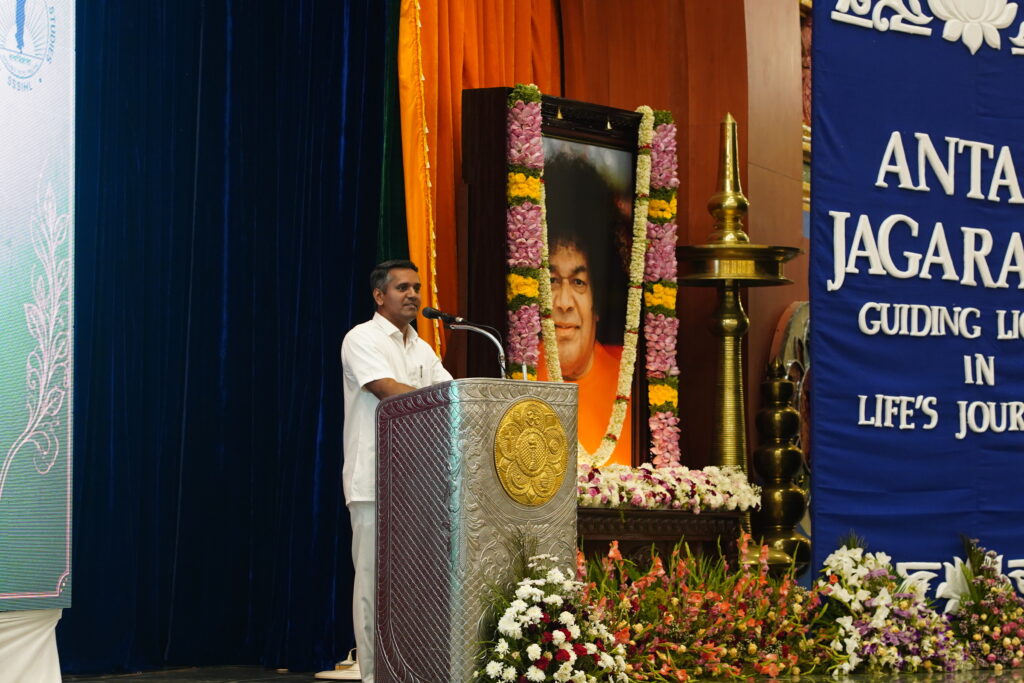
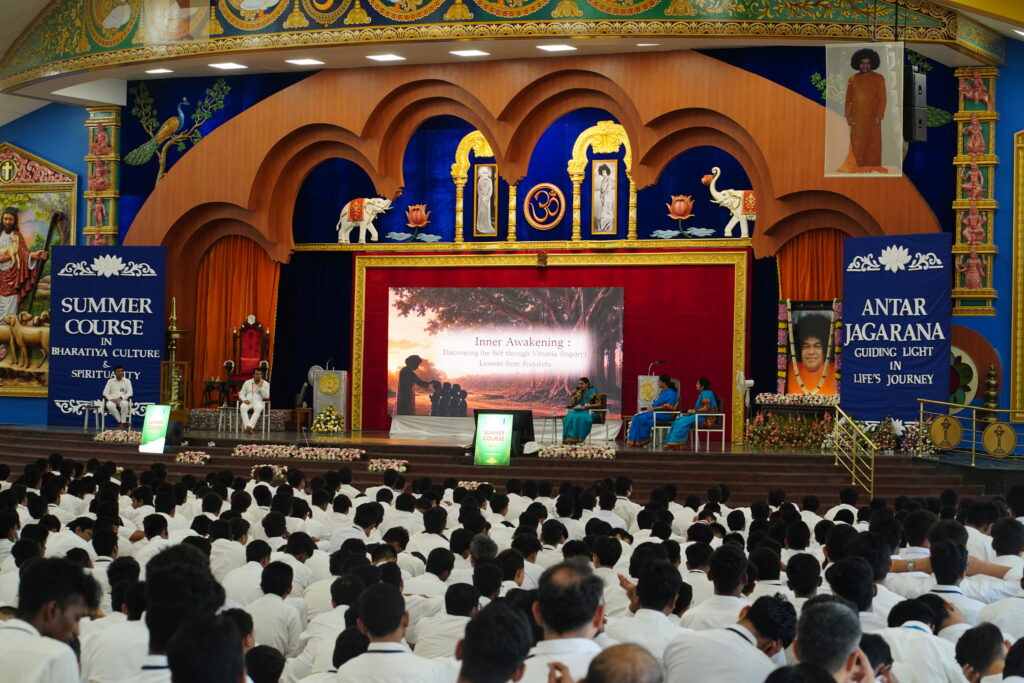
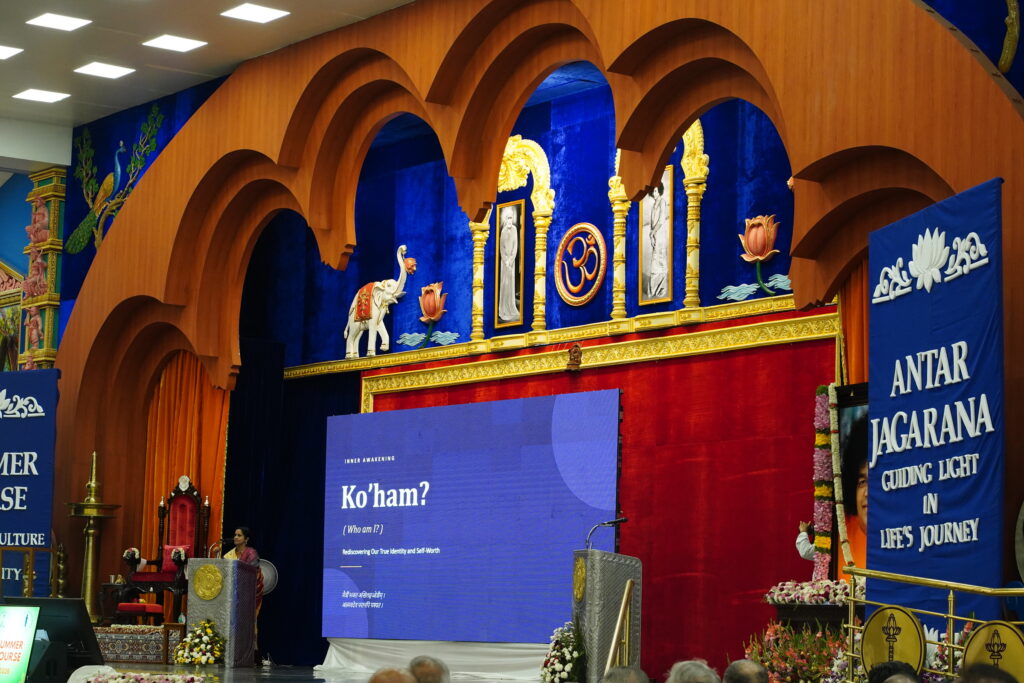
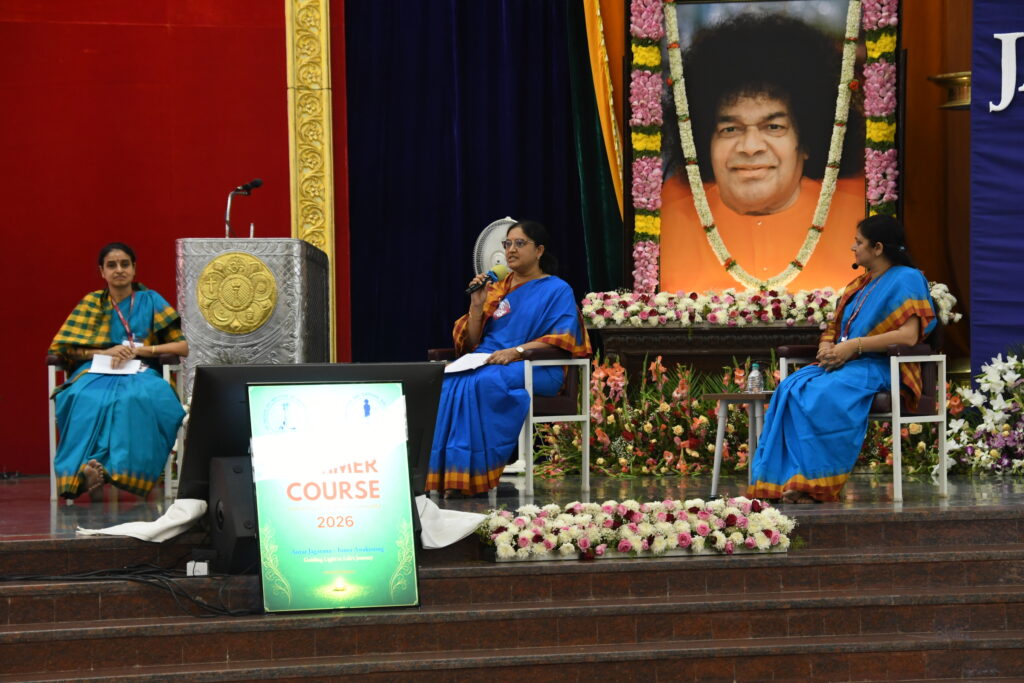
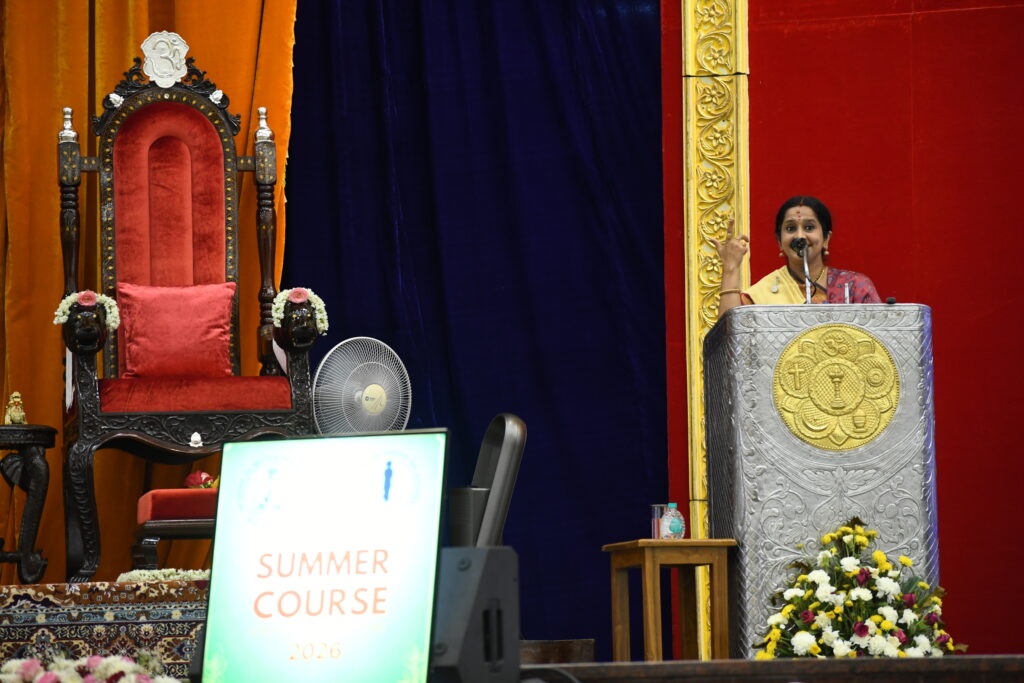
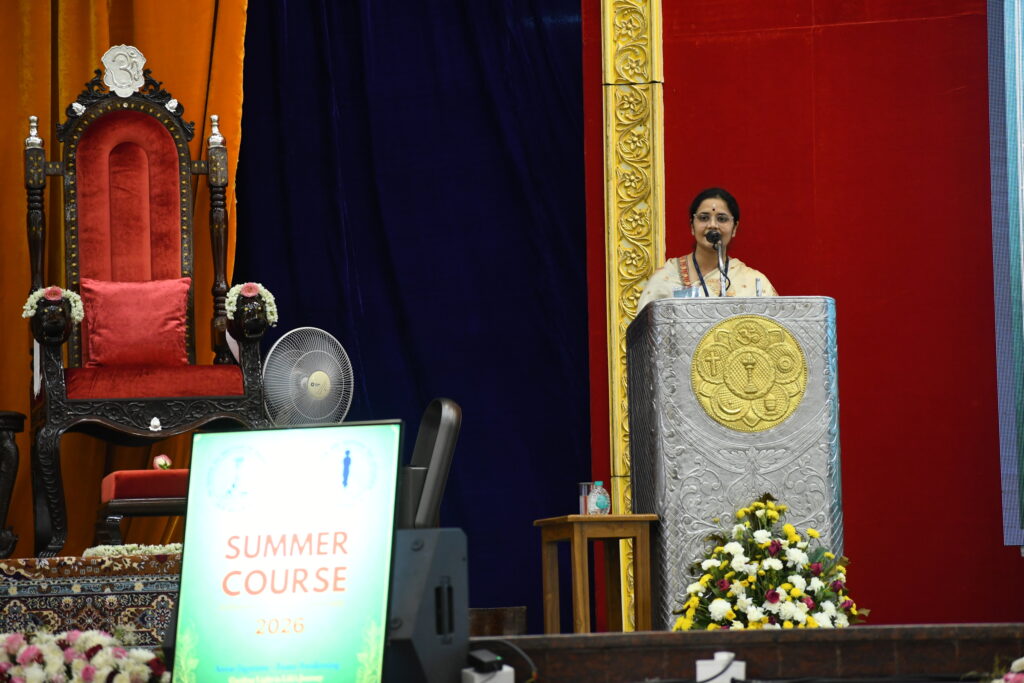
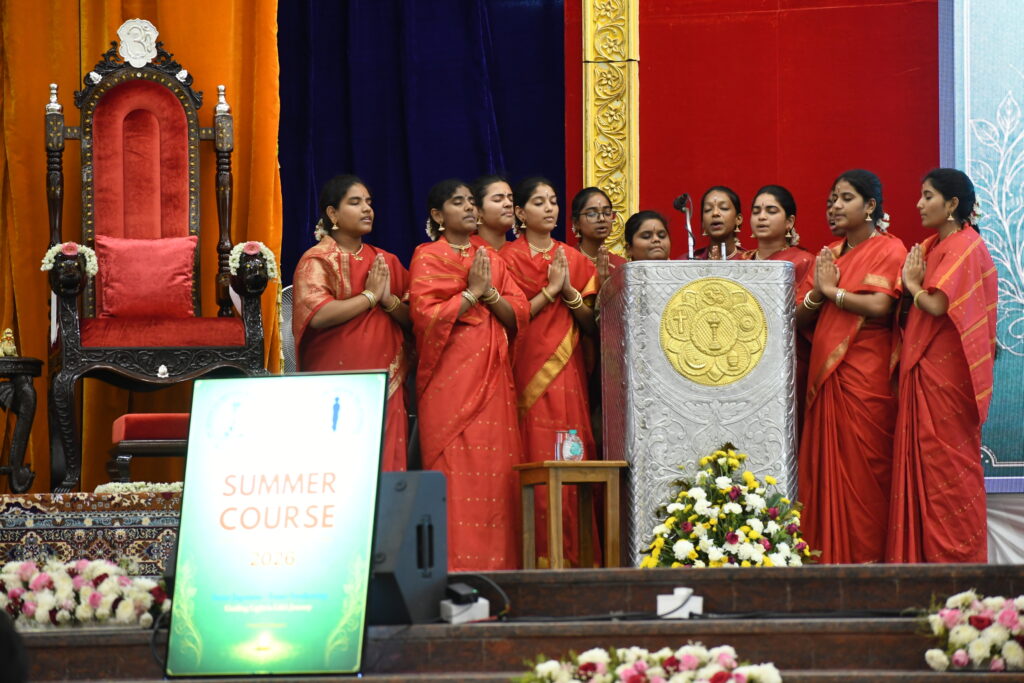
The second day of the Summer Course in Bhāratīya Culture and Spirituality 2026, organised by the Centre for Sri Sathya Sai Studies, Sri Sathya Sai Institute of Higher Learning (SSSIHL), continued to inspire participants through enriching discussions on self-transformation, spiritual discipline, and righteous living. Centred on the theme “Antar Jāgaraṇa – Inner Awakening: The Guiding Light in Life’s Journey,” the day’s sessions encouraged students to cultivate inner strength through sustained practice and adherence to Dharma.
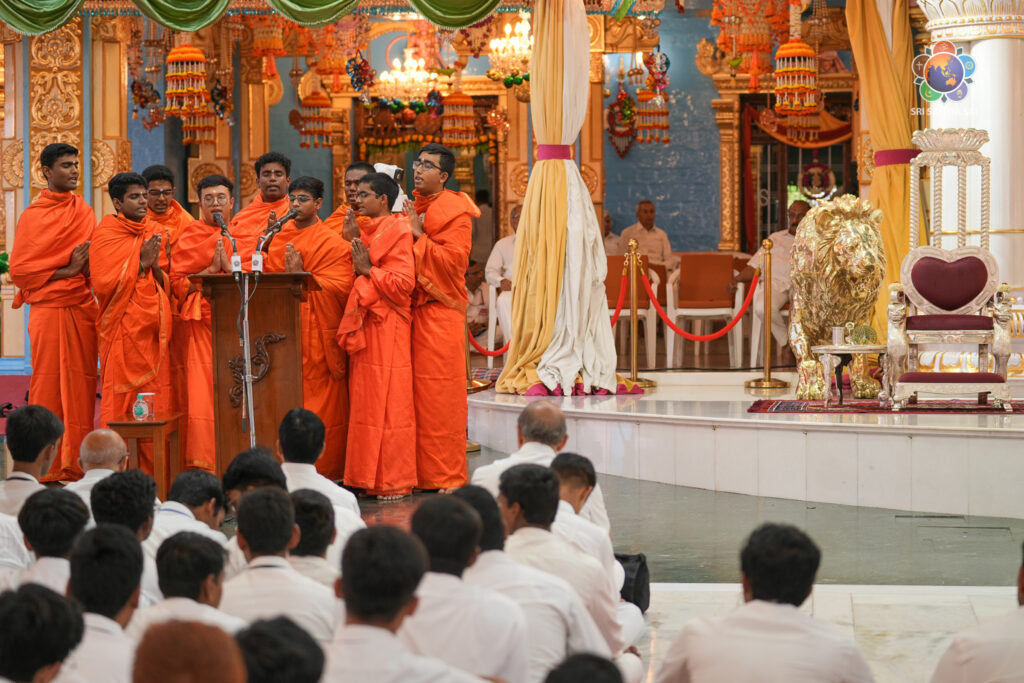
The morning programme commenced with the sacred chanting of the Medhā Sūktam Ghanam by students of the Sri Sathya Sai Higher Secondary School (Boys), invoking the blessings of Goddess Saraswati and setting a serene, contemplative tone for the day’s proceedings.
Participants engaged in an insightful case study presentation and discussion titled “Inner Awakening and Abhyāsa (Practice): Lessons from Lord Hanuman.” The session was moderated by Dr Sai Shyam, Assistant Professor, Department of Mathematics and Computer Science, SSSIHL, and featured a distinguished panel comprising Sri Sai Ganesh Muthuraman, Software Engineer, Google, Dr V. Bhaskaran, Assistant Professor, Department of Mathematics and Computer Science, SSSIHL; Dr K. J. Srinivas, Assistant Professor, Department of Management and Commerce, SSSIHL; and Dr Priyamvada C., Assistant Professor, Department of Languages and Literature, SSSIHL.
Drawing upon selected verses from the Hanuman Chalisa, supported by episodes from the Ramayana and the teachings of Bhagawan Sri Sathya Sai Baba, the panel explored the transformative power of Abhyāsa (consistent spiritual practice). They highlighted the three essential attributes—Bala (strength), Buddhi (intellect), and Vidya (knowledge)—as indispensable for achieving life’s highest purpose, emphasising that these qualities attain their fullest expression only when accompanied by purity of thought, noble intentions, and the grace of God.
The discussion further examined Lord Hanuman’s exemplary qualities of humility, unwavering availability in the service of the Divine, and complete surrender, presenting them as timeless ideals for every aspirant. Drawing meaningful parallels between Hanuman’s encounters with obstacles during his journey and the challenges encountered in daily life, the panel encouraged students to cultivate discernment, resilience, and steadfast faith in responding to life’s trials.
A particularly moving segment of the session featured students from the Brindavan Campus, who shared heartfelt reflections on the transformative impact that the regular chanting of the Hanuman Chalisa had made in their own lives. The session concluded on an uplifting note with the entire audience joining in the collective chanting of the Hanuman Chalisa, followed by the Shanti Mantra, creating an atmosphere of devotion and spiritual unity.
The evening programme at Sai Kulwant Hall began with Vedam chanting, followed by the Ganesha Sūktam rendered by students of the Anantapur Campus and the Sri Sathya Sai Higher Secondary School (Girls). A summary of the day’s proceedings was presented by Ms Sai Srilekha N., II M.B.A., SSSIHL.
This was followed by an engaging panel discussion on “Inner Awakening and Righteous Living – Dharma as the Compass for Daily Life,” moderated by Prof. Rani P. L., Dean, Faculty of Humanities & Social Sciences and Languages & Literature, and Director, Anantapur Campus, SSSIHL. The panel featured Ms Sai Swaroopa Iyer, Program Lead, INDICA; Ms Sai Geetha M. N., Senior Director, Software Engineering, Lowe’s India; Dr Lathasree, Senior Medical Officer, Sri Sathya Sai General Hospital; and Ms Vidyulatha Narayan, Manager, Education Division, East Sussex County, UK.
Drawing upon the teachings of Bhagawan Sri Sathya Sai Baba, the speakers explained that Dharma is not merely a moral code but the expression of one’s innate divinity. Emphasising Trikarana Shuddhi—the harmony of thought, word, and action—they described righteousness as the foundation of individual transformation and social harmony.
The discussion explored profound concepts such as Swarupa Dharma, the realisation of one’s true divine nature, and Deha Dharma, the responsibility of caring for the body and mind through purity in food, conduct, speech, and thought. Citing examples from the Ramayana, Mahabharata, and Bhagavad Gita, the panel underscored that true Dharma lies in performing one’s duties selflessly, with detachment, and offering every action to the Divine while upholding universal human values.
Concluding the discussion, the panel affirmed that Dharma serves as the guiding compass for inner awakening, enabling individuals to listen to the voice of conscience, purify the mind, and manifest the divinity within. By making righteousness a natural way of life, they observed, humanity can progress from personal transformation to universal harmony and lasting peace.
The second day concluded with Bhajans and Arati at Sai Kulwant Hall, followed by a Vedam Workshop conducted by Sri K. Vedanarayanan, and Sri G. R. Praveena from Sri Sathya Sai Higher Secondary School and the Prasanthi Vedam Group, bringing another enriching day of the Summer Course to a spiritually elevating close.
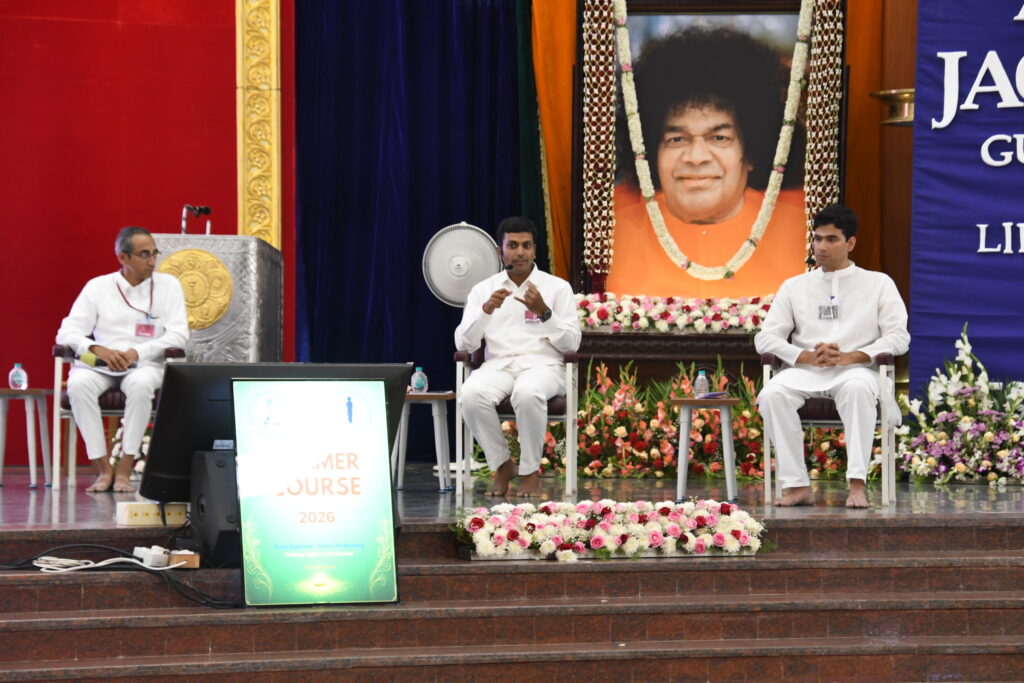
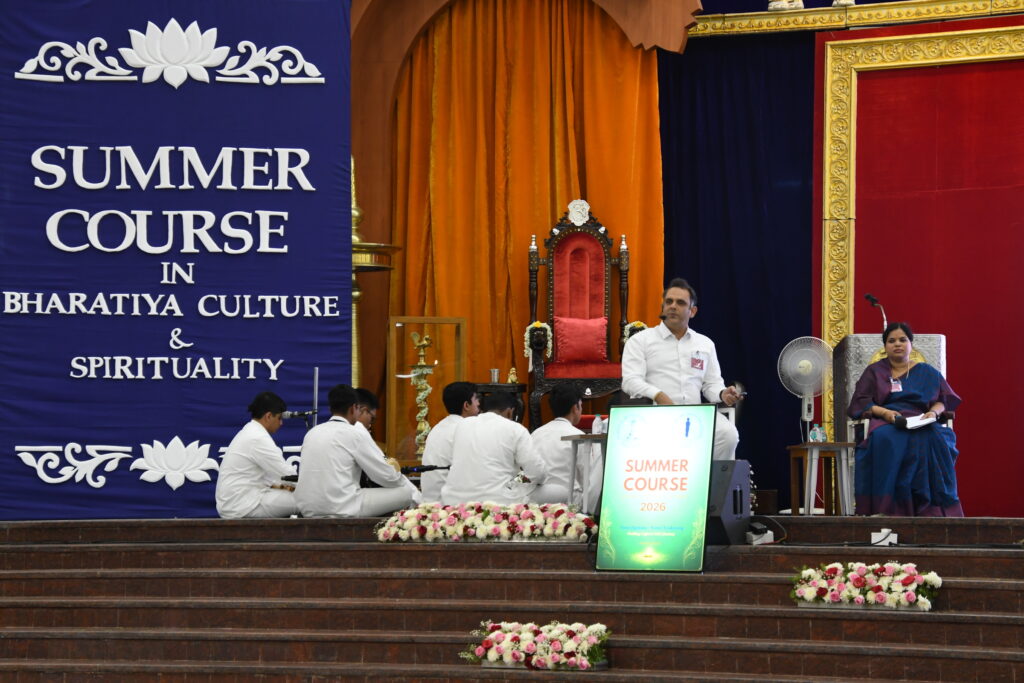
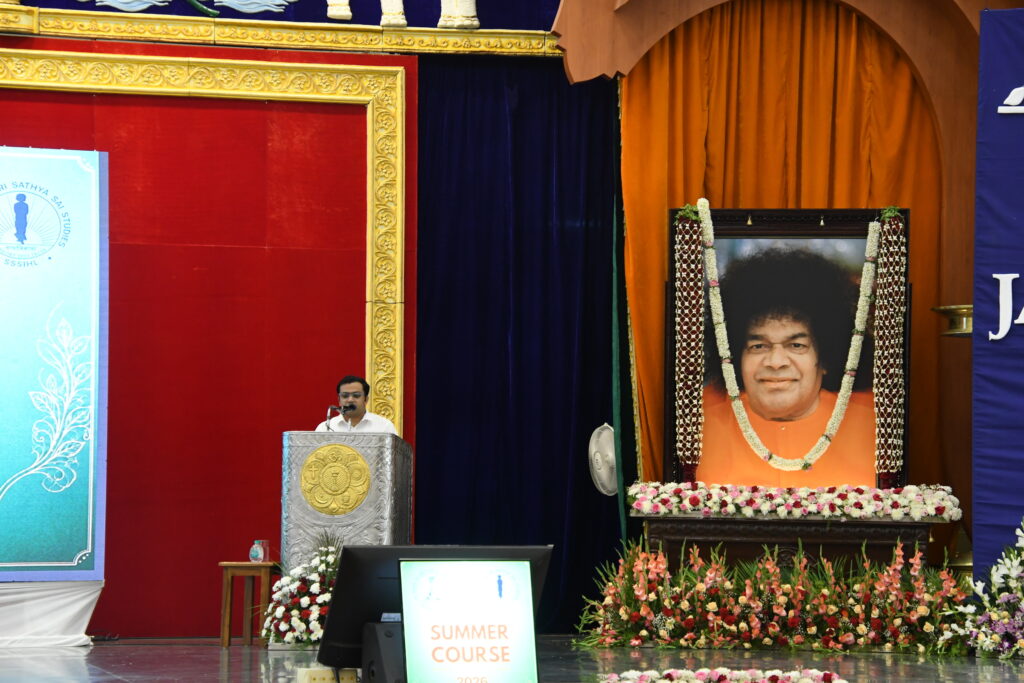
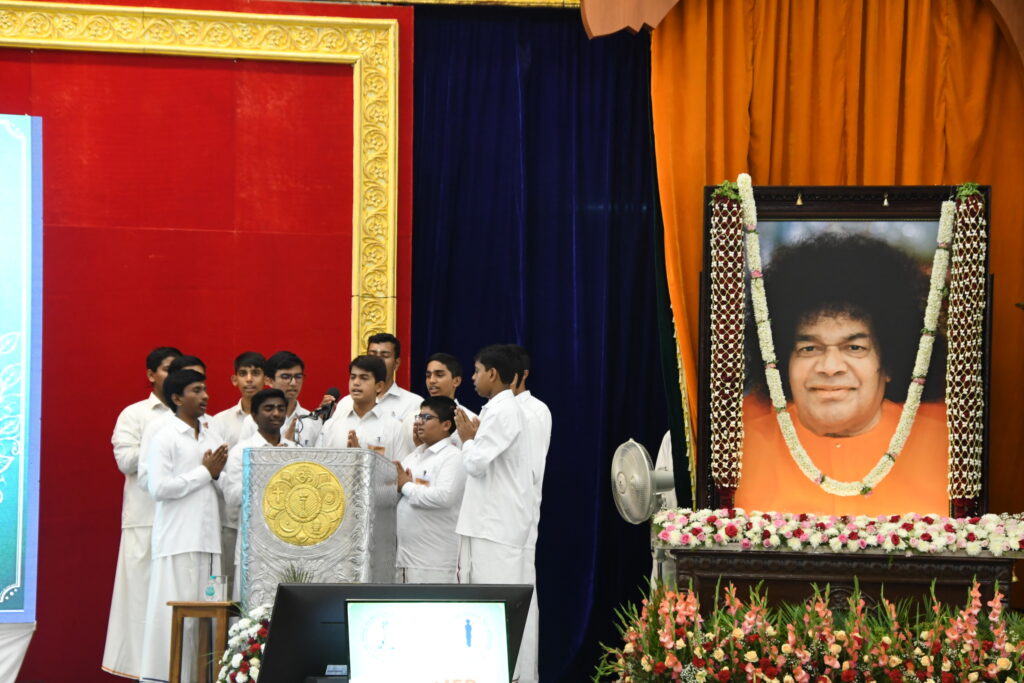
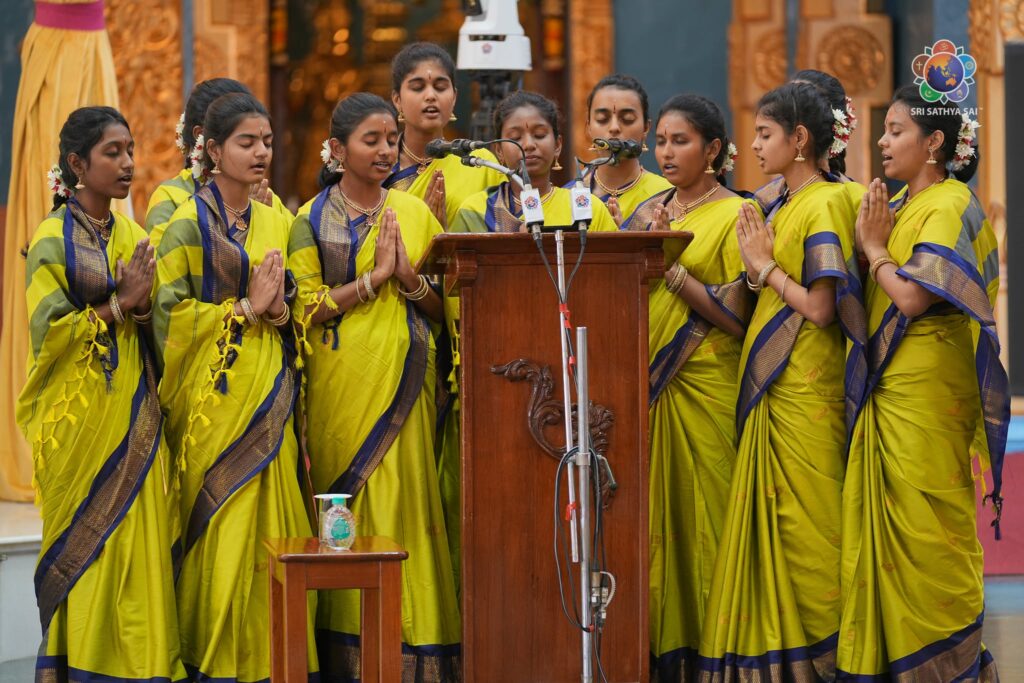
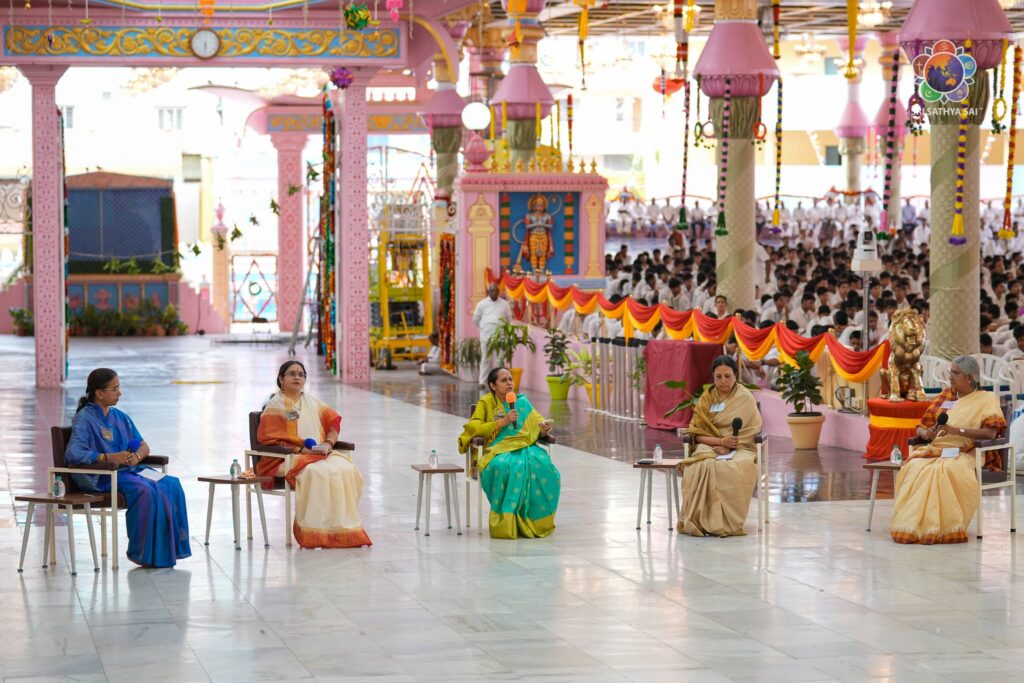
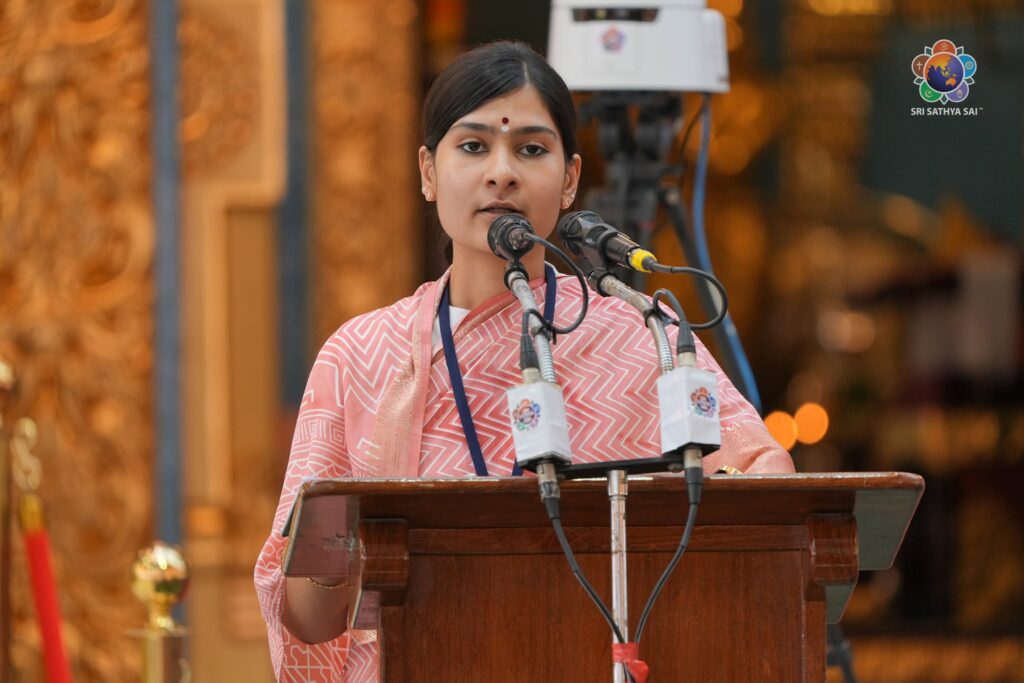
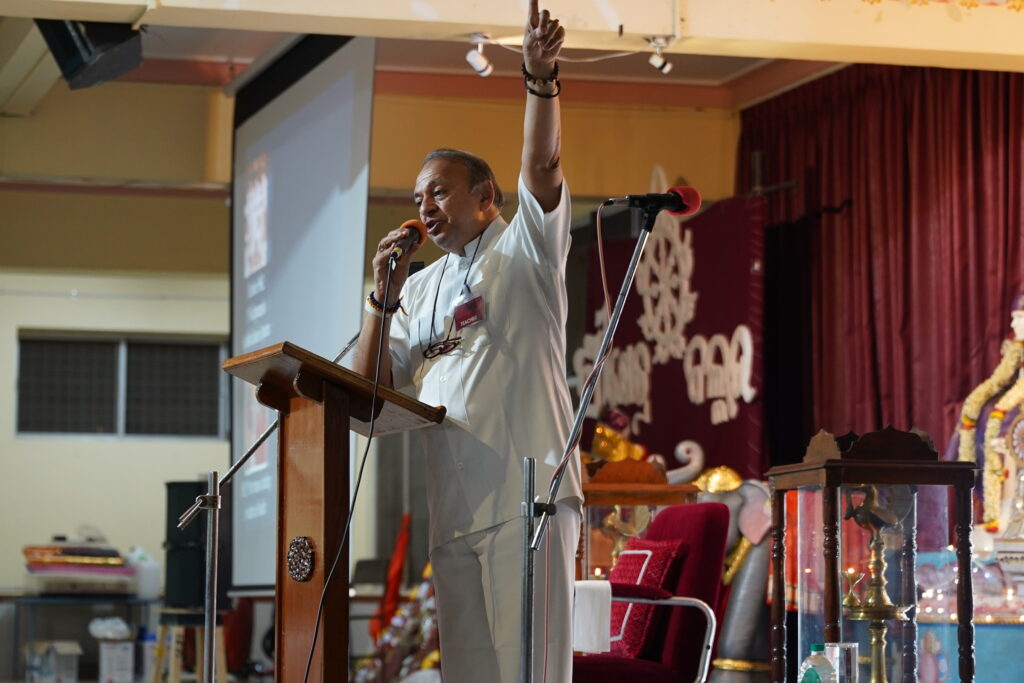
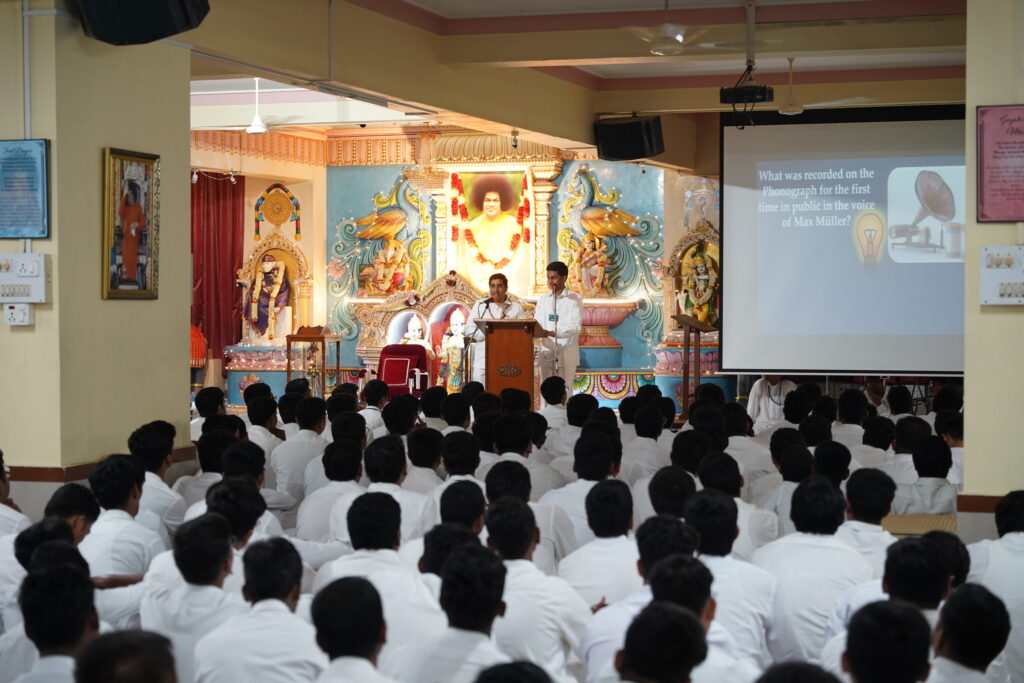
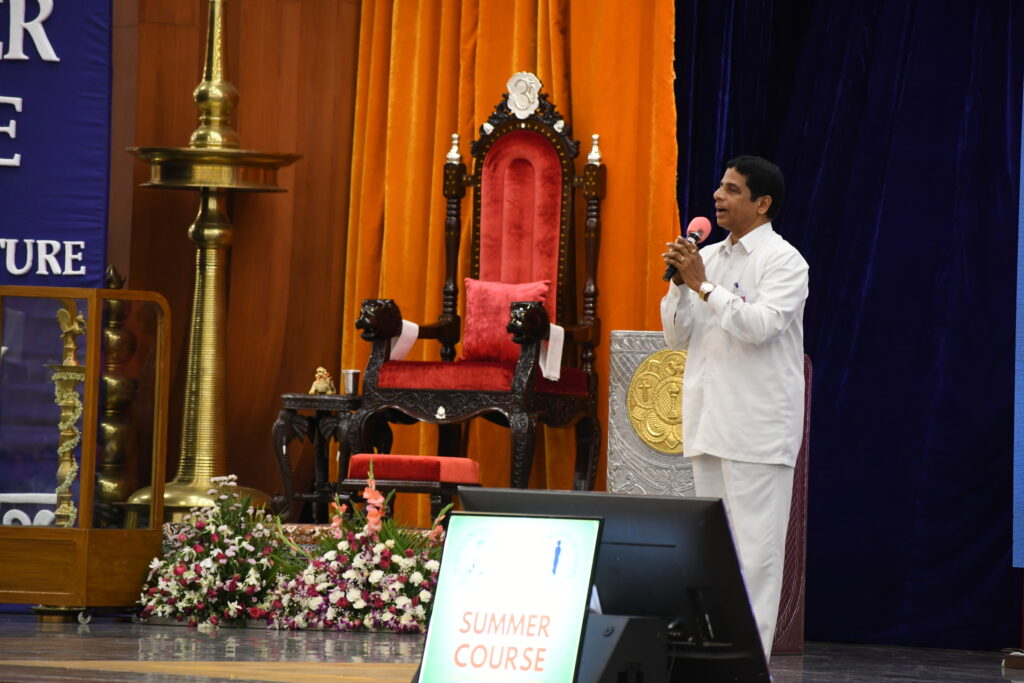
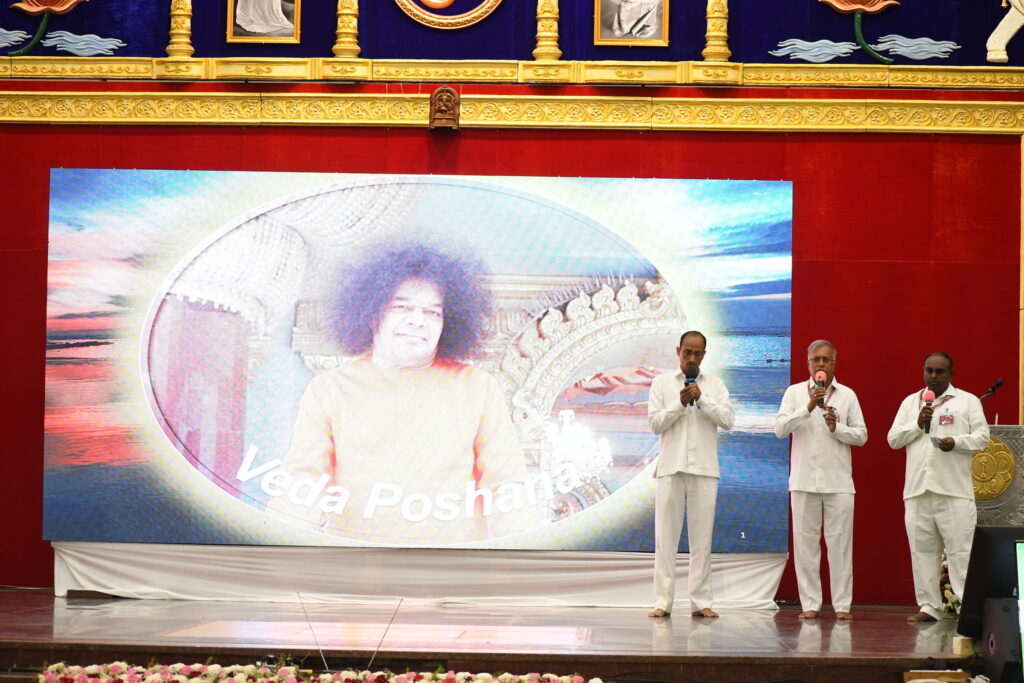
The Summer Course in Bharatiya Culture and Spirituality 2026 commenced on 26 July 2026 at the Poornachandra Auditorium, Prasanthi Nilayam, marking the beginning of three days of reflection, inspiration, and self-transformation. Instituted by Revered Founder Chancellor Bhagawan Sri Sathya Sai Baba in the early 1970s, the Summer Course remains a distinctive feature of the Sri Sathya Sai Institute of Higher Learning, nurturing students through a harmonious blend of academic excellence, character development, and spiritual wisdom.
The inaugural session was graced by Sri K. Chakravarthi, IAS (Retd.), Chancellor, SSSIHL; Prof. B. Raghavendra Prasad, Vice Chancellor, SSSIHL; Dr Srikanth Khanna, Registrar, SSSIHL; Sri R. J. Rathnakar, Managing Trustee, Sri Sathya Sai Central Trust; along with senior members of the Sri Sathya Sai Institute of Higher Learning (SSSIHL), Sri Sathya Sai Central Trust (SSSCT), Sri Sathya Sai Seva Organisations (SSSSO), and the Sri Sathya Sai Global Council (SSSGC), reflecting the collective commitment of these institutions to Bhagawan’s vision of integral education.
Centred on the theme “Antar Jāgaraṇa – Inner Awakening: The Guiding Light in Life’s Journey,” the inaugural session brought together students, faculty, staff, and distinguished speakers to reflect on the deeper purpose of education and the transformative journey from knowledge to wisdom.
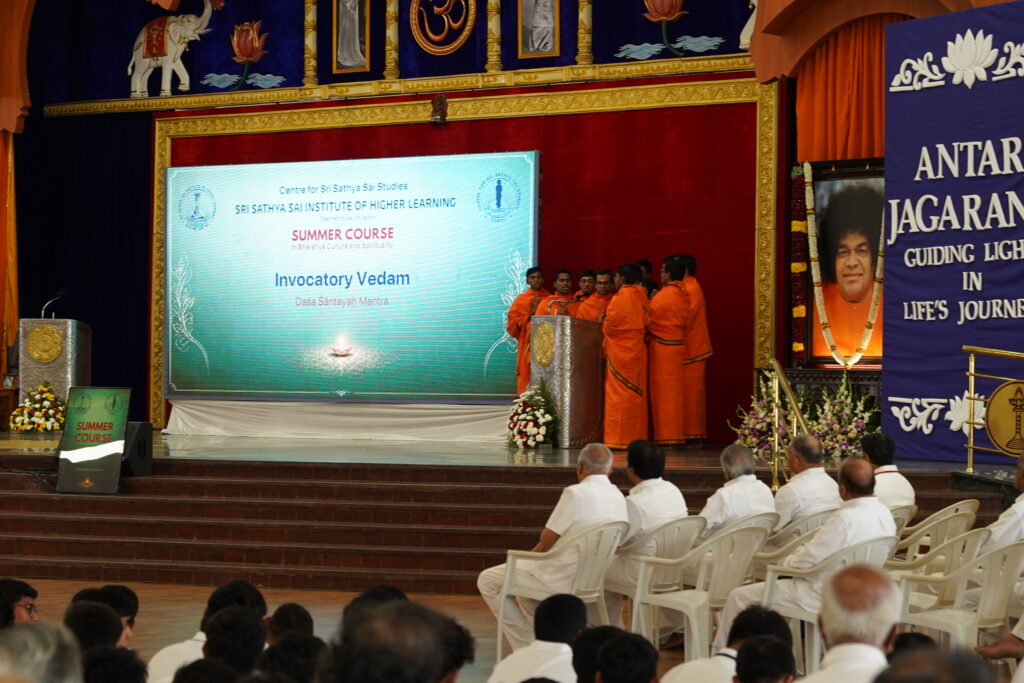
The programme commenced with the lighting of the ceremonial lamp, followed by Invocatory Vedam chanting by students of the Prasanthi Nilayam Campus, invoking divine blessings for the successful conduct of the course.
Welcoming the gathering, Dr Srikanth Khanna, Registrar, SSSIHL, reminded students of Bhagawan’s profound declaration that education is the process of drawing out the divinity already present within. He emphasised that the five cardinal human values—Truth, Right Conduct, Peace, Love and Non-violence—cannot simply be taught through textbooks but must blossom from within through sincere effort and practice. Encouraging students to harmonise academic excellence with spiritual depth, he urged them to awaken their inner light, for only an illumined individual can become a source of light for the world.
Setting the context for the three-day course, Dr G. S. Srirangarajan, Co-Chairperson, Centre for Sri Sathya Sai Studies and Controller of Examinations, SSSIHL, unfolded the significance of Antar Jāgaraṇa through the evocative symbolism of a lamp. He likened knowledge to the flame, humility to the oil, self-confidence to the wick, skills to the light, and the Summer Course to the spark that ignites the process of self-discovery. His address beautifully illustrated that true education culminates not merely in intellectual accomplishment but in inner transformation.
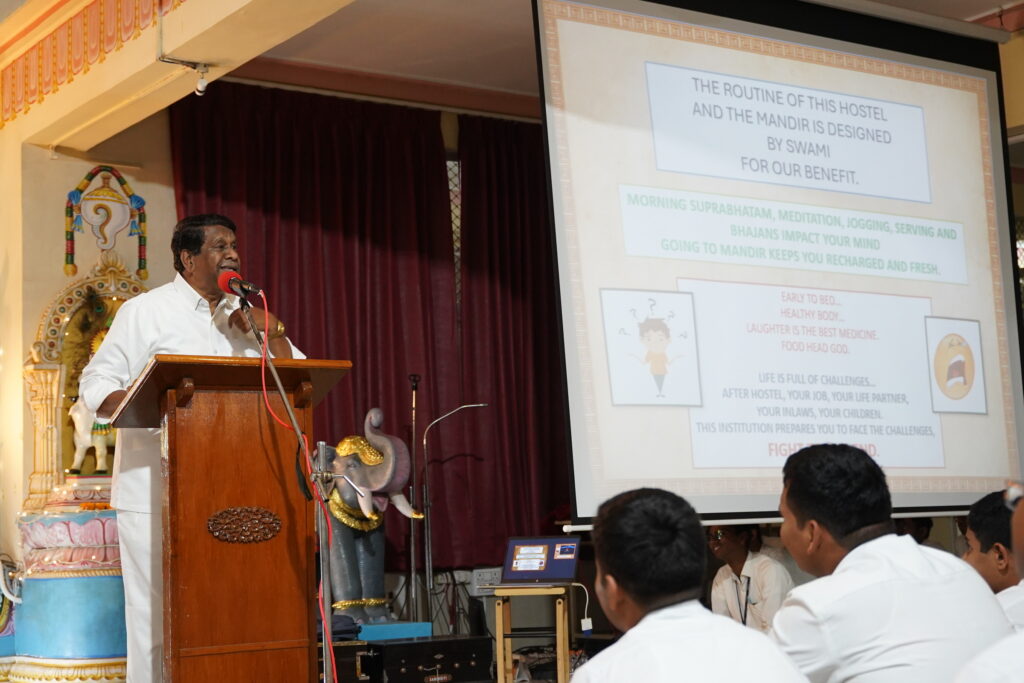
The Inaugural Address was delivered by Sri R. J. Rathnakar, Managing Trustee, Sri Sathya Sai Central Trust, who fondly recalled his own years as a student in Bhagawan’s divine presence. Reflecting on Bhagawan’s unique vision of integral education, he explained that every Sai student learns through three sacred classrooms represented by the acronym HIM—the Hostel, where one learns discipline and harmonious living; the Institute, where knowledge and academic excellence are pursued; and the Mandir, where devotion, culture, and spirituality become living experiences. Encouraging students to embrace lifelong learning, he affirmed that through sincere sadhana, perseverance, and continuous practice, no goal is beyond one’s reach.
The morning session concluded with an inspiring keynote by Sri Amol Anil Muzumdar, Head Coach of the Indian Women’s Cricket Team, on “Inner Awakening and Inner Resilience – Samatva (Equanimity) and Sthiratā (Steadfastness) of the Mind.” Drawing upon experiences from the world of international sport, he presented resilience not as the absence of challenges but as the strength to refuse to let adversity define one’s life. Quoting the timeless teaching of the Bhagavad Gita, “Karmanyevadhikaraste Ma Phaleshu Kadachana,” he reminded students that while effort always lies within one’s control, outcomes do not. Comparing life to a game of cricket, he observed that true success is measured not by the runs one scores but by the number of lives one positively influences.
The afternoon featured an engaging and interactive case study presentation and panel discussion titled “Choosing Śreyas (Lasting Good) over Preyas (Instant Pleasure): Lessons from Naciketā.” Moderated by Sri Rajeev Rajan, Assistant Professor, Department of Management and Commerce, SSSIHL, the panel comprised Sri S. Sai Manohar, Asst. Professor, SSSIHL, Dr Yadusree K. P., Asst. Professor, SSSIHL, Sri T. S. Balaramachandran, Senior Vice President – Human Resources, HDFC Bank, and Sri Siddharth S. Bhatt, Senior Vice President – Business Excellence & Ethics, Tata Capital Ltd. Through insightful discussions rooted in the Katha Upanishad, the panel explored the timeless dilemma between immediate gratification and enduring good, encouraging students to cultivate discernment in making life’s choices.
The evening programme at Sai Kulwant Hall commenced with Vedam chanting, followed by the Samāna Sūktam rendered by students of the Brindavan Campus. A concise summary of the day’s proceedings was presented by Sri Sai Siddhanth Botta, II M.B.A., SSSIHL. The day’s activities concluded with a Bhajan Workshop conducted by Sri S. Ravi Kumar (SSSIHMS) and the Prasanthi Bhajan Group, providing students with an opportunity to deepen their understanding and appreciation of devotional music as an expression of inner awakening.
The inaugural day of the Summer Course thus set a profound and inspiring tone for the days ahead, inviting every participant to look within, cultivate resilience, choose the path of Śreyas, and embark upon the lifelong journey of Antar Jāgaraṇa—the awakening of the divinity that Bhagawan taught resides within every human being.
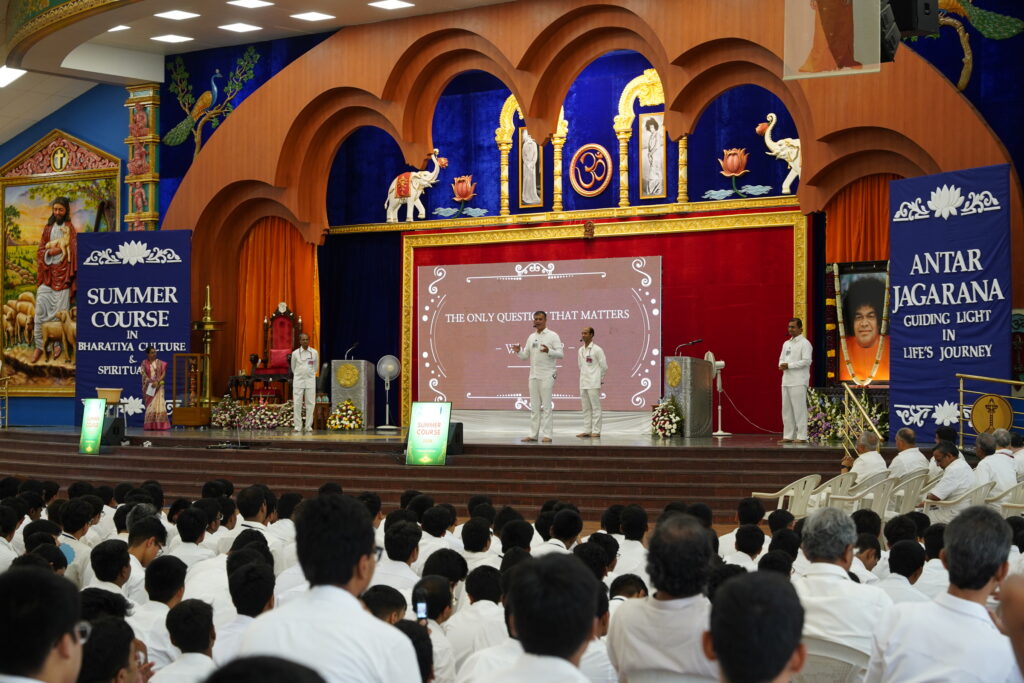
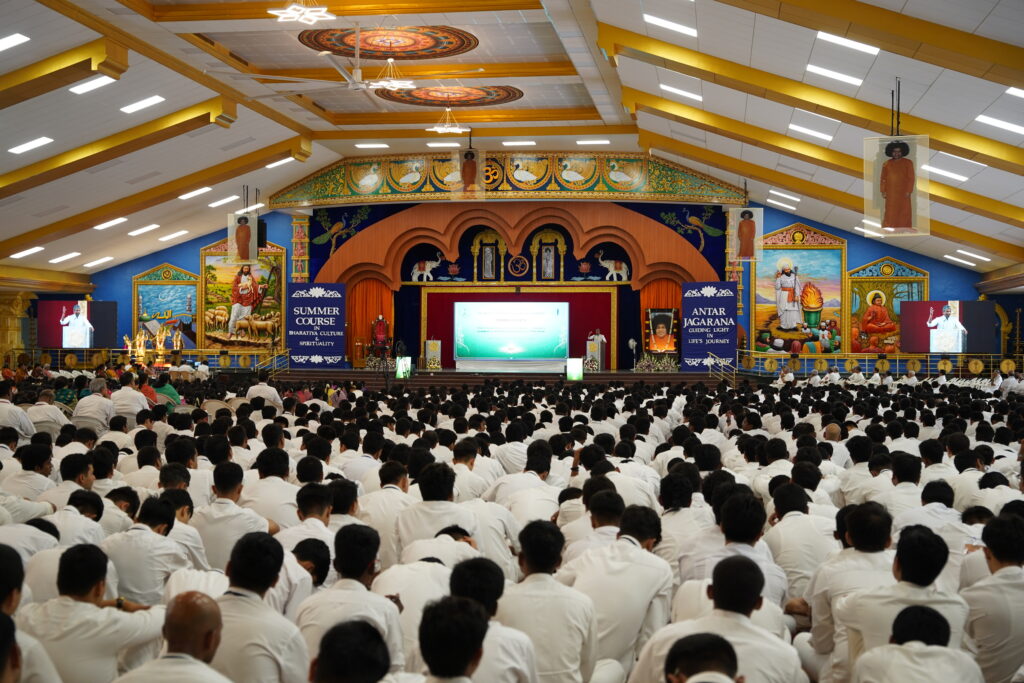
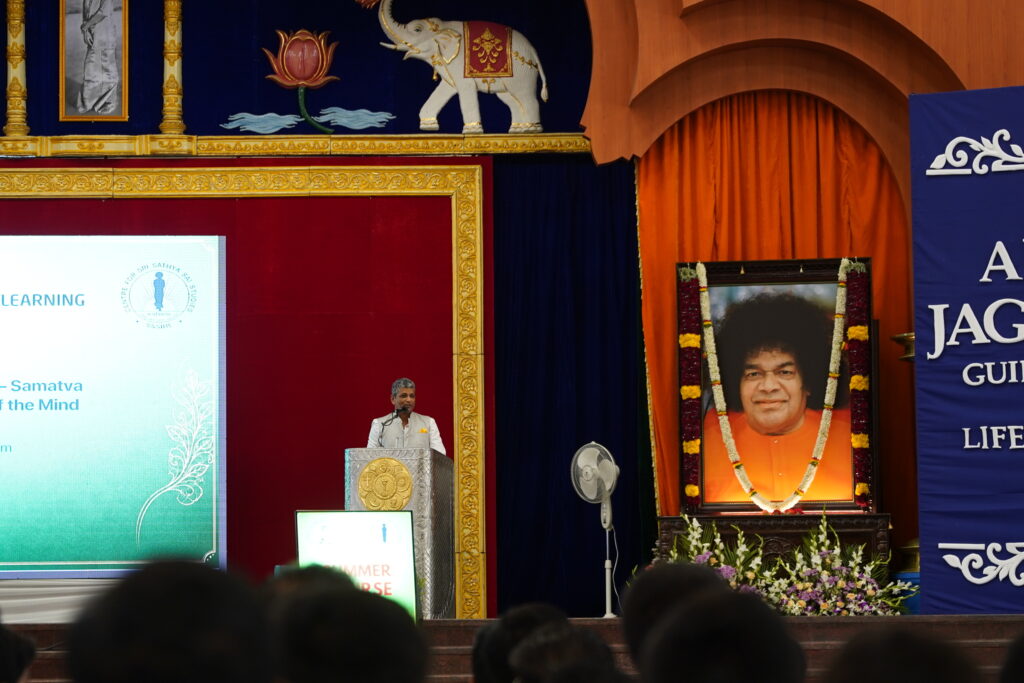
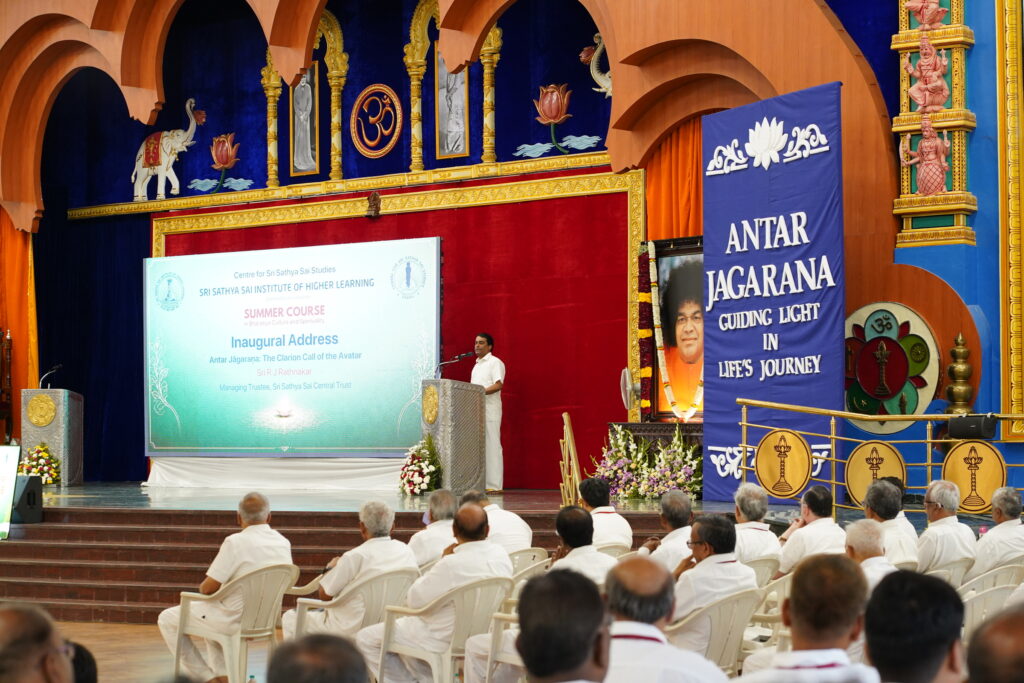
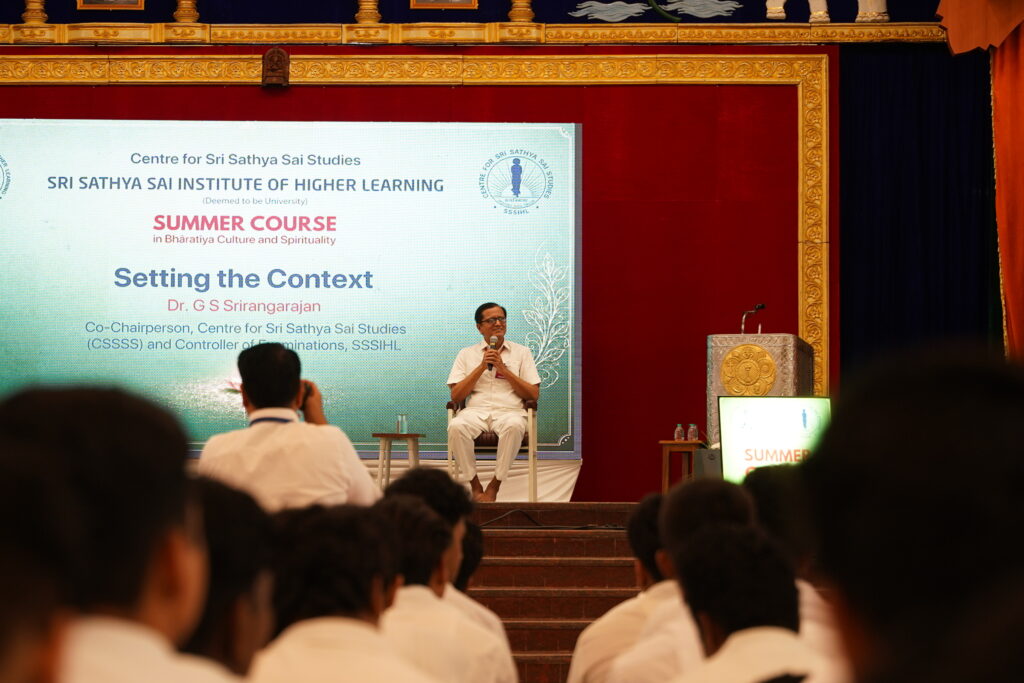
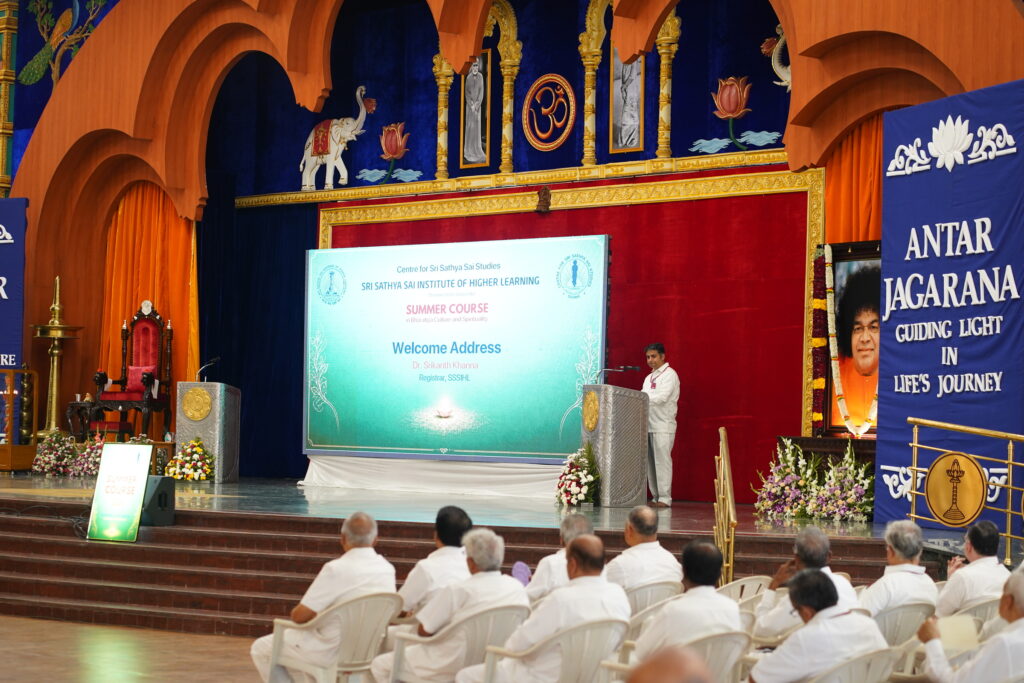
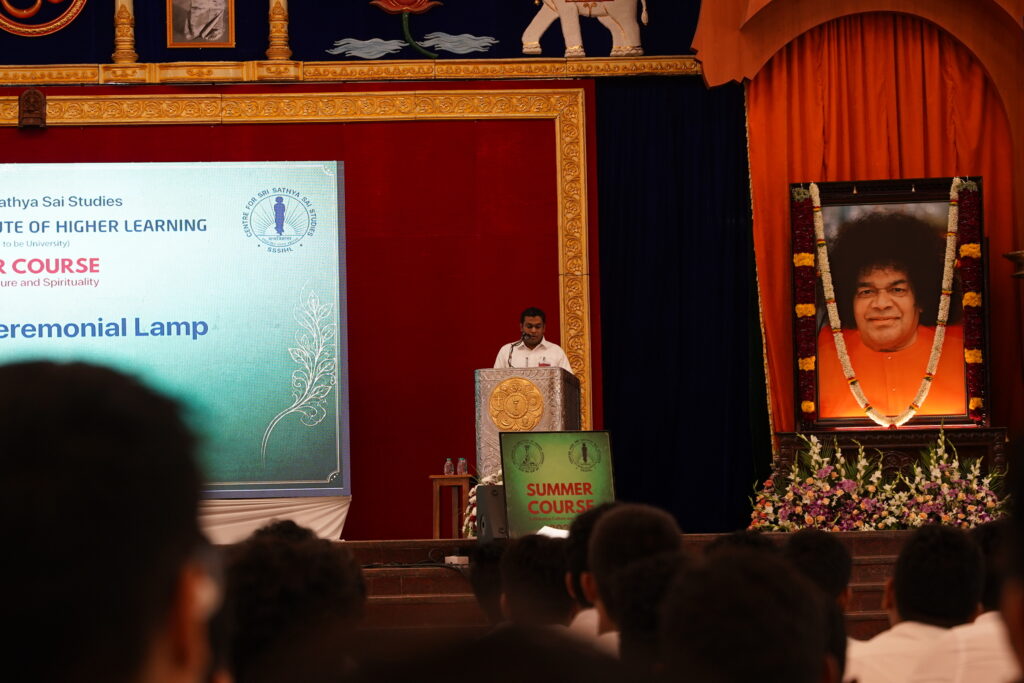
The genesis of the Summer Course in Indian Culture and Spirituality dates back to the early seventies, when Bhagawan Baba organized Summer Courses in Indian Culture and Spirituality for the benefit of students. The course then was usually three to four weeks long and would typically consist of a series of lectures on Indian culture, the essence of the scriptures and other spiritual topics delivered by learned scholars, senior devotees and men of esteem. The highlight, however, was the daily discourse by Baba Himself, delivered typically in the evening. The Summer Courses in this format continued through the seventies; and after a brief hiatus (in the eighties), they continued into the nineties, until the last one in 2002.
Now organized at the beginning of each academic year by Sri Sathya Sai Institute of Higher Learning (SSSIHL) as a three-day event, the Summer Course serves as an orientation programme that holds immense significance for both students and staff members. It imbues participants with the rich values and traditions of Indian culture and spirituality, fostering a holistic approach to education beyond academic excellence.
For students, the Summer Course is a transformative experience that integrates the essence of Indian ethos into their daily lives. Students gain a profound understanding of India’s spiritual heritage through lectures, discussions, and interactive sessions led by esteemed scholars and spiritual leaders. This exposure cultivates a deep sense of moral responsibility, discipline, and a strong ethical foundation, which are pivotal in their personal and professional growth. The programme also emphasizes the practice of human values such as truth, righteousness, peace, love, and non-violence, fostering a harmonious and compassionate outlook toward life.
Members of staff also benefit significantly from the Summer Course, which enhances their personal development and continuous learning. It equips them with the tools to mentor and guide students effectively, aligning with the institute’s mission of character building and academic excellence.
The Summer Course in Bhāratīya Culture and Spirituality will be held from 26 to 28 July 2026 at Prasanthi Nilayam.
The three day event will be attended by over 3000 staff and students of all SSSIHL campuses, XI-XII Std. students of Sri Sathya Sai Higher Secondary School (Girls and Boys Wings) and Smt. Eswaramma High School, as well as guest and delegates from Sri Sathya Sai Global Council (SSSGC) and Sri Sathya Sai Seva Organizations (SSSSO).
It will focus on discussions on the teachings on Indian culture and spirituality by our Revered Founder Chancellor, Bhagawan Sri Sathya Sai Baba led by SSSIHL students, doctoral research scholars and teaching faculty. It will also include talks and presentations by distinguished thought leaders, educationists and administrators, focusing on the role of universal human values in education, governance, social cohesion and ethical conduct.
The list of key external speakers include:
Kindly download the entire three-day event schedule below.
EVENT SCHEDULE
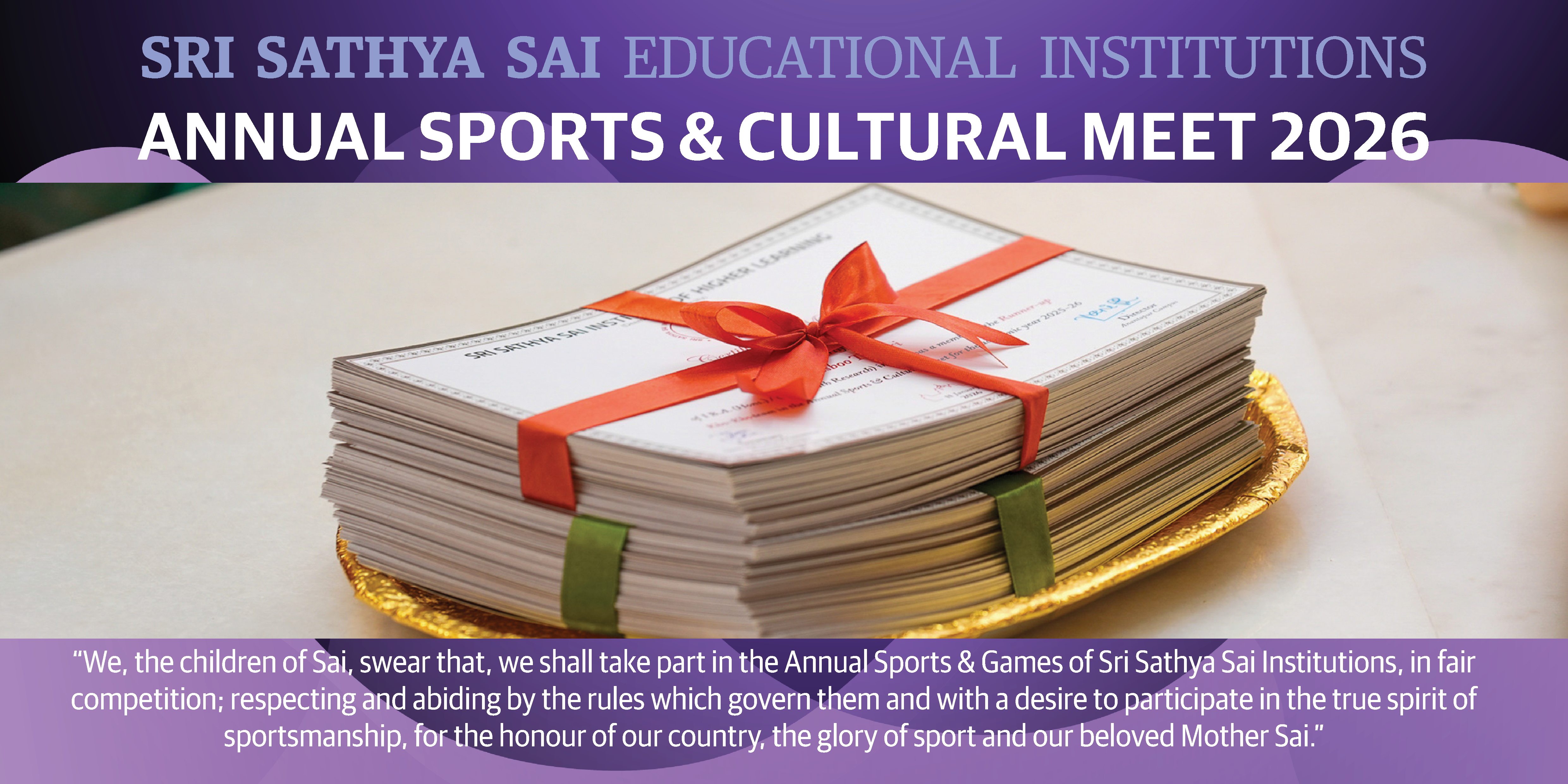
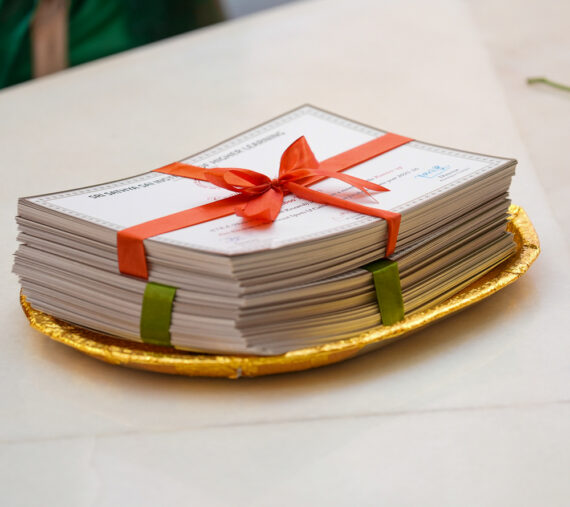
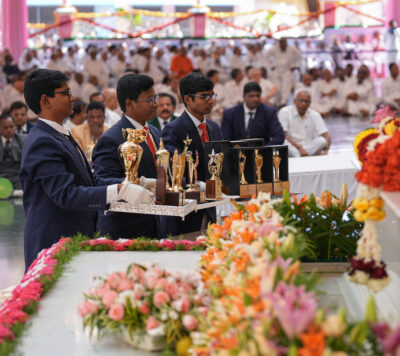
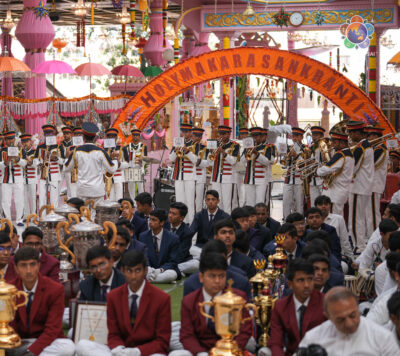
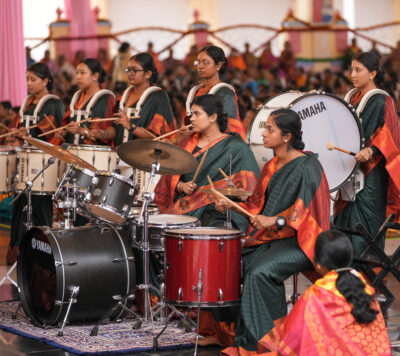
The Prize Distribution Ceremony of the Annual Sports and Cultural Meet 2026 for the Sri Sathya Sai educational institutions—a celebration of the excellent performances in sports, cultural and fine arts events during the academic year 2025/26 by students—was held on 15 January 2026, on the auspicious occasion of Makarasankranti, at Sai Kulwant Hall, Prasanthi Nilayam, Andhra Pradesh.
The programme commenced at 8:15 a.m. with a grand procession comprising the Institute brass band, a Veda chanting group of students, senior members of Sri Sathya Sai Institute of Higher Learning (SSSIHL) and a flag-bearing squad.
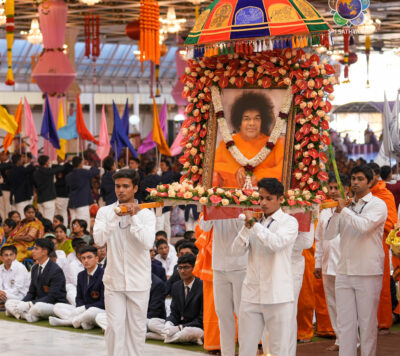
The Master of Ceremonies, Ms. Beesetti Lohita, Doctoral Research Scholar, Dept. of Food & Nutritional Sciences, SSSIHL, in her introduction, remarked that the festival of Makarasankranti teaches us that after a period of intense effort, there must also be peace, joy and gratitude.
The first talk of the event was delivered by Dr. Chandrahaas C S, Assistant Professor, Dept. of Management & Commerce, SSSIHL. He likened the harvest Makarasankranti to the year-long effort students put into sports, cultural and fine arts events during the academic year 2025/26. He said the key lessons the Annual Sports & Cultural Meet teaches students are Self-Confidence, Self-Satisfaction (achieved by the singular goal of pleasing Bhagawan Baba), Self-Sacrifice (by giving up their physical comforts) and Self-Realization (the individual ego subsumed in group identity). The core of this, he concluded, is the faith students have in Him.
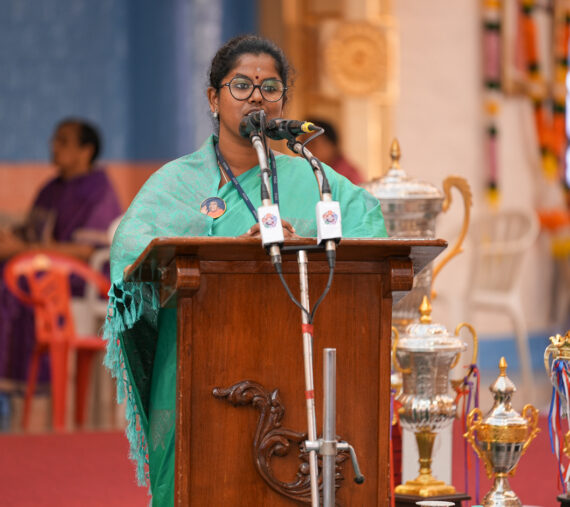
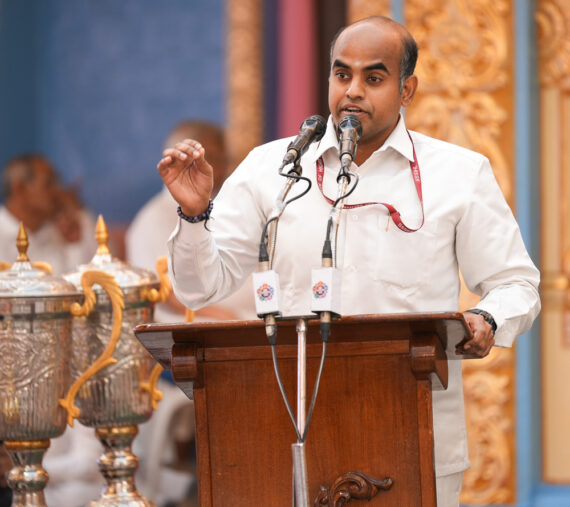
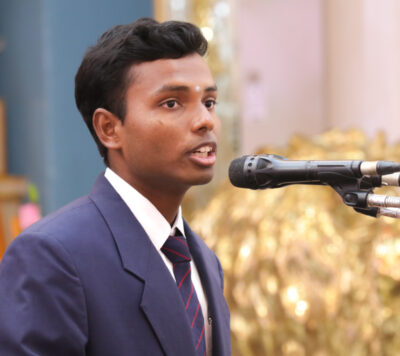
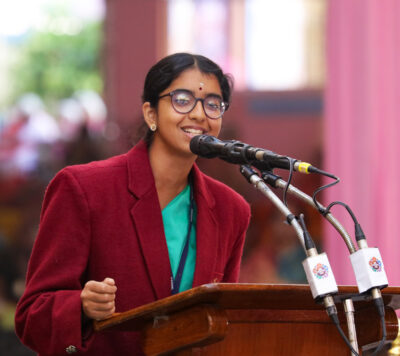
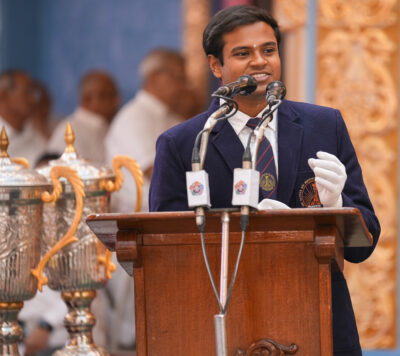
Next up was a series of brief talks by students. They recalled the behind-the-scenes challenges, motivations, prayers and miracles that inspired them to come together in unity and surrender to participate in the Annual Sports & Cultural Meet, shaping them into instruments of peace and righteousness. Speakers included Mohan Sai S (XII Std.) and K Sai Dikshita (XI Std.) of Sri Sathya Sai Higher Secondary School (SSSHSS), N Janavi from Smt. Eswaramma High School, and four students from SSSIHL – Akshra H, II B.Com. (Hons.) from Anantapur Campus, Ritick Raj Gupta, II M.Sc. in Data Science & Computing from Nandigiri Campus, Pulkit Khare, II M.B.A. from Brindavan Campus, and Kinthada Sai Sampath Kumar, B.S. (Hons./Hons. with Research) in Mathematics from Prasanthi Nilayam Campus.
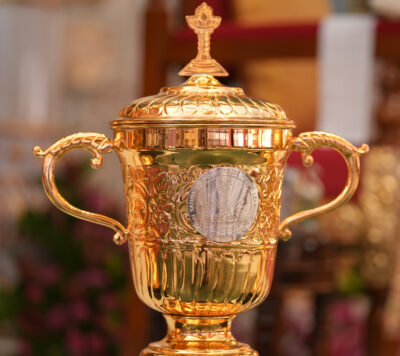
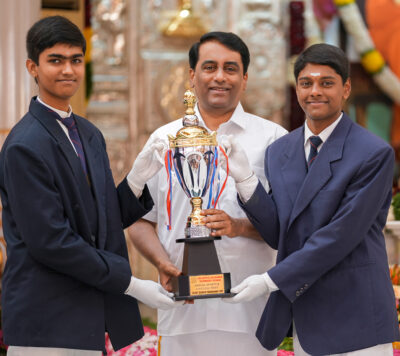
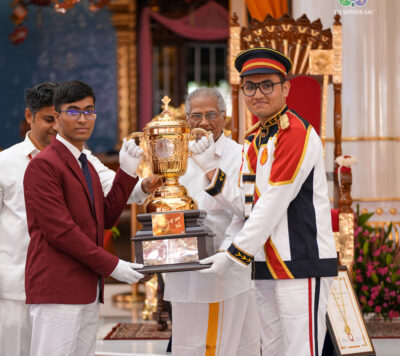
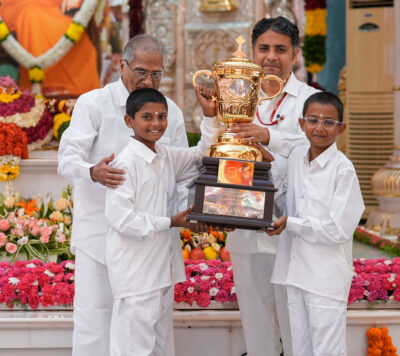
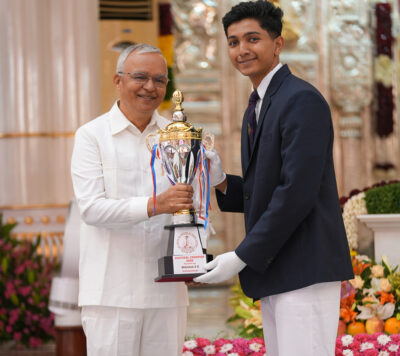
Following the talks, the Founder Chancellor’s Cups—symbolizing the grand effort put in by each institution—were presented by Sri K Chakravarthi, IAS (Retd.), Hon’ble Chancellor, Sri Sathya Sai Institute of Higher Learning. The respective captains and vice-captains of each Sai educational institution and campus received them.
Sri R J Rathnakar, Managing Trustee, Sri Sathya Sai Central Trust and Prof. B Raghavendra Prasad, Vice-Chancellor, SSSIHL, then presented trophies to the House and Individual champions of SSSHSS and each SSSIHL campus, respectively, under various sports, cultural and fine arts categories.
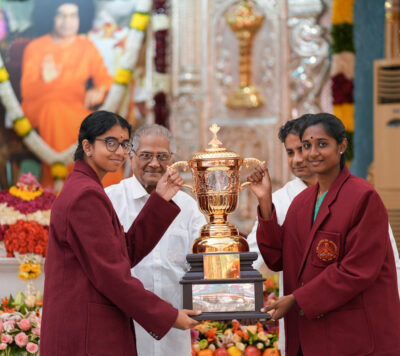
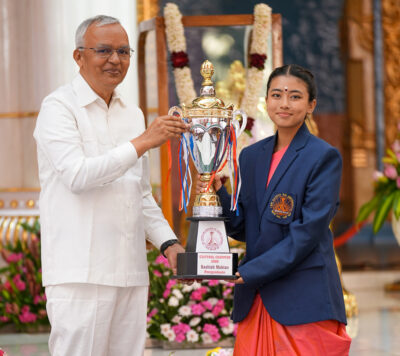
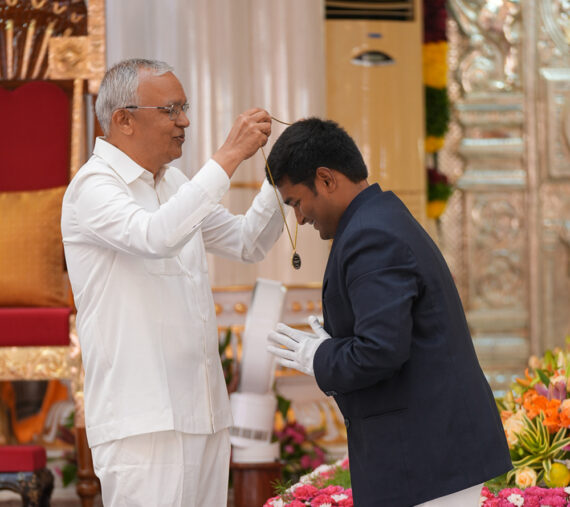
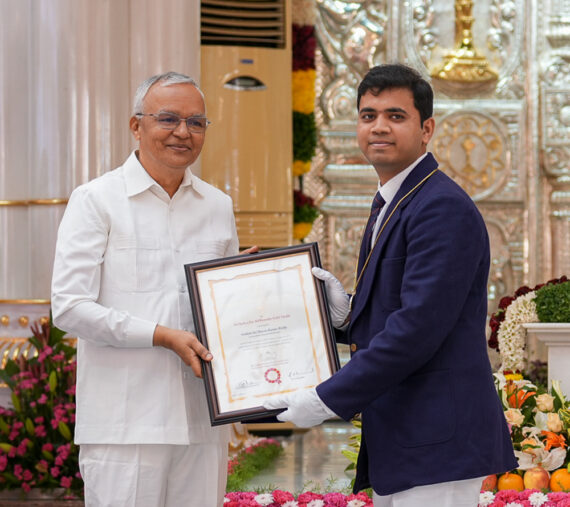
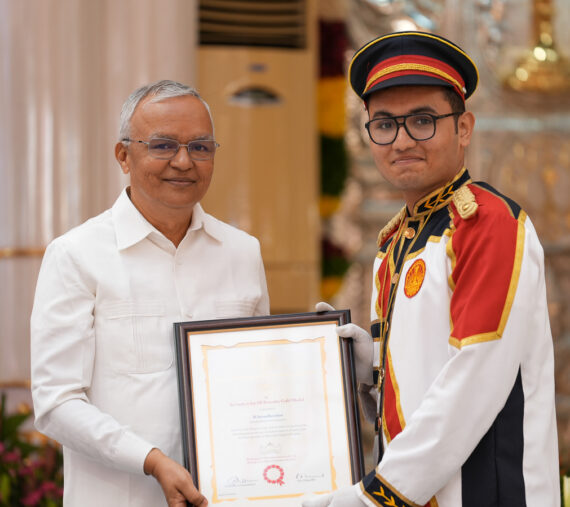
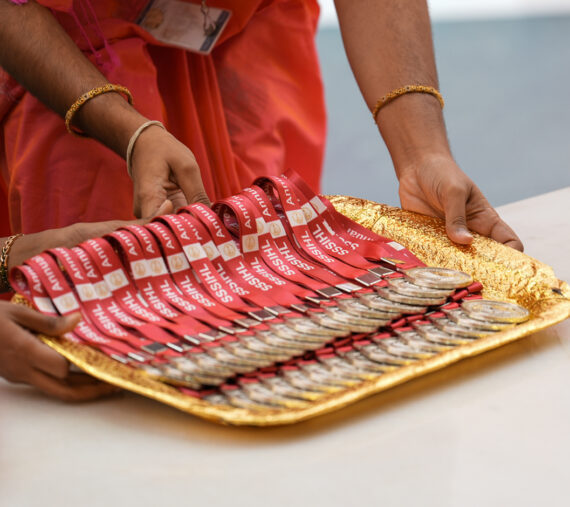
Every year, a student from each SSSIHL campus receives the Sri Sathya Sai All Rounder Gold Medal. Founded by Bhagawan Baba Himself, this esteemed award honours consistent exemplary conduct, discipline, devotion, outstanding academic performance, and involvement in activities such as sports, dramatics, Self-Reliance, and spiritual work. It truly exemplifies excellence in Sri Sathya Sai Values-based Integral Education.
Presented by Prof. B Raghavendra Prasad, Vice-Chancellor, SSSIHL, this year’s awardees were:
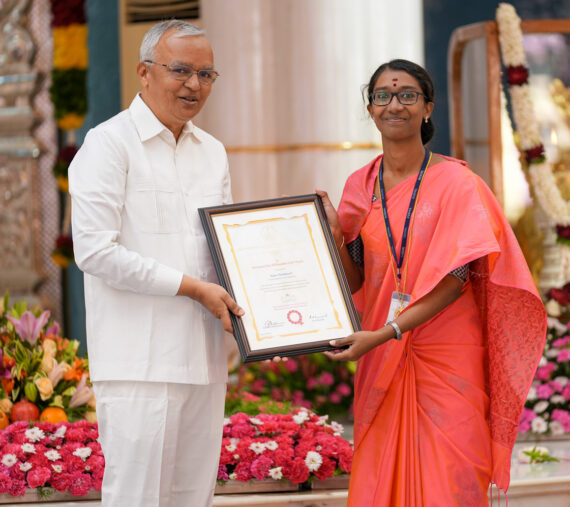
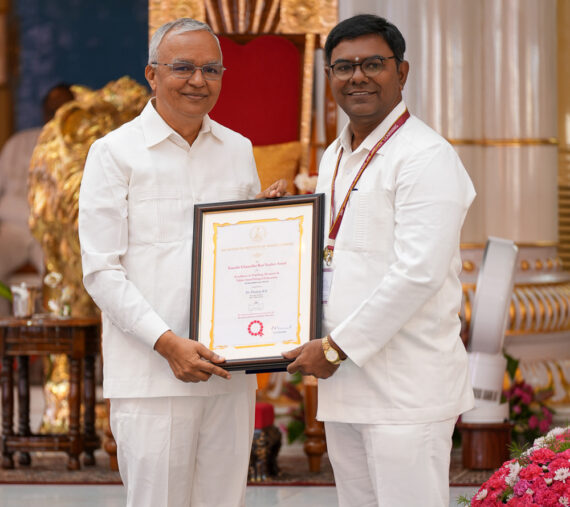
Prof. Gowrishankar R, Dean of Academic Affairs at SSSIHL, then announced the Founder Chancellor Best Teacher Award for Excellence in Teaching, Research & Values-based Integral Education at SSSIHL. The award recognises the significant role teachers play in Sai educational institutions, shaping and guiding students not only academically but also moulding them into women and men of character.
Dr. Pradeep B E, Associate Professor, Dept. of Biosciences, received the award for academic year 2025/26 from Prof. B Raghavendra Prasad, Vice-Chancellor, SSSIHL.
Next, the Physical Directors and Sports, Cultural, and Fine Arts Coordinators of each Sri Sathya Sai educational institution took namaskar of Bhagawan Baba and submitted the prize lists for the current academic year to Him.
This was followed by the Divine benediction of Bhagawan Sri Sathya Sai Baba. His discourse focused on the existence of Divinity in totality and beyond all boundaries. He explained the true nature of the five elements and their interconnectedness with all life on Earth. He asked students to recognise this all-pervasive power (of Divinity) within themselves and not to look for it externally. He said it is the true source of protection. He said that every act of God is for the benefit of all.
He appreciated the efforts students make during the Sports & Cultural events to please Him, but reiterated that the only thing that makes Him happy is that all of us are happy. The only way this can happen is to be full of love and joy, to serve others, and to become ideal examples by following the spiritual path.
Following a few pieces by the Institute brass band, prasadam distribution and bhajans, the event concluded at 11 a.m.
Press Release of the Main Event (11 Jan 2026).
Video recording of the Main Event – Morning Session (11 Jan 2026).
Video recording of the Main Event – Evening Session (11 Jan 2026).
Video recording of the Cultural Event (13 Jan 2026).
Video recording of the Cultural Event (14 Jan 2026).
Video recording of the Cultural Event (15 Jan 2026).
The Sri Sathya Sai Educational Institutions held the main event of the Annual Sports & Cultural Meet on 11 January 2026 at the Sri Sathya Sai Hill View Stadium, Prasanthi Nilayam, Andhra Pradesh, India.
This annual event is a heartfelt tribute from over 3500 students (from primary school to Ph.D.) of Sri Sathya Sai Educational Institutions to our Beloved Revered Founder Chancellor, SSSIHL, Bhagawan Sri Sathya Sai Baba. The institutions include four campuses of Sri Sathya Sai Institute of Higher Learning (SSSIHL), Sri Sathya Sai Higher Secondary School (Primary section, Girls wing and Boys wing), Smt. Eswaramma High School, and Sri Sathya Sai Institute of Higher Medical Sciences (SSSIHMS) College of Nursing and Allied Health Sciences.
The presentations are the culmination of various sports, cultural and fine arts competitions held across all campuses of the Institute and other Sai educational institutions throughout the academic year 2025-26. This year also marked the Birth Centenary Year of Bhagawan Sri Sathya Sai Baba.
The signature feature of this event is that every teacher and student is involved in some capacity. This process is one of several ways in which the conscious effort of man-making and character-building at Sai educational institutions truly succeeds. It prepares students to navigate the toughest of situations without sacrificing their principles and values. At the same time, it helps build strong inner qualities such as a sense of unity and teamwork, determination, discipline and hard work.
Preparations began a month in advance.
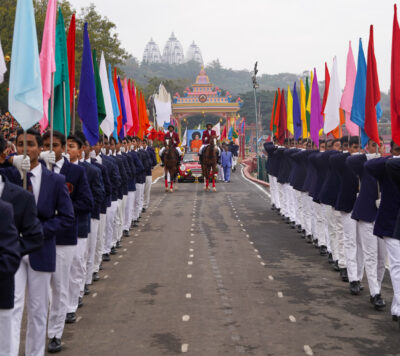
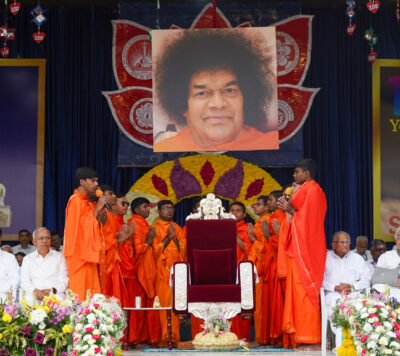
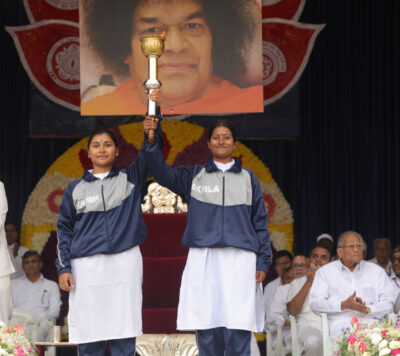
The morning session commenced at 8 a.m. with Bhagawan Baba’s car entering the Sri Sathya Sai Hill View Stadium, flanked by the motorbike escort team of SSSIHL. The procession was led by Sai Melodies, the women’s brass band of SSSIHL Anantapur Campus, playing the devotional bhajan “Jai Ho Sai Ram.” It was ceremonially escorted by women equestrians riding two majestic horses. A flag salute was given by all the House and Institute Captains of SSSIHL, schools and allied institutions. This was followed by an escort by the Slow March Squad, a special contingent led by the men’s brass band of the Prasanthi Nilayam Campus, SSSIHL.
Following the ceremonial welcome to Bhagawan, which concluded with the students chanting the Vedas, the Vice-Chancellor and Registrar of SSSIHL, along with senior members of the Sai educational institutions and students representing each institution, offered salutations to Bhagawan.
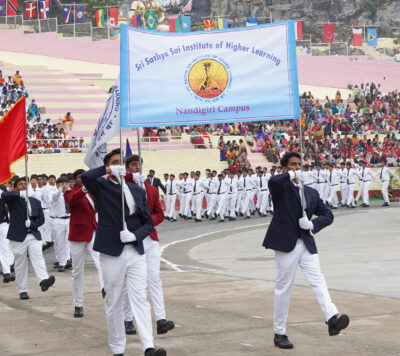
The March Past that followed included each Sai student marching in unison towards the dais at Shanti Vedika where Bhagawan Baba sits, offering their salutations to Him.
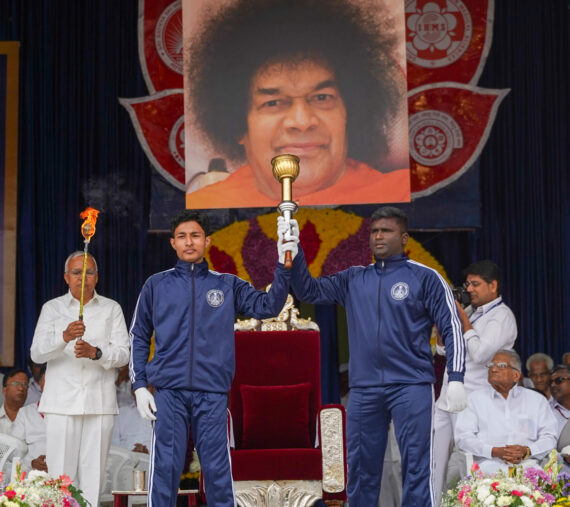
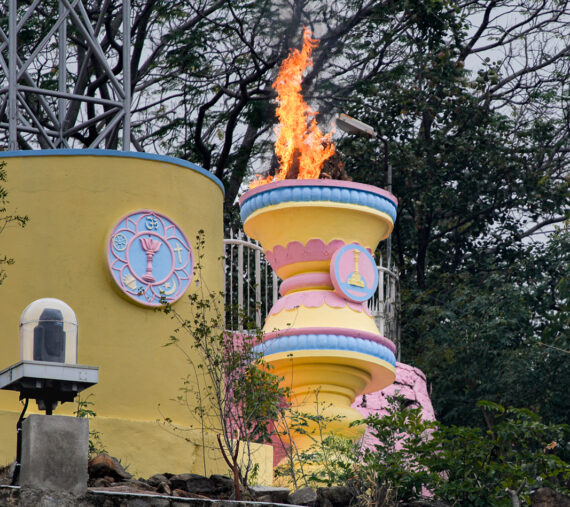
This was followed by the hoisting of the University flag, which represents unity and the promise to uphold the honour and glory of Sri Sathya Sai’s mission. Students then took the Sports Meet oath. This was followed by the unveiling of this year’s mascot – the Exotic Pigeon, a timeless symbol of peace, purity and hope. As the mascot flew into the main torch next to the Gods of Hill View, it marked the commencement of the 2026 Annual Sports & Cultural Meet.
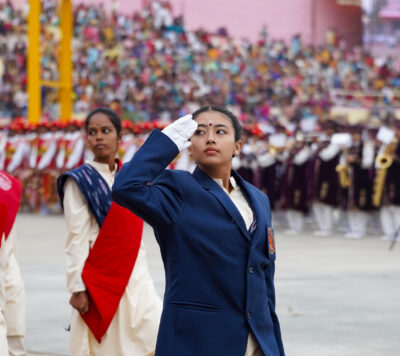
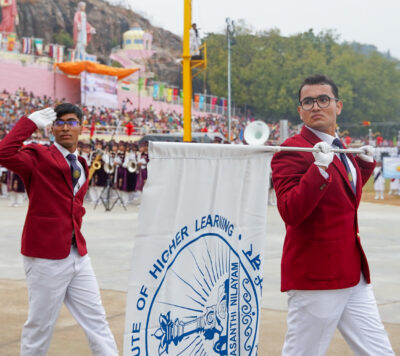
Students of all the Sai educational institutions—gathered on the ground—then gave a collective bow to Bhagawan Baba, celebrating the 100th year of the advent of the Divine Master.
The brass bands of the Primary section of Sri Sathya Sai Higher Secondary School and SSSIHL Anantapur Campus then played a piece, with the Institute Band members joining in unison, as they marched past Shanti Vedika, saluting their Divine Master. They were followed by the Institute brass band, which offered its salutations. This signalled the commencement of the day’s presentations.
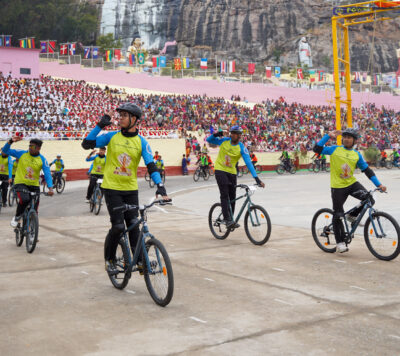
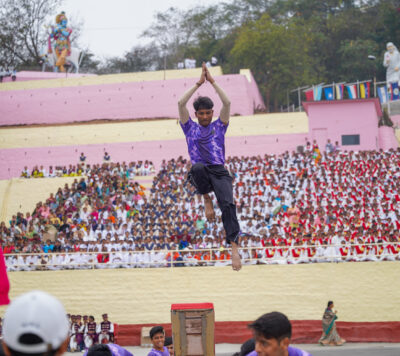
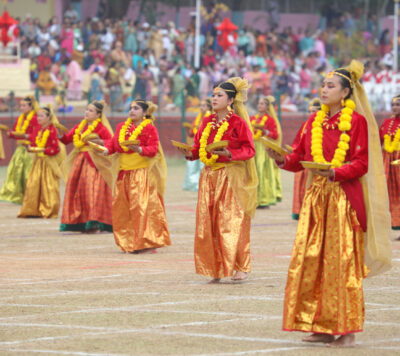
The women students of SSS Educational Institutions, SSSIHL Anantapur Campus and SSSIHMS College of Nursing and Allied Health Sciences were the first to present. Their theme, The Art of Sports: A Grateful Offering, depicted the philosophy of sports beginning with art; and art paving the path.
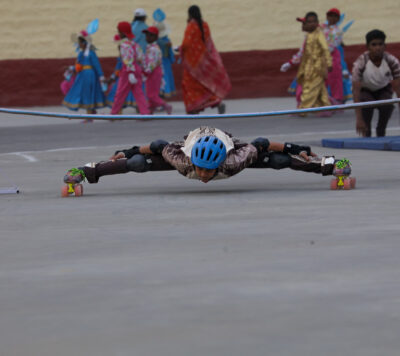
Their six presentations were named The Flexifits, The Numinous Nrutta, The Frisky Flips, The Dancing Damsels, The Festive Flags and The Racing Riders. They included a display of synchronised asanas, the ancient Bhārateeya art of Nātya, a colourful aerial display, traditional folk dance, five-foot flags handled with dexterity and diligence, and a beautiful human formation that read: Forever Yours.
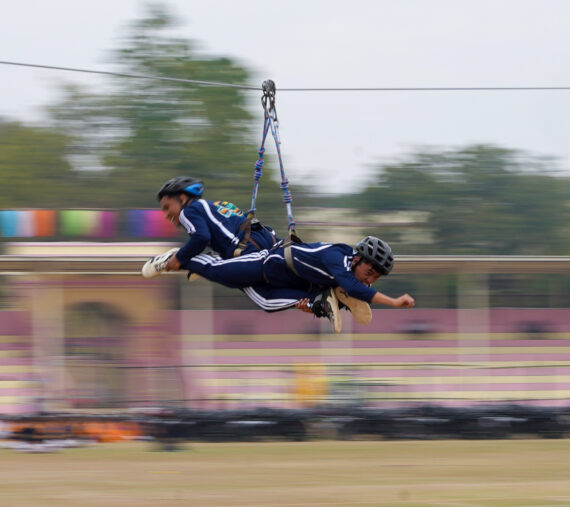
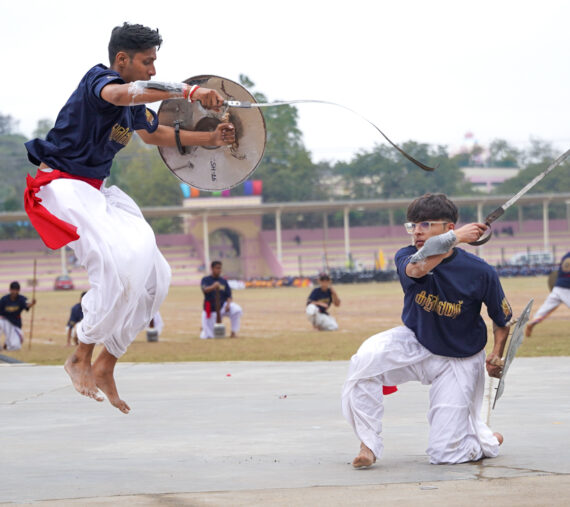
This year, the students of SSSIHL Men’s Campuses–Prasanthi Nilayam, Brindavan and Nandigiri–presented a combined performance of twelve items, split into two sessions.
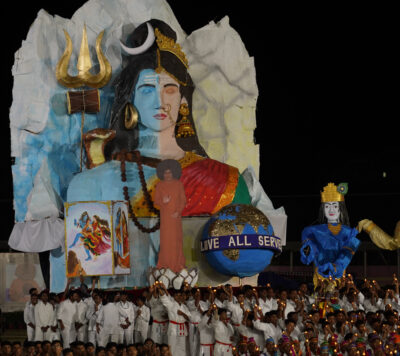
Their morning presentation began with a larger-than-life installation of Ardhanarishvara, representing the divine union of Lord Shiva (masculine principle, Purusha) and his consort, Goddess Parvati (feminine principle, Prakriti or Shakti), which was rolled into the stadium. The Resonant Drummers then ignited the arena with a powerful symphony of rhythmic Chinese drums, ably accompanied by a variety of instruments. This was followed by Sky Sentinels, a Zipling event, then Utplavangamaah (meaning High Jumper), a teeterboard-based gymnastics item, and Gear Grind, a vibrant cycling presentation featuring a host of solo and group stunts and an innovative cycling football game.
Aerovyuh, the next item, showcased a medley of agile body movements and skillful gymnastics on the ground and on a giant German wheel. This was followed by their final presentation of the morning, Kalaripayattu, an ancient Indian martial art depicted through choreographed duels with traditional weapons, reflecting discipline, devotion, and martial excellence.
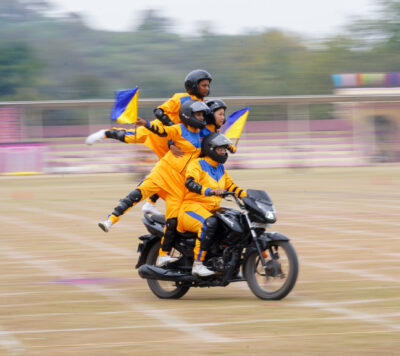
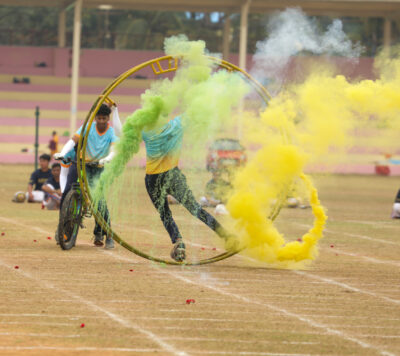
The grand formation around Sai brought together all the students from this morning’s presentation before paving the way for the final item.
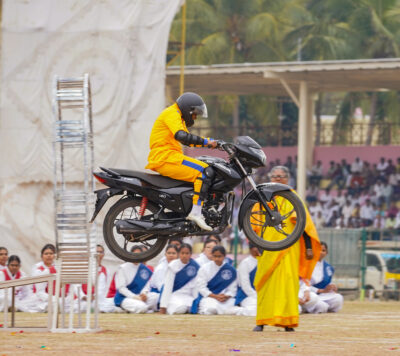
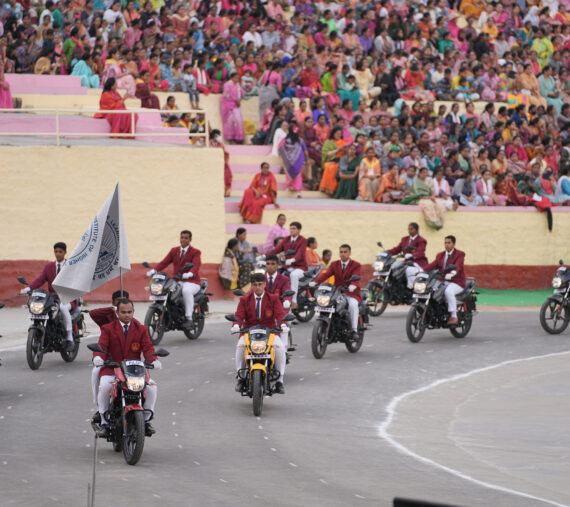
No Sports Meet is complete without the signature item of motorbike stunt riding. This year, the students of Anantapur Campus, SSSIHL, returned for their final ensemble, featuring forty bikers performing synchronised riding and stunts, including criss-crosses, circular formations, and jumping over ramps and rings.
The morning’s presentation ended with Mangala Arati offered to Bhagawan Baba.
The evening session of the 2026 Annual Sports & Cultural Meet began at 4:15 p.m. with the ceremonial procession welcoming Bhagawan Baba to the Sri Sathya Sai Hill View Stadium. It was led by the motorbike escort team of SSSIHL, followed by two majestic horses ridden by equestrians, and the Brass Band of Brindavan Campus, SSSIHL, playing the devotional song “Hum Tere Hai Sai”. As the Slow March Squad reached the dias, students chanted the Vedas, and the Vice-Chancellor and Registrar of SSSIHL, along with senior members of the Sai educational institutions and students representing each institution, offered salutations to Bhagawan.
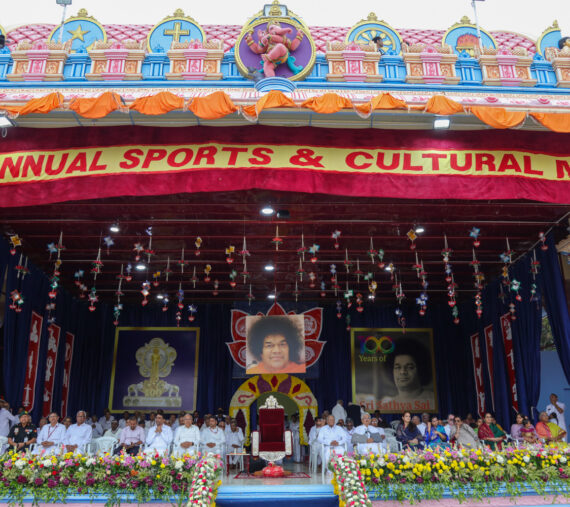
Students of Smt. Eswaramma High School had the honour of performing the opening act. The I to XI Std. girls presented a delightful blend of innocence, rhythm and devotion (Radha Krishna Dance); eye-catching formations adorned with glittering fabric (Drape Scape); and a dance set to the sacred hymns of Lord Shiva (Shiv Tandav). They were followed by the I to VIII Std. boys, whose items, Elf Dance and Buugeng, showcased gymnastics and Japanese martial arts.
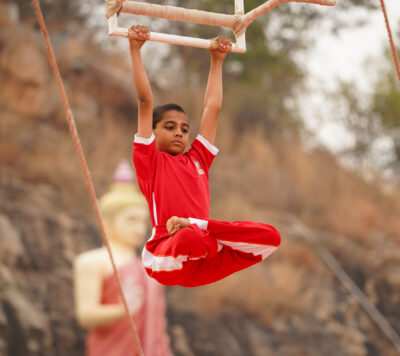
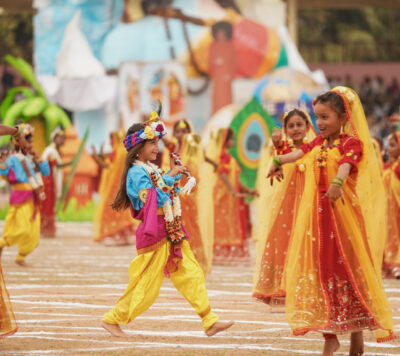
They were followed by a series of presentations by students of SSS Higher Secondary School (Primary section & Girls wing). From The Dauntless Heroes on the Swing (acrobatic swirls and whirls under the banner that reads: Power and Fortitude come from Within) to the Celestial Dance of the Acqua World, the tiny tots of the Primary School immersed themselves in the oceanic bliss of the marine world, taking the audience along for the ride.
Other items ranged from a kathak-based dance to an ode to the Gods – especially Hanuman and Shiva. The highlight of their performance was the sheer range of colours, costumes and props – most of which were handmade by the students themselves. This was evident in the multitude of human formations the entire group created as a final offering, spreading love and joy among the spectators.
Presentations by students of SSS Higher Secondary School (Boys wing) and Smt. Eswaramma High School (VIII-X Std. Boys) followed. Soulful Bhangra dancing was followed by synchronised acrobatic movements, including aerial stunts and formations, by the Celestial Ascendants. The Astral Aligners then took the stage. The deft blend of art and science was evident as these students balanced geometry and symmetry with music with grace and maturity.
They concluded their performance with Garba and Dandiya Raas – Gujarati folk dances central to the Hindu festival of Navratri, symbolising profound spiritual and cultural concepts.
For the final performance of the day, students of SSSIHL Men’s Campuses–Prasanthi Nilayam, Brindavan and Nandigiri–narrated the spiritual process of transformation, using Giant Puppets depicting the Dashavatara.
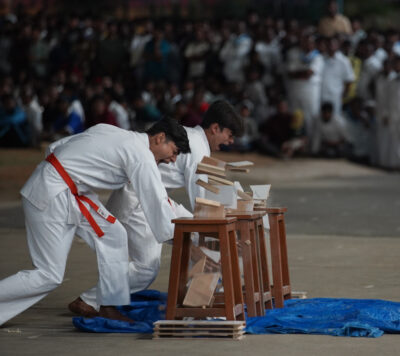
Sai-Shin-Kai, a team of over a hundred martial artists, then took the field for a martial arts display that combined the disciplines of Karate, Kung Fu and Taekwondo, featuring stunts and nunchaku and sticks.
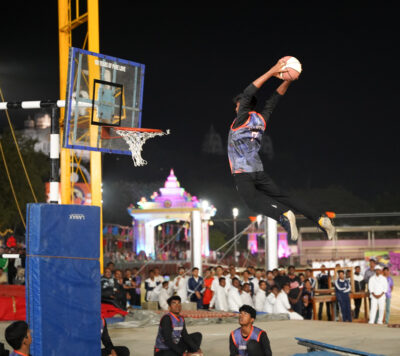
Airborne, a trampoline basketball spectacle, highlighted a rush of lift, momentum, and nerve—stacked with insane rebounds, liquid-like flips, and thunderous dunks. This gave way to Rope Mallakhamb (popularly known as Rope Yoga), a display of powerful and graceful stunts that depict strength, balance, flexibility, endurance and body control.
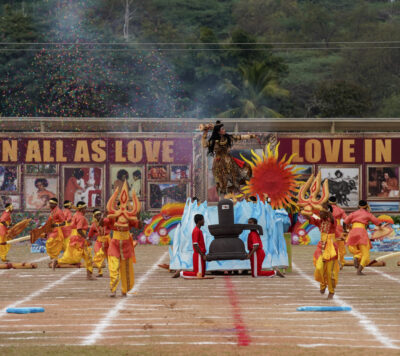
Echoes of the Ayudhas – Stories of the Lord told through His Weapons, a thematic presentation that portrayed the changing role of dharma and recollected the leelas of the Gods through their sacred ayudhas (divine weapons of the Gods or implements used in daily life) across the Yugas.
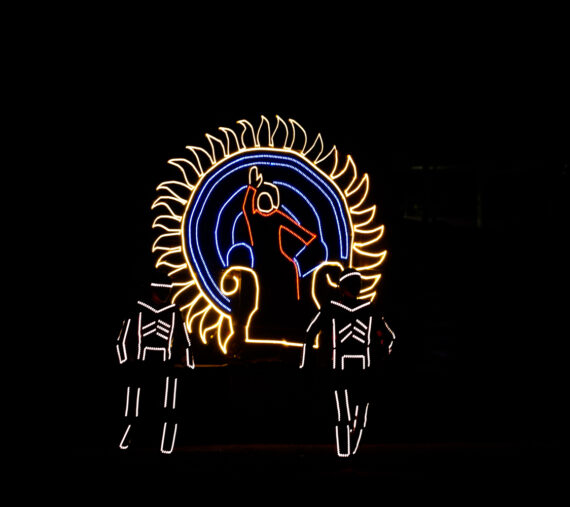
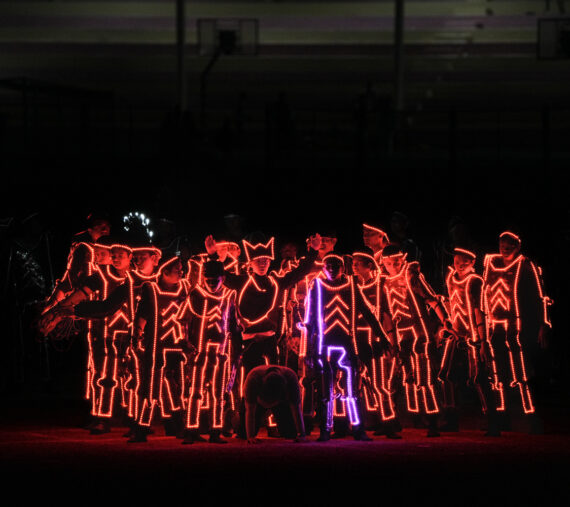
As night fell over Sri Sathya Sai Hill View Stadium, a groundbreaking performance using wirelessly controlled LED suits (a first at the Annual Sports & Cultural Meet) displayed changing formations that conveyed stories with light and colour. The “Illuminators” smoothly shifted from cosmic designs to significant shapes, honouring teamwork, devotion, and the influence of light. Through coordinated movements, they employed advanced technology to animate timeless tales of collaboration and faith in a contemporary and captivating manner.
All participating students then came together in grand formation to sing a devotional song to their Divine Master.
Mangala Aarati offered to Bhagawan Baba brought the Sports Presentations for the 2026 Annual Sports & Cultural Meet to an end.
A deeply moving docudrama that retraced cherished moments from decades of Sports & Cultural Meets—when human effort on the ground was transformed by divine presence.
Through music, narration, dance, and soul-stirring memories, the students revisited a legacy shaped by Bhagawan Sri Sathya Sai Baba’s love and encouragement.
Recounting their journey from diffidence to daring, they reflected on how Bhagawan’s words inspired generations of Anantapur students to attempt feats of courage—be it dance, bike stunts, or acts of quiet determination—coining this inner strength as Godfidence.
Interwoven with timeless Sports Meet songs, alumni voices, and heartfelt performances, the docudrama celebrated not just memories, but the enduring impact of Swami’s guidance, affirming that with His grace, the impossible becomes possible.
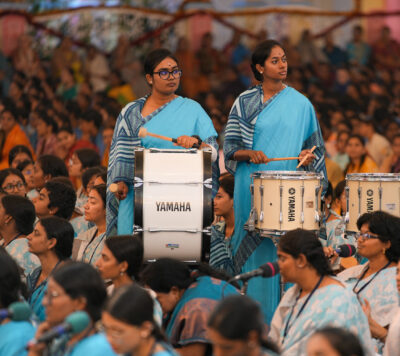
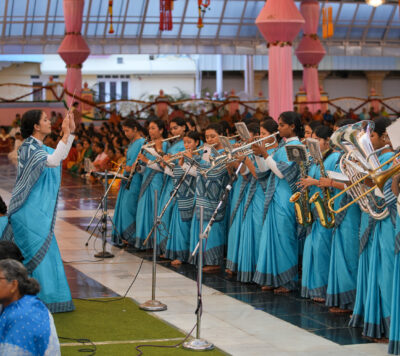
This symphony ensemble by over 120 students of SSSIHL Men’s Campuses at Prasanthi Nilayam, Brindavan, and Nandigiri, presented a thoughtfully woven journey of twelve musical offerings spanning Carnatic and Hindustani classical, fusion, band compositions, and an evocative a cappella rendition. From the auspicious opening Ganesha Vandana to soulful pieces that stirred nostalgia and devotion, each segment unfolded as an expression of love placed at Bhagawan’s Lotus Feet.
Indian classical instruments, Western orchestral sections, and a full brass band blended seamlessly, reflecting unity in diversity and precision rooted in discipline. A standout moment was the serene a cappella rendering of “Ye Ga Vitthalabai”, marked by harmony, simplicity, and collective surrender. The offering culminated with the powerful Sports Meet theme “Kaliyuga Avataram”, bringing the symphony to an inspiring close.
More than a concert, Premāmṛita was love given back through melodious sound—each note shaped by gratitude, each silence filled with humility, and every moment offered in quiet reverence to the One who inspires it all.
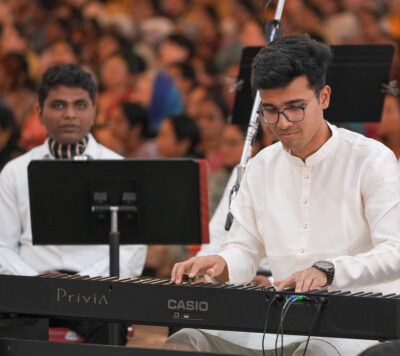
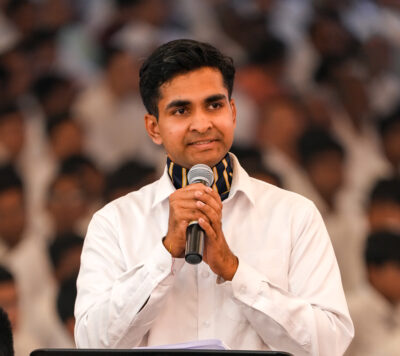
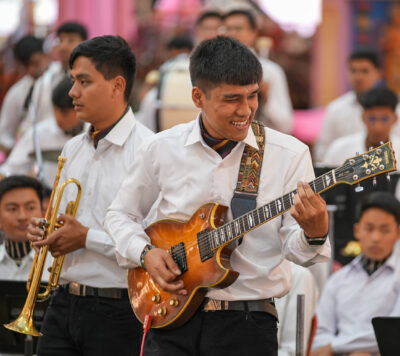
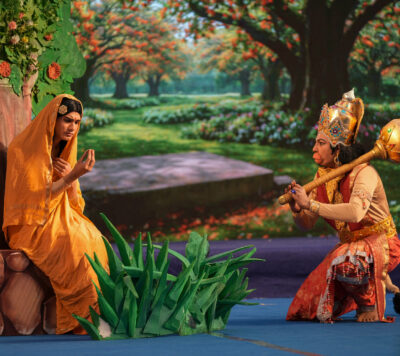
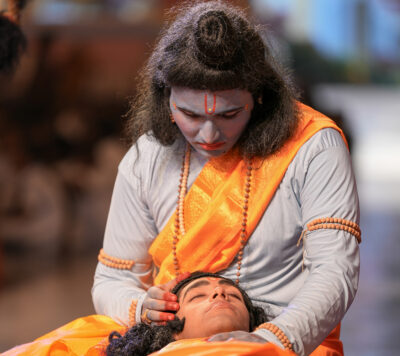
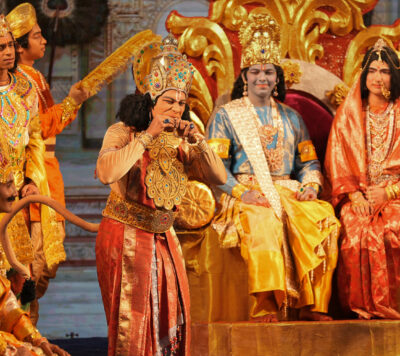
Through the life of Ramabhakta Hanuman, this evocative drama reflected the true spirit of Bhakti as lived devotion. Framed by a dialogue between a Sai student and his teacher, the presentation wove timeless episodes from Hanuman’s life with the inner journey of a modern seeker.
Beginning with the first physical encounter between Lord Rama and Hanuman, when the devotee who has long heard and imbibed the Lord’s name at last beholds His form, capturing the essence of Sravanam in that transition from listening to seeing, from longing to experiencing. Through the incidents that follow, the nine forms of devotion come alive not as abstract concepts but as intense, human moments in which God seems to depend on His devotee, and the devotee in turn finds his very identity in serving the Lord. The narrative culminates with Atma Nivedanam in the final conversation between Rama and Hanuman, gently suggesting what true devotion looks like: to live as an instrument, content to be where the Lord wants, as He wants, for as long as He wants, thus edifying that Atma Nivedanam is not a final moment of submission but an entire life of surrender.
Sri Sathya Sai Educational Institutions will host the Annual Sports & Cultural Meet on, 11 January 2026 at the Sri Sathya Sai Hill View Stadium, Prasanthi Nilayam, Andhra Pradesh, India.
The Sri Sathya Sai Educational Institutions include all four campuses of Sri Sathya Sai Institute of Higher Learning, Sri Sathya Sai Higher Secondary School (Primary section, Girls wing and Boys wing), Smt. Eswaramma High School, and Sri Sathya Sai Institute of Higher Medical Sciences (SSSIHMS) College of Nursing and Allied Health Sciences.
Bringing together the spirit of a year-long journey of sports, cultural and fine arts competitions across our campuses, this event holds a cherished place in the collective hearts of our students and staff. More than 3,300 students will present inspiring physical and cultural performances in two sessions scheduled for the morning and evening. At its core, this celebration is a humble offering of love, shaped by the values of Duty, Discipline, and Dedication, to our most Revered Master and Founder Chancellor, Bhagawan Sri Sathya Sai Baba, as we joyfully mark His Birth Centenary Year.
From 12 to 15 January 2026, students from various campuses will present cultural programmes, including drama and devotional music, at Sai Kulwant Hall in Prasanthi Nilayam. The Prize Distribution Ceremony for the Annual Sports and Cultural Meet 2026 will be held on the morning of 15 January 2026, coinciding with the auspicious occasion of Makarasankranti, at Sai Kulwant Hall, Prasanthi Nilayam, Andhra Pradesh.
Annual Sports & Cultural Meet 2026 Schedule
The Sports Presentations on 11 January 2026 will be streamed live on the SSSIHL YouTube channel.
The Cultural Presentations from 12 to 15 January 2026 will be streamed live on the YouTube channel of Sri Sathya Sai Media Centre (SSSMC), Prasanthi Mandir Live.
Notes for Editors (About Sri Sathya Sai Institute of Higher Learning)
Sri Sathya Sai Institute of Higher Learning (SSSIHL), a Deemed to be University in Prasanthi Nilayam, Puttaparthi, Andhra Pradesh, India, is one of the few institutions in the world offering values-based education to students at the University level, ever since its inception in 1981. Ethics and morals form the undercurrent of every subject taught at the institute providing its students with a holistic framework of interpersonal development combined with academic excellence. With a merit-based, open admissions policy, SSSIHL welcomes students from all backgrounds—irrespective of income, religion, or region—and provides quality education free of charge.
SSSIHL has four campuses across Andhra Pradesh and Karnataka, attracting students from all over India and offering a range of programmes at the undergraduate, postgraduate, professional, and research levels.
SSSIHL also provides a strong research environment, with exceptional academic practices, that have resulted in the growth of national and international collaborations. The Central Research Instruments Facility (CRIF), based at the Prasanthi Nilayam Campus is one of the few facilities in the country that houses advanced Characterisation / Analytical Tools to carry out Translational Research in various areas of Science and Technology.
For further information, visit: sssihl.edu.in.

With the divine blessings of Bhagawan Sri Sathya Sai Baba, Revered Founder Chancellor, SSSIHL, the Sri Sathya Sai Biobank & Research Hub (SSSBRH) – a joint offering of Sri Sathya Sai Institute of Higher Learning and the Sri Sathya Sai Medical Institutions — was inaugurated on 22 November 2025 by Shri C. P. Radhakrishnan, Hon’ble Vice President of India.


The state-of-the-art facility located in Prasanthi Nilayam, is poised to strengthen the nation’s capabilities significantly in the following areas:
Aligned with the Hon’ble Prime Minister’s vision of ViksitBharat2047, and India’s BioE3 Policy (Biomanufacturing, Biofoundry & BioAI), this Biobank will accelerate discovery science and support evidence-based healthcare across the country.


A biobank is essentially a high-tech library that stores millions of carefully collected human biological samples, such as blood, tissue, and DNA, along with detailed, protected health information. They help accelerate medical discoveries, leading to personalised medicine and improving public health through research.
India represents one-sixth of the world’s population but has less than 1% of the world’s genomic datasets. This gap means new treatments are often less effective or safe for Indians because they were not developed based on our population data.
Sri Sathya Sai Biobank addresses this gap. It is India’s first integrated precision medicine ecosystem.
The ethically collected samples (the biobank already has 25,000) will significantly enhance India’s genetic diversity, which is underrepresented in global medical research.
The Biobank will be an ISO 20387-compliant facility scalable to five million biospecimens in triplicate. It embodies the seamless integration of Sri Sathya Sai Educare and Medicare for the larger purpose of Sociocare.